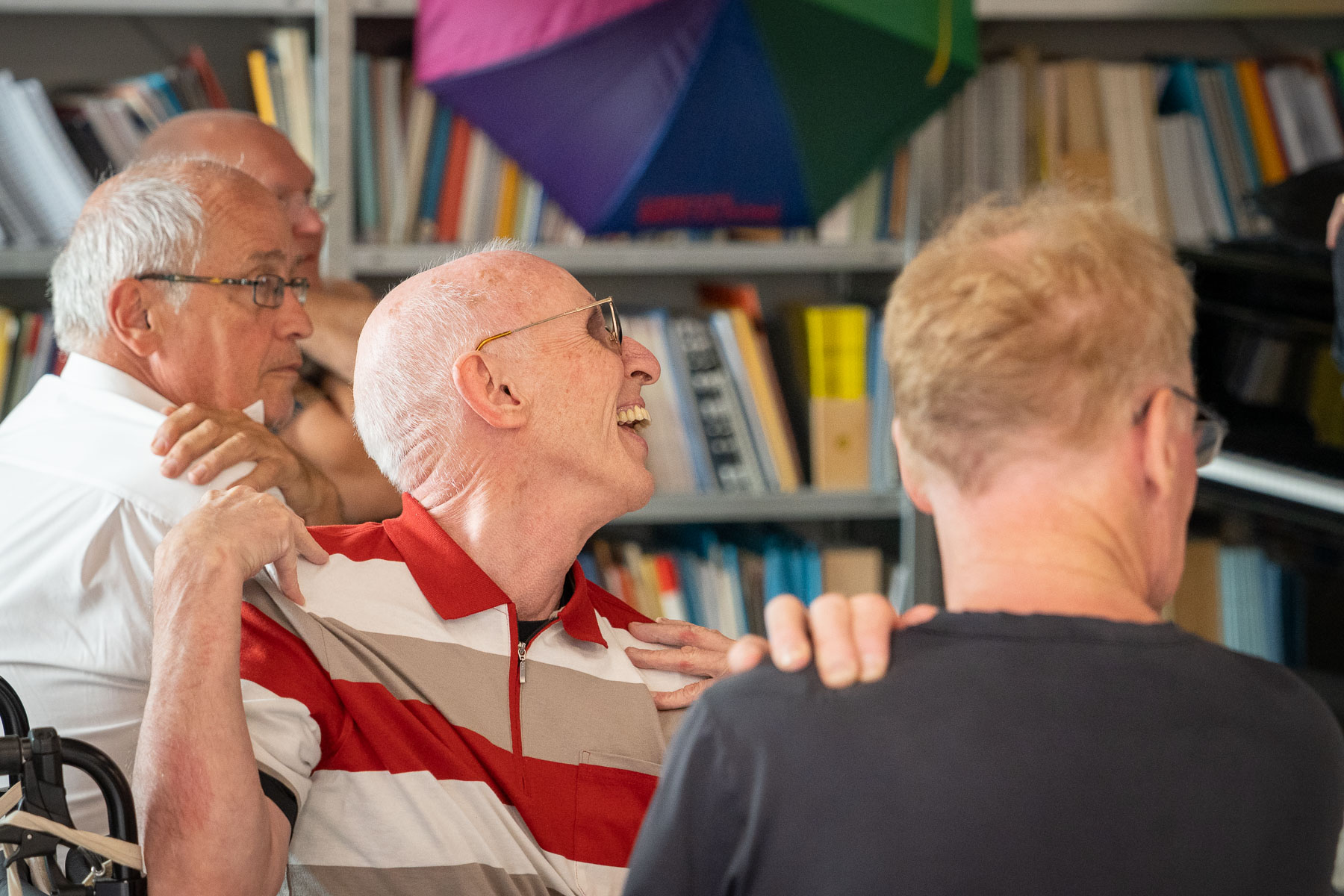
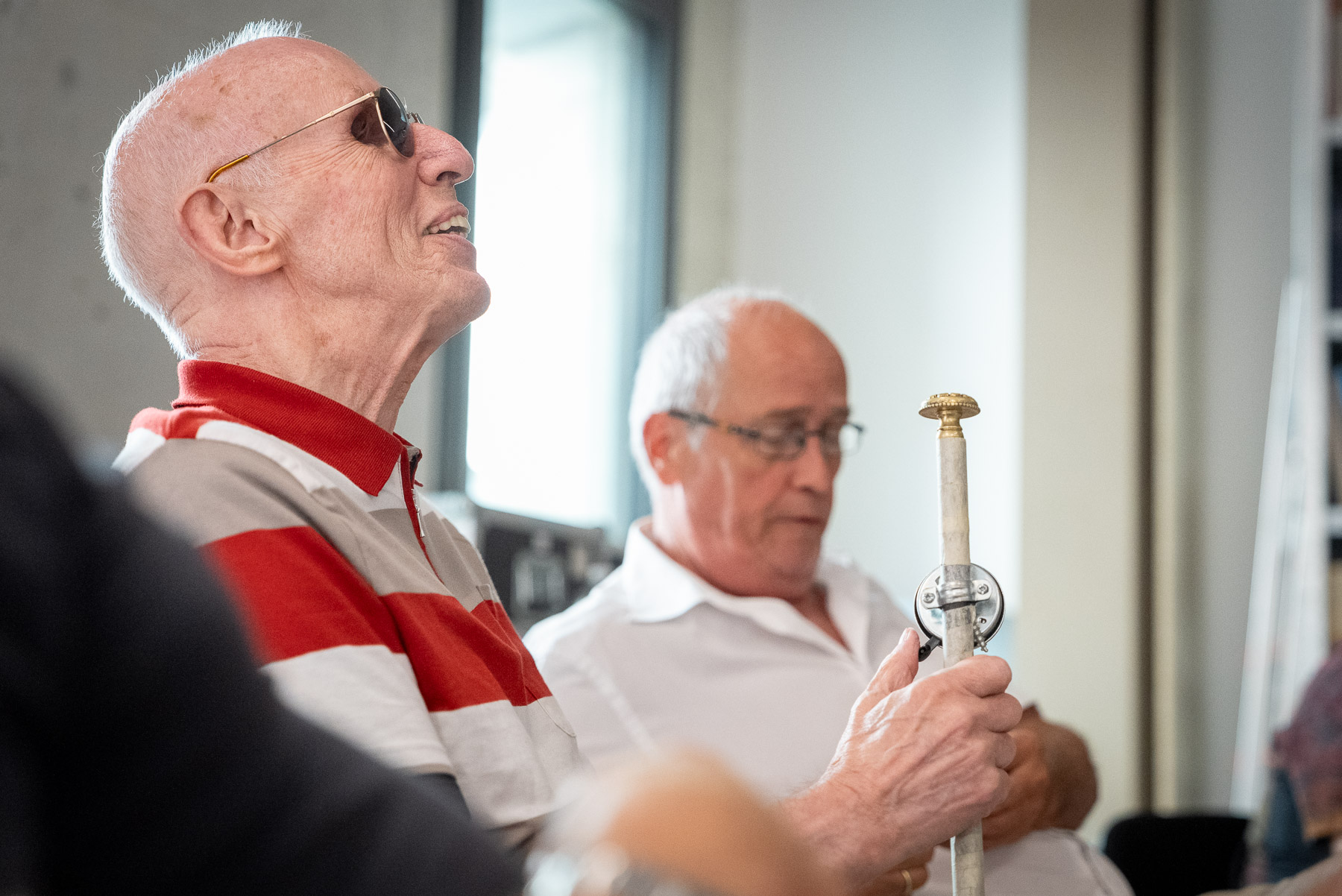
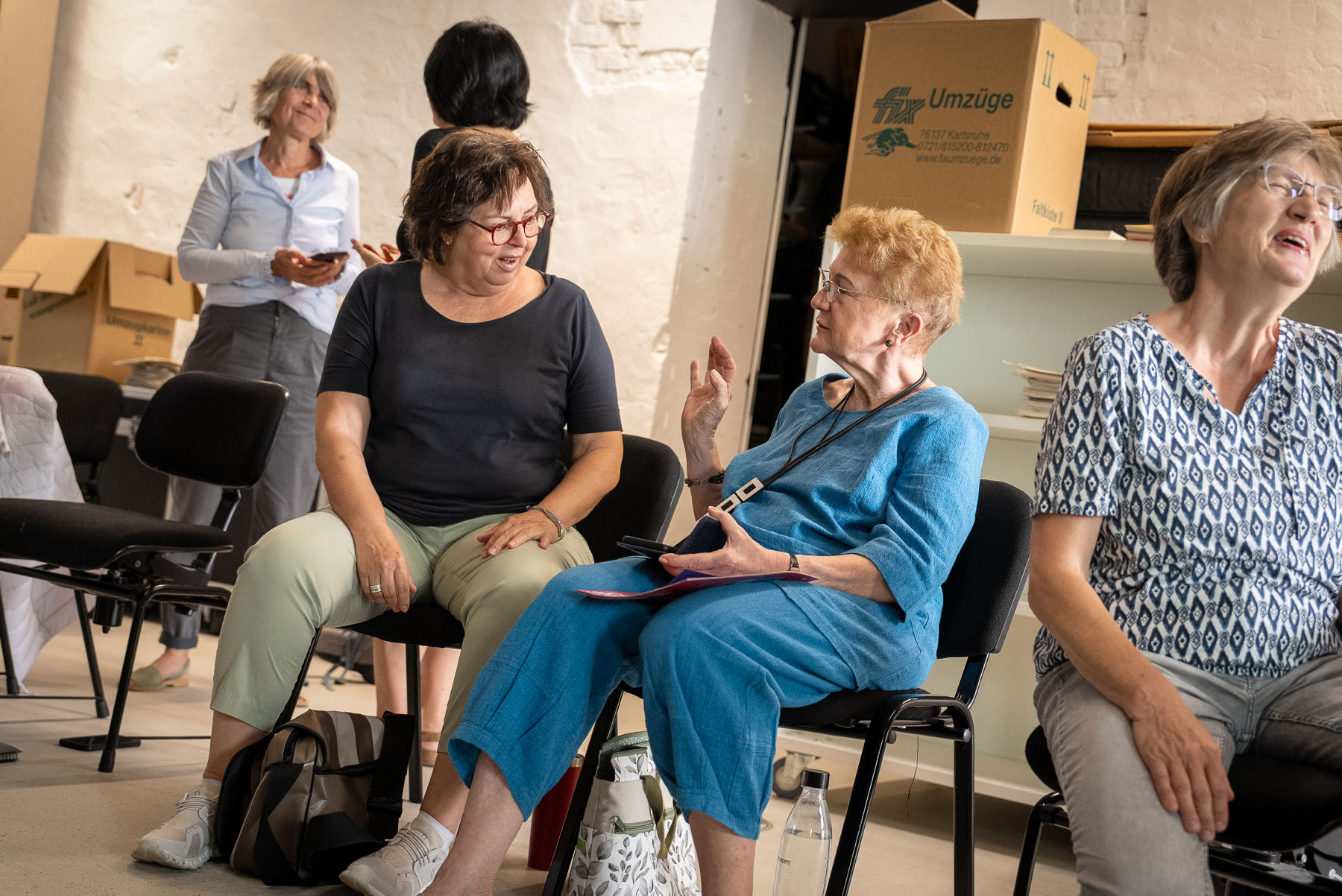
The Heidelberg Complaints Choir was formed during the volunteer day of the Rhine-Neckar Metropolitan Region in 2014. Since then, people with and without disabilities have been singing against barriers and prejudices under the direction of Bernhard Bentgens—with a good mind to singing songs and a good amount of humour. 

“Friends of the art of singing, let’s start! It’s so good you are here,” Bernhard Bentgens greets seventeen men and women inside the landmarked railway maintenance depot in Heidelberg. The place where, for decades, waggons had been repaired is now the place where one of the arguably most unusual ensembles of the Metropolitan region meets for rehearsals every Tuesday from 6 pm to 8 pm. For what had once been an industrial site has long since been turned into an area for creative projects and events; and music, too, is at home here. And right in the middle of it all is—the Heidelberg Complaints Choir.    
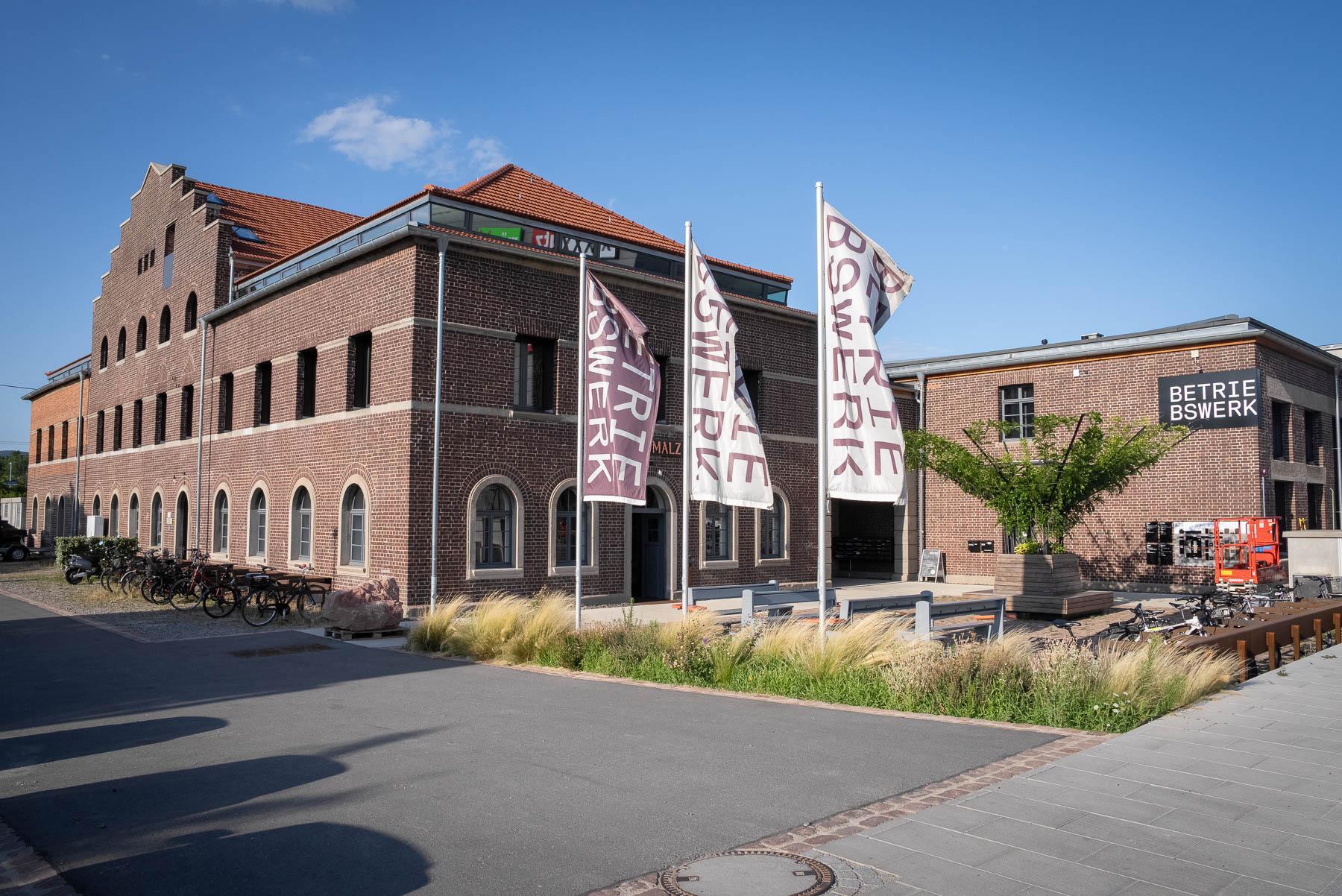

It was founded in September 2014 during the volunteer day of the Rhine-Neckar Metropolitan Region. An advisory panel for people with disabilities in the city of Heidelberg had offered a workshop at the time, during which 30 people worked together to write lyrics for melodies. Was that the end of the song? Far from it. Because since then, the mixed amateur choir has been singing about the usual obstacles that make everyday life difficult for people with disabilities and impairments in a humorous way. There are Complaints Choirs in many countries, the first of which was founded in the mid-2000s in England. In Heidelberg, the spontaneous project has by now evolved into a permanent fixture: a non-profit association that now has about 40 members. 
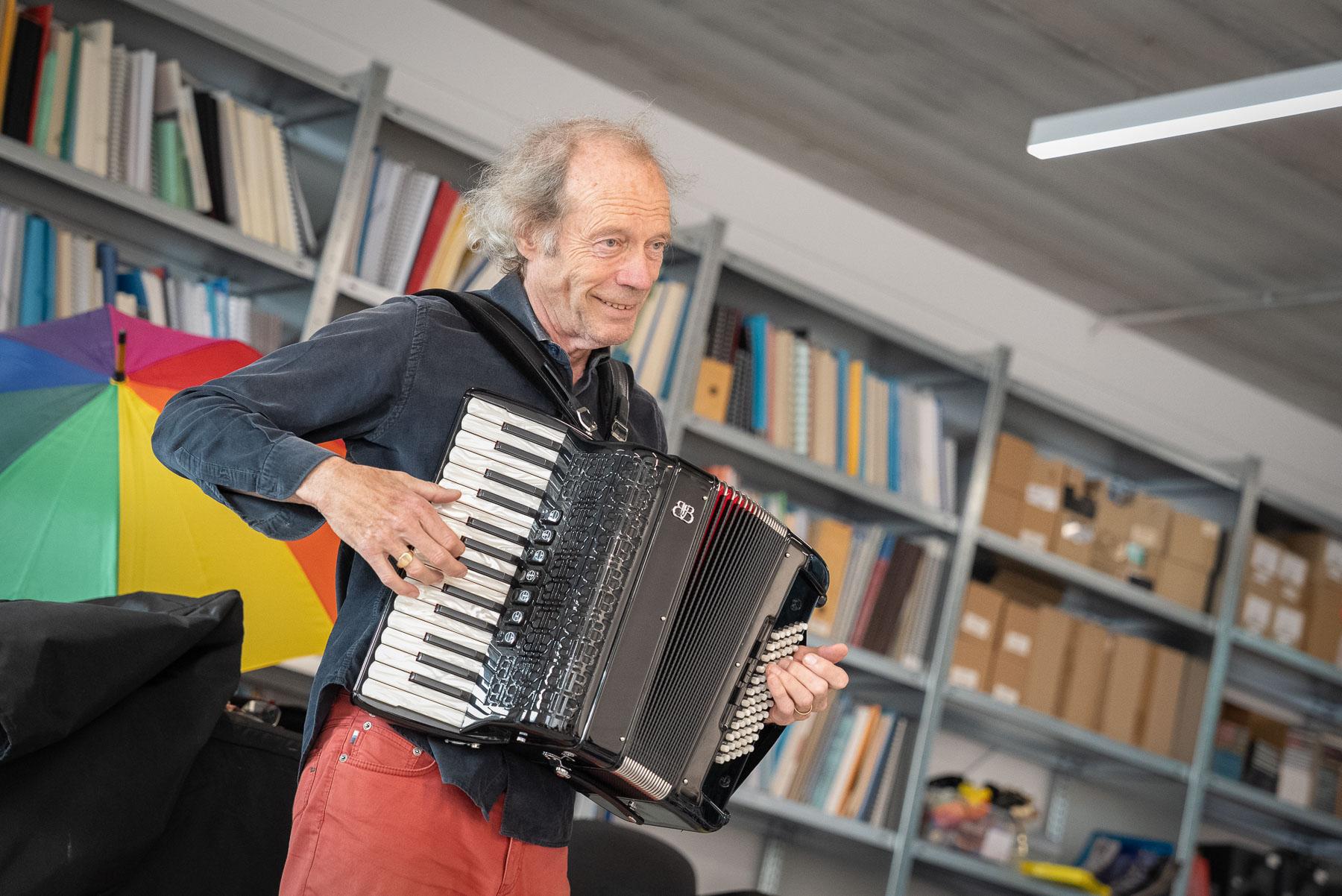
In an upbeat mood: choir director Bernhard Bentgens

Its director is Bernhard Bentgens. Before the singers start with their warm-up, circling their hips and stretching their vocal cords by chiming “ha-ha-ha, he-he-he”, Bernhard has an announcement to make. It is about a performance in the main street of Heidelberg. Susanne says: “I don’t dare to do that.” Manfred suggests: “You can mingle with the audience and sing along, then people will wonder why you know the songs so well.” Everyone laughs. Bernhard wants to bring the topic of inclusion to the streets—literally—to attract as much attention as possible. “We wait until the people stop and gather in the street; and the more there are, the sooner the police will arrive. This is our aim.” Again, there is laughter. Bernhard strikes the first notes on the piano. “Ha-ha-ha, he-he-he”. This is followed by the first song. “A bird comes flying…”, the first stanzas are quite familiar. But the third stanza goes “I am disabled and happy. I am disabled as it is. I am disabled and happy. And this is how it is.”
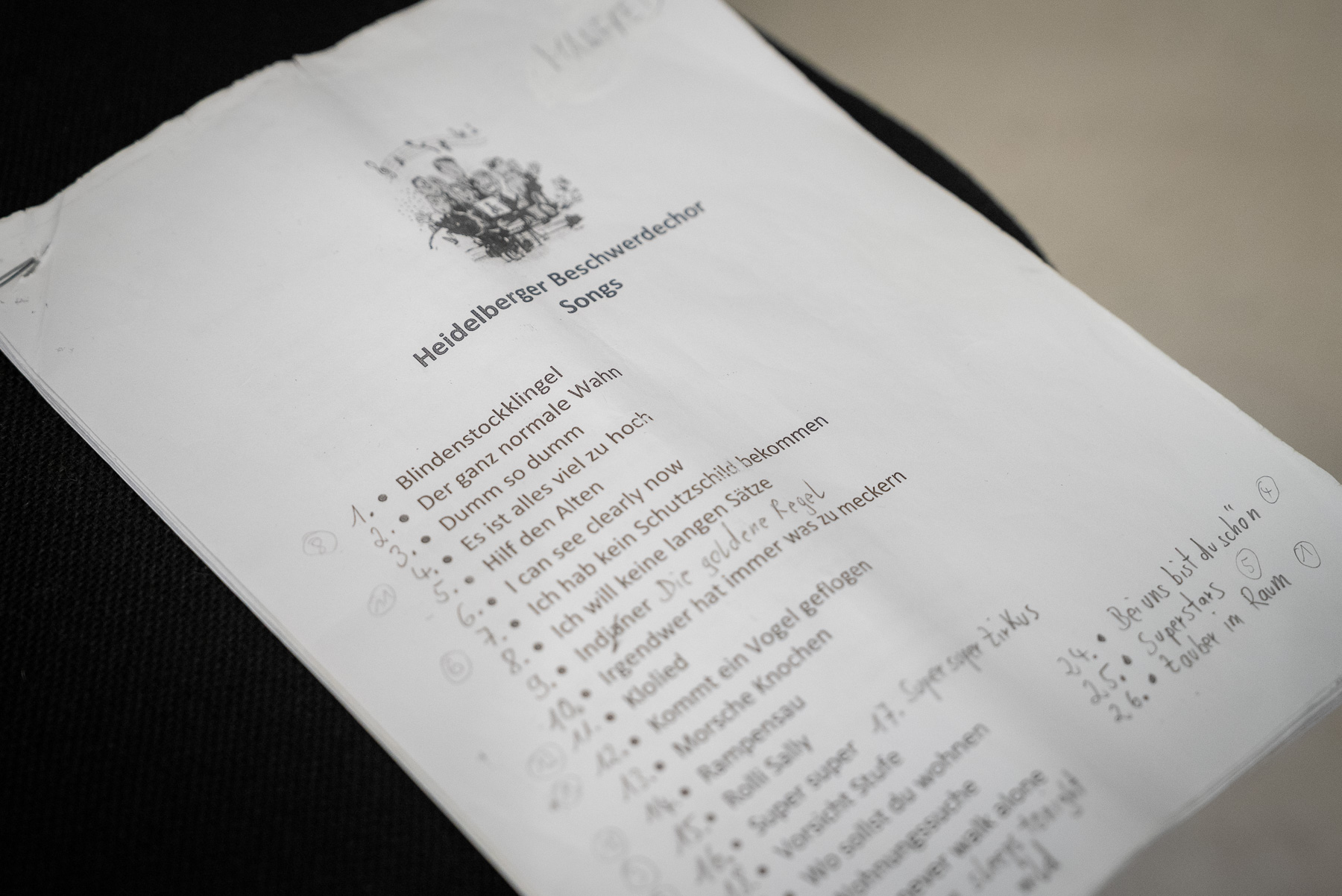
And this is how it is when you know what disability really means. If you, like Hermann, lost both your legs and your eyesight in your mid-20s due to a gas explosion in your house. Or if you have schizophrenia like Moyu. Or if you have osteoporosis and Parkinson’s disease like Renate. Or if you are a person of short stature like Sabine. “A loo, a loo, where is a loo? Show me fast a wheelchair loo, I need it, yes I do!” the men and women sing to the tune of “Sex Bomb”. The members of the choir and Bernhard wrote the lyrics themselves. The topics are challenges like inaccessible tinned tomatoes on a supermarket shelf, stairs and cobbled streets but also mental illnesses. Like in the song to a tune by Sting where it says “mentally ill, express yourself, don’t stay alone. Depression must not be a stigma any more. I don’t want to hide how I really am. Acceptance is an asset for everyone. For insanity, too, is alive and has a purpose.” 

Mentally ill, express yourself, don’t stay alone. Depression must not be a stigma any more. I don’t want to hide how I really am. Acceptance is an asset for everyone. For insanity, too, is alive and has a purpose.

Today, Bernhard is not content with the recorders that come into play in the song “Be aware of the stairs”. “What beautiful flute music you made,” the choir director says. The lean man with the wide smile and grey curly hair is not the kind of person who bangs his fist on the table or makes a fuss when something isn’t running smoothly. He uses irony. Because what he really wants to say is that the recorders went awry completely. So, once again it is.   

Bernhard is a pro. Born in 1956, he grew up in a strict Catholic household in the Ruhr region and studied Church Music at the Folkwang University of the Arts (Folkwang Hochschule) in Essen. “That was the only possible way to convince my parents to let me study music.” There were no instruments in his family, but a season ticket for the opera, as he recounts. Because, quite often, his father did not want to go, he accompanied his mother. At the age of 14, he saw “Elektra” by Richard Strauss in the opera house Deutsche Oper am Rhein in Duisburg—this was a decisive experience. “The curtain opened and I had goosebumps for two hours,” he remembers. After that, he taught himself to play instruments, first the guitar, then the piano. The goosebumps become his leitmotif. He wants to know: “How can I manage to affect people with music; how can I touch them emotionally?” He tried out a lot of things to achieve this goal; he cooperates with the Mannheim National Theatre and the city theatre of Heidelberg; he is a freelance composer and performs as a clown at festivals, cooperates with different orchestras and together with his wife he founded a school in Southern Hesse.

And he conducts choirs, mostly professional groups. What he really loves, though, are the amateur ensembles. “They gain their quality by being fully committed to it,” Bernhard says. In a professional choir, he, as the director, is the boss; in the Complaints Choir everyone is equal. “No-one has the absolute authority. Rather the responsibility is shared by all. The choir invents itself.” This fits in really well with the topic of inclusion, as Bernhard sees it. He has a very clear opinion about what is still going wrong in the municipalities. “A lot has been achieved; many municipalities have an inclusion commissioner. But that is not enough.” The aim of the Complaints Choir is to convey this criticism without a moralising undertone and in a fun way.

The ensemble, however, is also there for the people who make it up. Sabine, for instance, has been a member for ten years. She likes to be part of it, especially because of Bernhard’s crazy ideas. As a person of short stature, she is used to people looking at her askance, but she says to herself: “It used to be worse in the past. Back then, short stature was seen as synonymous with a lack of ability to perform.” Sabine studied social work and has been working in the self-help office in Heidelberg for 30 years. Moyu has had schizophrenia for many years now. She can understand that people consider her difficult because her mood can change rapidly. Nonetheless, she wants to be treated normally, and she wants to break down the social stigma surrounding mental illness. “I am very open about my condition and receive lots of understanding both in my private life and at work.” Renate became part of the choir at the volunteer day in 2014 and has been a member ever since. “Enthusiastically! When we sing together in harmony my body is flooded by feelings of happiness,” she says.   

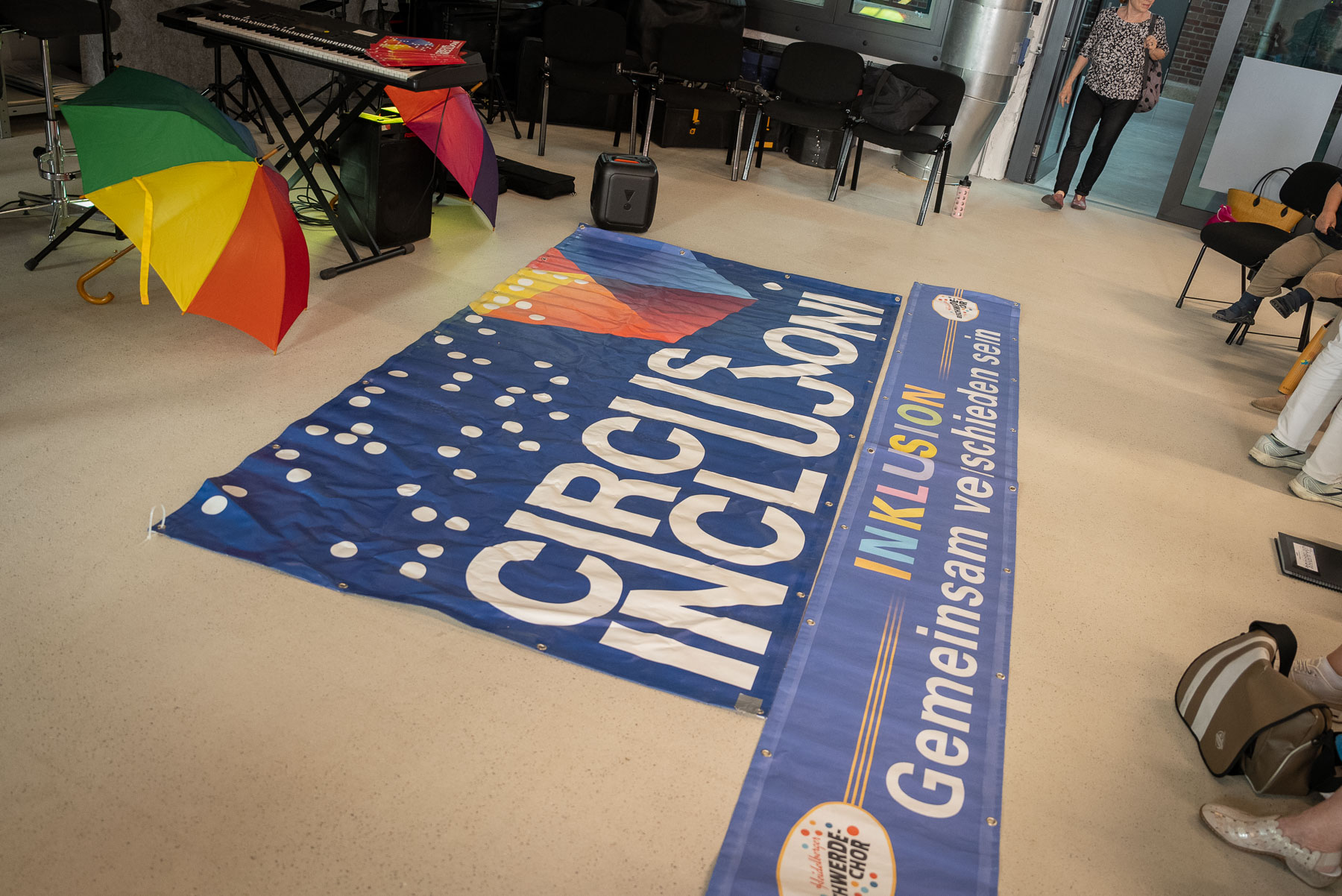
It’s now time for the umbrellas. They symbolise the protective shield that autists lack. “I didn’t receive a protective shield for this world. But nobody believes me how much I perceive. I didn’t receive a protective shield for this world. Everything’s so colourful and vibrant and bright, and I’m supposed to behave,” the members of the Complaints Choir sing, unfolding multicoloured umbrellas above their heads. In 2019, the Complaints Choir adopted an official programme called “Circus Inclusioni”. Since then, all singers wear red ringmaster’s jackets at performances. Because their message is: Our topics are serious—let’s laugh about it. And let’s embrace our differences together.     


https://beschwerdechor-heidelberg.de/

Newsletter

Tips for excursions and interesting stories about the Rhine-Neckar region can be found regularly in our newsletter.

And this is how it works: Enter your email address in the field and click subscribe. You will then receive an automatically generated message at the email address you entered, which you only need to confirm. Done!

Cancel

Suche

Generic selectors
Exact matches only
Search in title
Search in content
Post Type Selectors