In the heart of Germany’s largest forest, a Samenklenge in Elmstein tells the story of how tree seeds used to be harvested for reforestation. Burkhard Steckel, former head of the local forestry office, takes us on a journey into the fascinating world of trees—and into that of forestry work, which was arduous and dangerous.
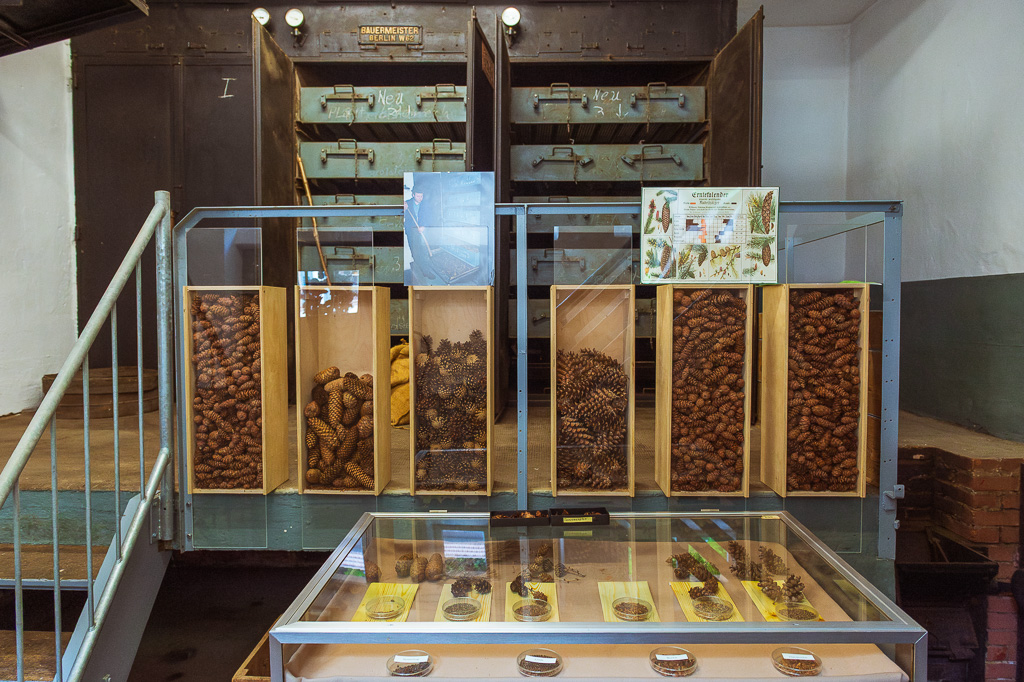
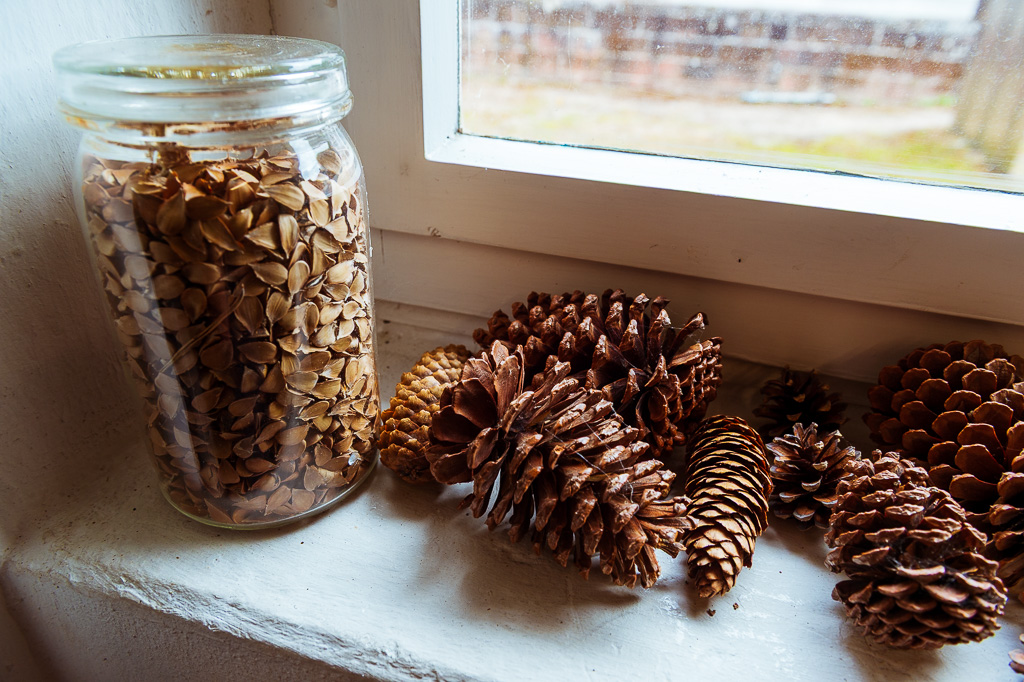
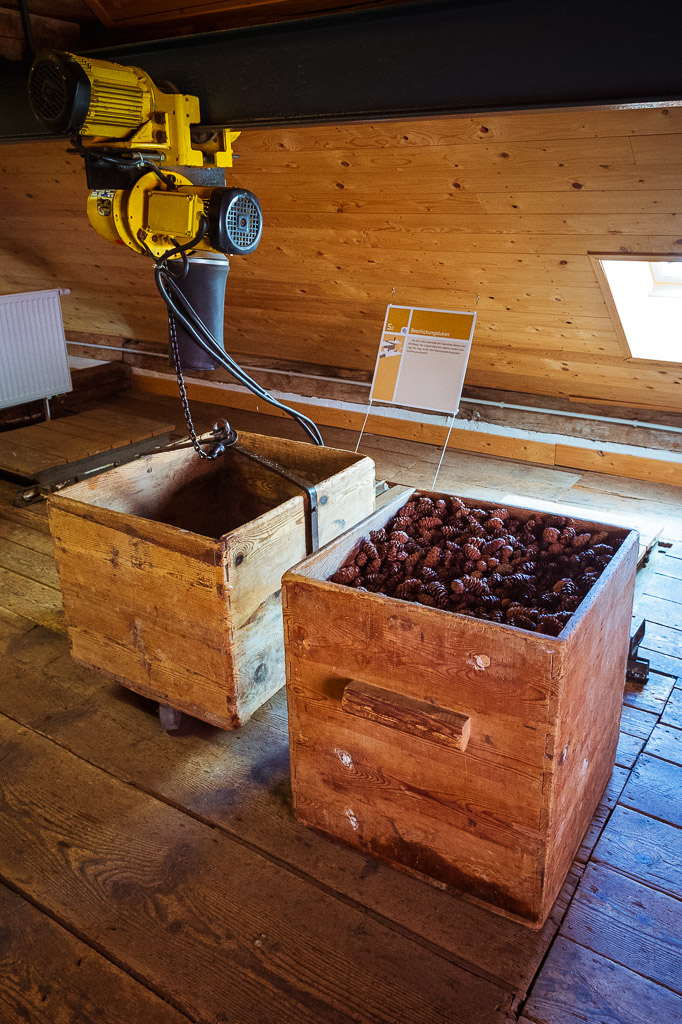
Some are tiny and roundish, others large and jagged. Burkhard Steckel is showing us treasures on this summer morning stored at the old seed collection site in Elmstein. Such as tree seeds from larch or pine. They almost look like tiny sesame seeds. Seeds from Douglas firs are much larger and jagged. The colours range from light grey to almost black. And no sooner have you arrived in the centre of Elmstein than you realise: not all cones are the same.
A little guessing game: Which cones belong to which tree?
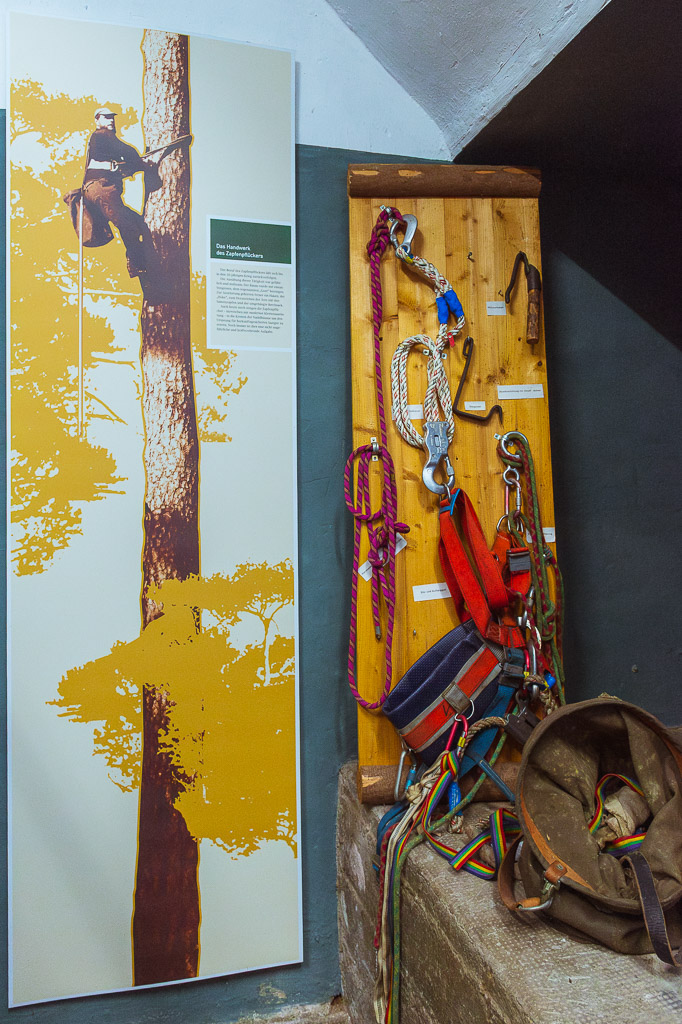
The term Samenklenge is unlikely to be familiar even to most speakers of German. “It originates from the German word Klang,” explains Burkhard, who gives voluntary guided tours of the museum, referring to the crackling sound made when pine cones burst open and release their seed capsules. As a qualified forester, he knows these things, of course. He headed the Johanniskreuz and Elmstein-Nord forestry offices, has held teaching posts at the University of Freiburg for years, and continues to this day to advise on forest management in China. Some of the on display, rather adventurous-looking tools used by forest workers were actually used for many years by this tall, athletic-looking pensioner himself. “My job was a dream job for me,” he recalls. “As well as timber production, it was also about nature conservation and public relations.”
A little guessing game: Which cones belong to which tree?
At the westernmost end of the Rhine-Neckar Metropolitan Region, in the heart of the UNESCO Palatinate Forest-North Vosges Biosphere Reserve, you will find the picturesque town of Elmstein, surrounded by forests and mountains. Around 2,500 people live here. On summer weekends, the Kuckucksbähnel train brings tourists from all over the world from Neustadt to this small village. Opening hours of the Samenklenge are tailored to its timetable.
The Samenklenge in picturesque Elmstein.
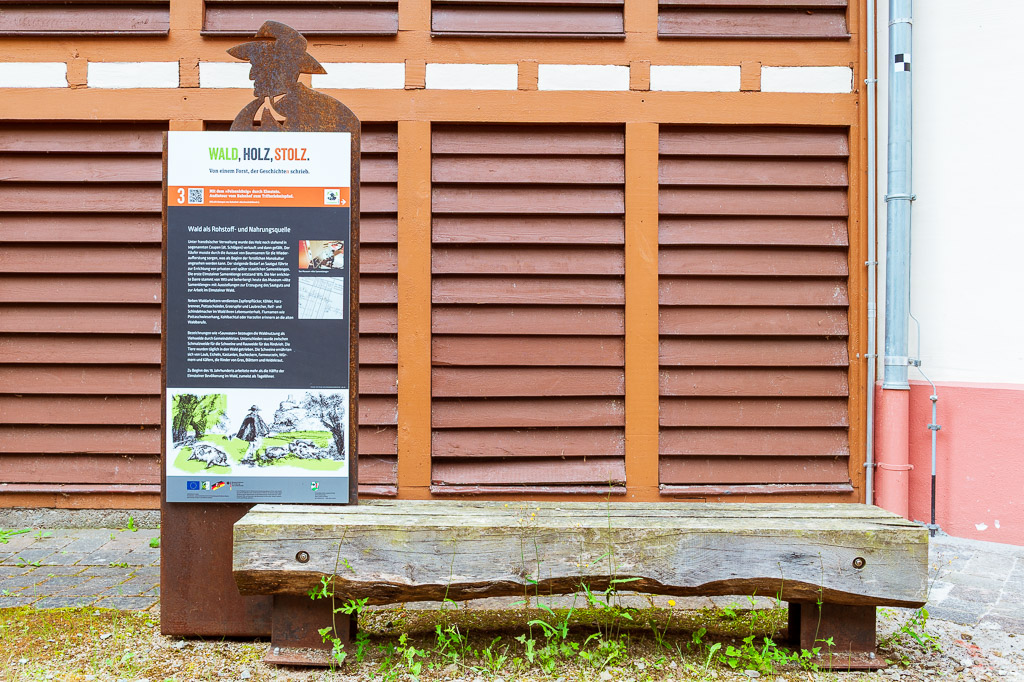
For the locals, the forest used to be a place of work and a source of raw materials and food.
The seeds harvested here...
… were not only used for reforestation in the Palatinate Forest.
The museum tells the story of working in the forest…
… then and now.
damals und heute.
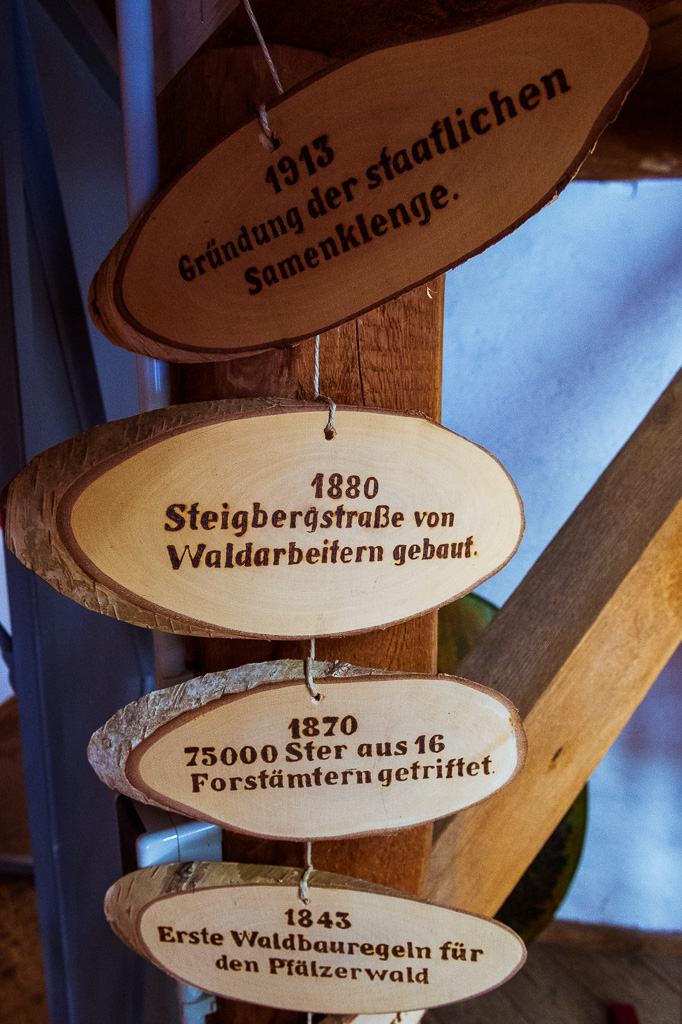
The Samenklenge is located in the centre of the town, right next to the Protestant parish church. A state-run institution, it supplied the Palatinate Forest and beyond with seeds for reforestation for some 100 years from 1913 onwards. Burkhard points out that a larch seed is only about 2 centimetres in size, whereas spruce cones can measure up to 15 centimetres. The cones of the Douglas fir, with their feather-like tips, are particularly pretty. And you learn that you would never find a real fir cone on the forest floor, as the empty cone always remains on the branch after it has scattered its seeds.
It is believed that the forest around Elmstein was already being used for forestry some 5,000 years ago.
Burkhard Steckel
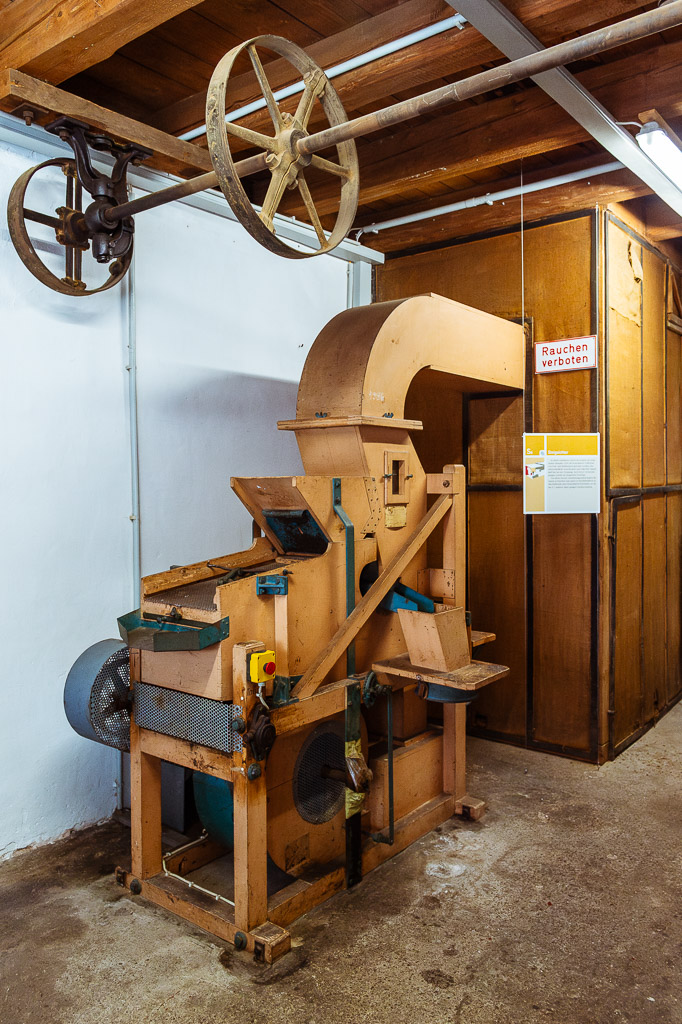
Burkhard is from Berlin. But he has lived in Elmstein for a long time and, above all, quite happily. “I’ve always really enjoyed the drive to work through the Palatinate Forest.” He is about to show us how the seeds were actually extracted. He demonstrates this using the original machines, which are over 100 years old and still fully functional today. “It’s important that the cones are picked whilst they’re still green and unripe; the seeds are then extracted and pre-dried. They then undergo a controlled ripening process in the drying oven.” This takes between 18 and 36 hours at a maximum temperature of 50 degrees Celsius.
The delicate spruce seeds have a small wing.
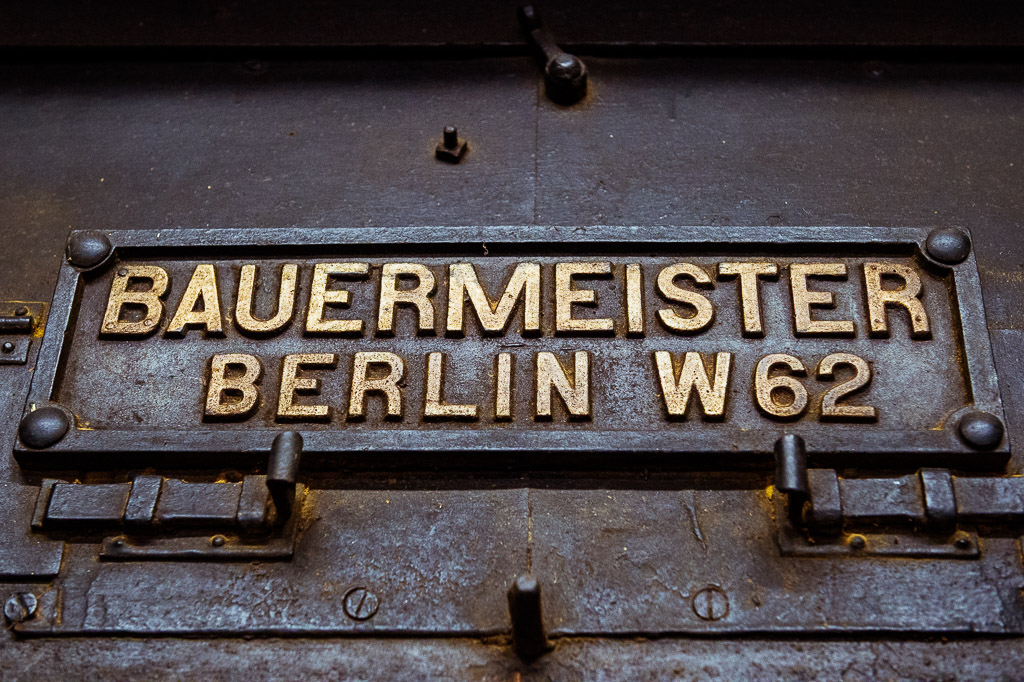
In the past, the huge oven was fired using wood. Today, the temperature can be better regulated using gas. With its large drawers, labelled according to region of origin, it takes up an entire room. Seeds for forestry purposes were not only harvested and strictly separated by region of origin, but much of the process is regulated by law under the Forest Reproductive Material Act (Forstvermehrungsgutgesetz). Around 16 kilogrammes of seeds can be extracted from one tonne of pine cones, whilst one kilogramme of spruce seeds can produce up to 50,000 seedlings.
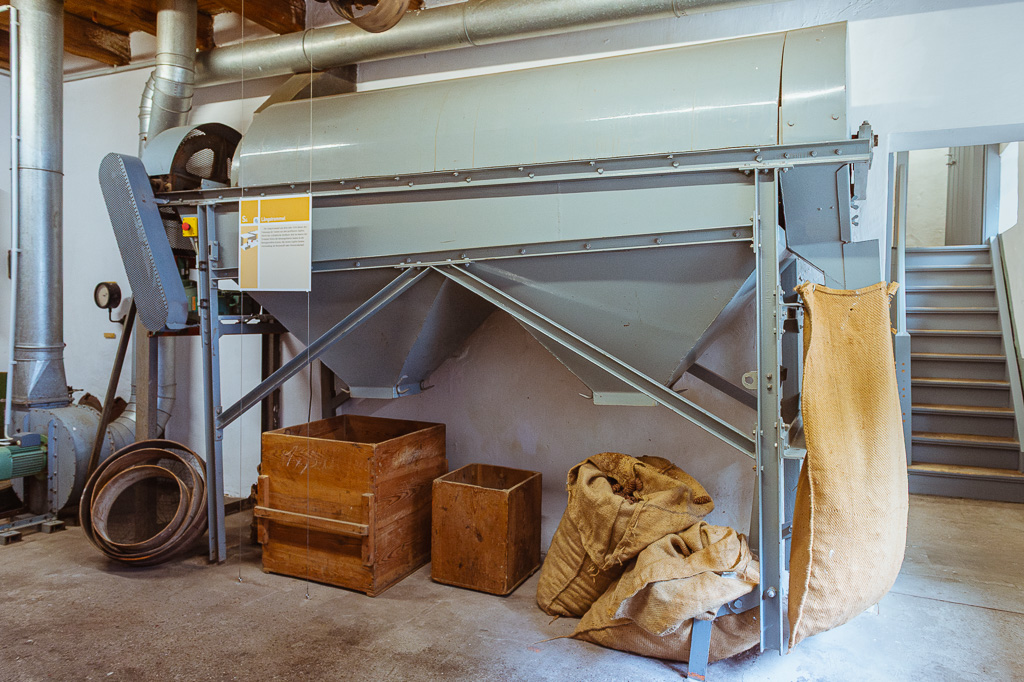
Before the drying process, the cones had to be opened, the seed wings removed, and the seeds sorted and cleaned.
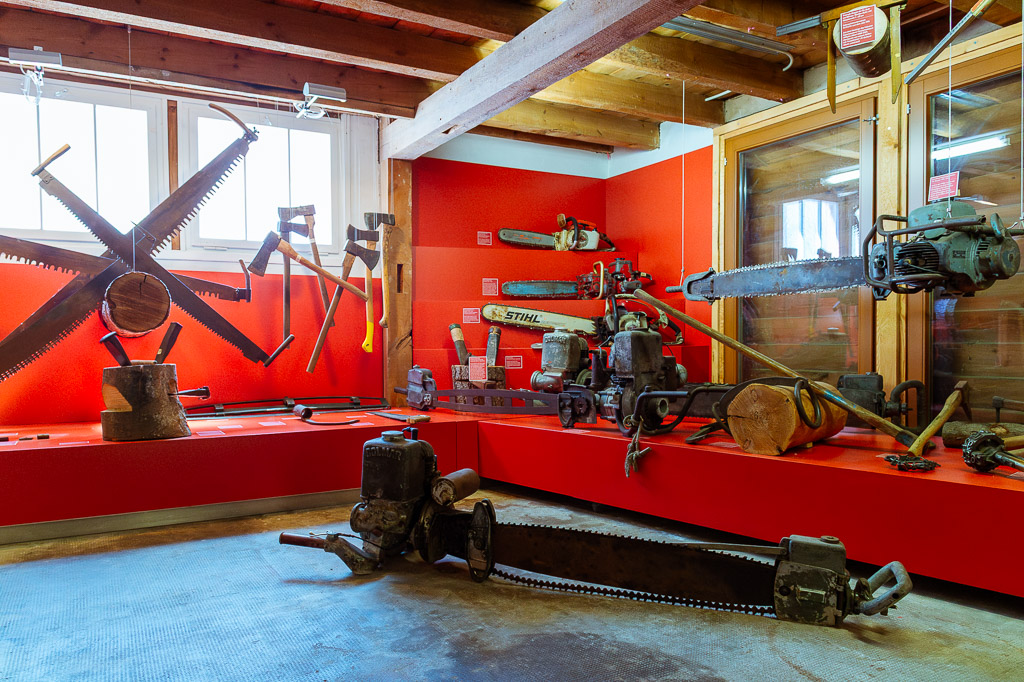
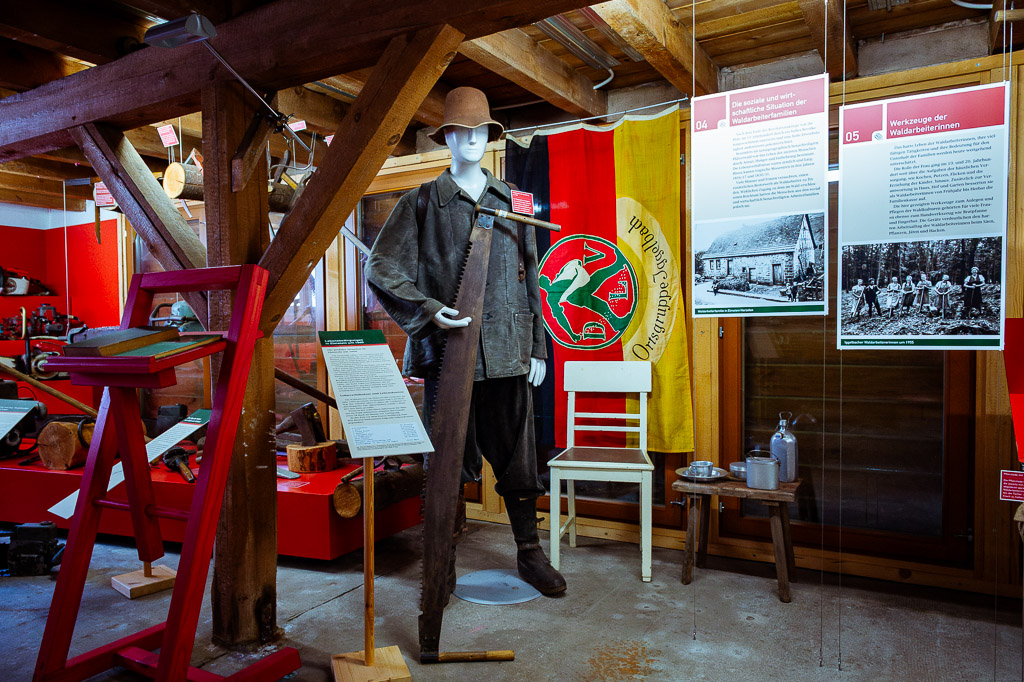
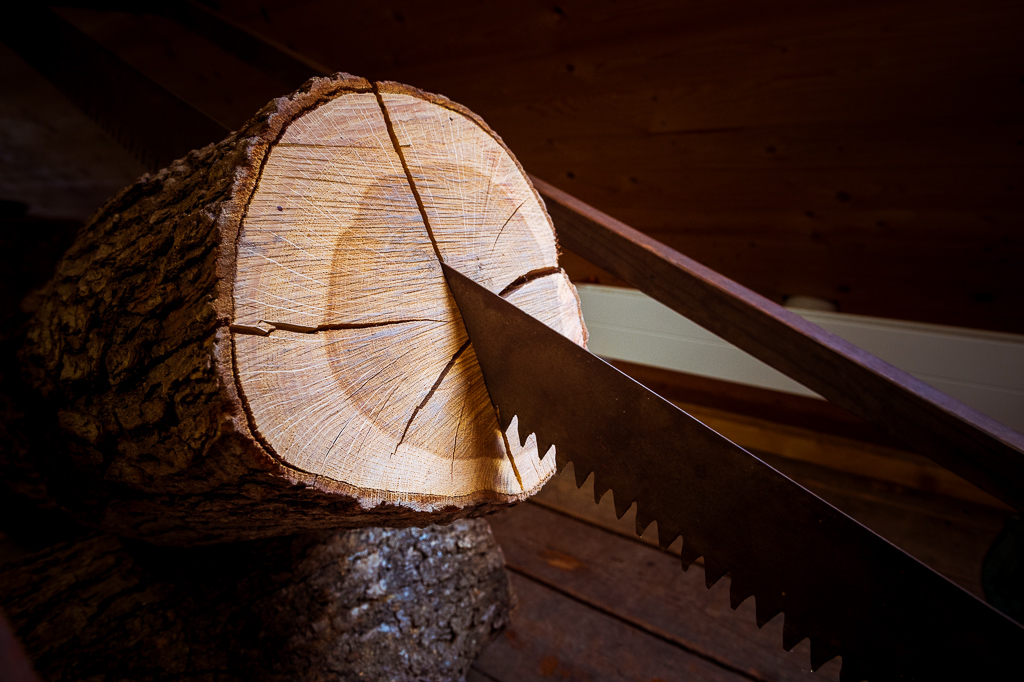
A lucrative business, at least in terms of volume. The Museum of Forestry and Forest Work, however, also shows just how dangerous forestry work used to be. This becomes tangible when you watch adventurous contraptions such as a motorised climbing saw or various chainsaws, some of which were enormously heavy and long. A life-size mannequin wears the work clothes typical of the time, consisting of sturdy boots, coarse clothing and a leather cap. “This was almost professional,” remarks Burkhard. “Most people used to work in their worn-out Sunday best.” Protective equipment and the ban on alcohol whilst working were only introduced much later.
The Museum of Forestry and Forest Work, however, also shows just how dangerous forestry work used to be.
In the past, foresters often acted as police officers. “Timber and forest theft were common in the 19th century; people lived in extreme poverty.” Sometimes about 20 per cent of the population had been reported to the authorities. “These were cases of theft due to poverty. Accordingly, foresters were pretty unpopular.” After all, they defended the forest while they lived under completely different conditions. The documentary explores this through the forest lodges in Elmstein and the magnificent uniform of a forester from the Nazi era. Burkhard knows much of this from his own experience. “As an intern, I had to prune trees with a climbing saw. That wasn’t pleasant,” he recalls. He also used to make use of the old calculating machine from the 1970s himself. Or of devices for marking timber, which were used to keep track of the quantities sold.
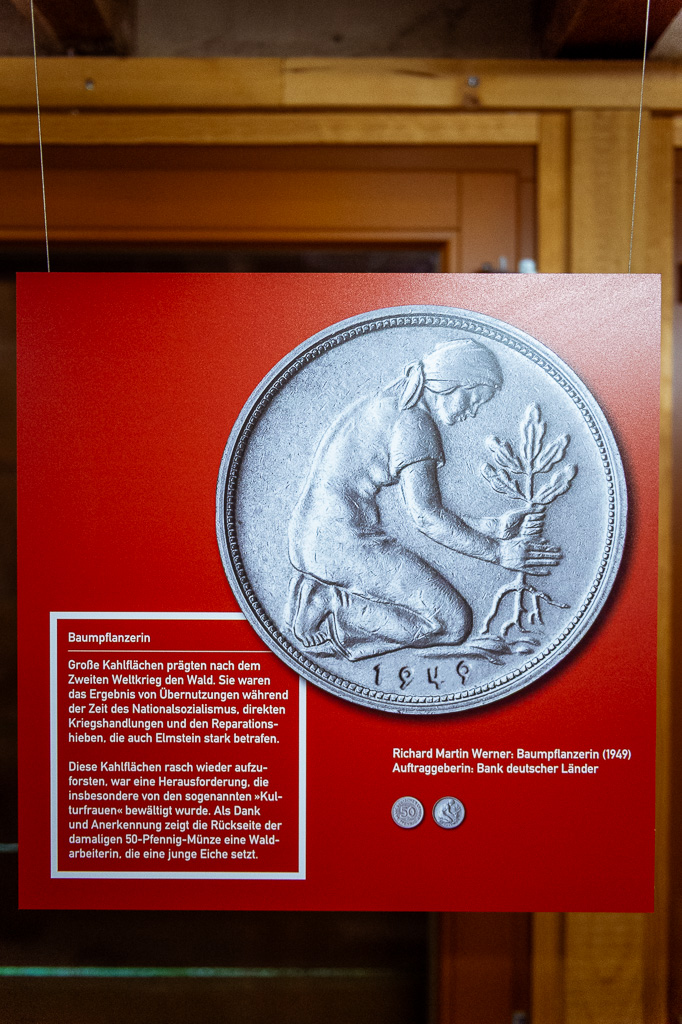
Life for forest workers’ families was hard, including for the Kulturfrauen—women who worked in the forest, entrusted with simpler tasks, such as planting or light tree maintenance. During and after both world wars, they were mostly left to fend for themselves. They often worked on a piecework basis and had to provide for their families at the same time. For this reason, the 50-pfennig coin was dedicated to them—as this was often their average hourly wage.
For a long time, the Samenklenge in Elmstein was one of eight state-run institutions of its kind throughout Germany. It was closed down in 2006, with operations relocated to Antonihof in Trippstadt. Its historic building was renovated and fitted out according to a concept devised by the museum’s director, Lina Turner, who has since passed away. Today, the sun-drenched forecourt invites visitors to linger on wooden benches beneath a large tree and offers a direct view of the former Triftamt, the timber rafting authority; a well-maintained half-timbered house that is privately owned. You can still explore the old timber-rafting routes. A footpath runs alongside them. But what exactly did Trift mean? On the upper floor of the museum, you can learn more about transporting timber by water. All the streams in and around Elmstein were used on the route towards the Rhine. A large sledge loaded with vast quantities of short timber demonstrates just how dangerous sledge transporting was. “Many serious accidents happened during this process, too.”
Lina Turner helped set up the museum in Elmstein. Her presence can still be felt.
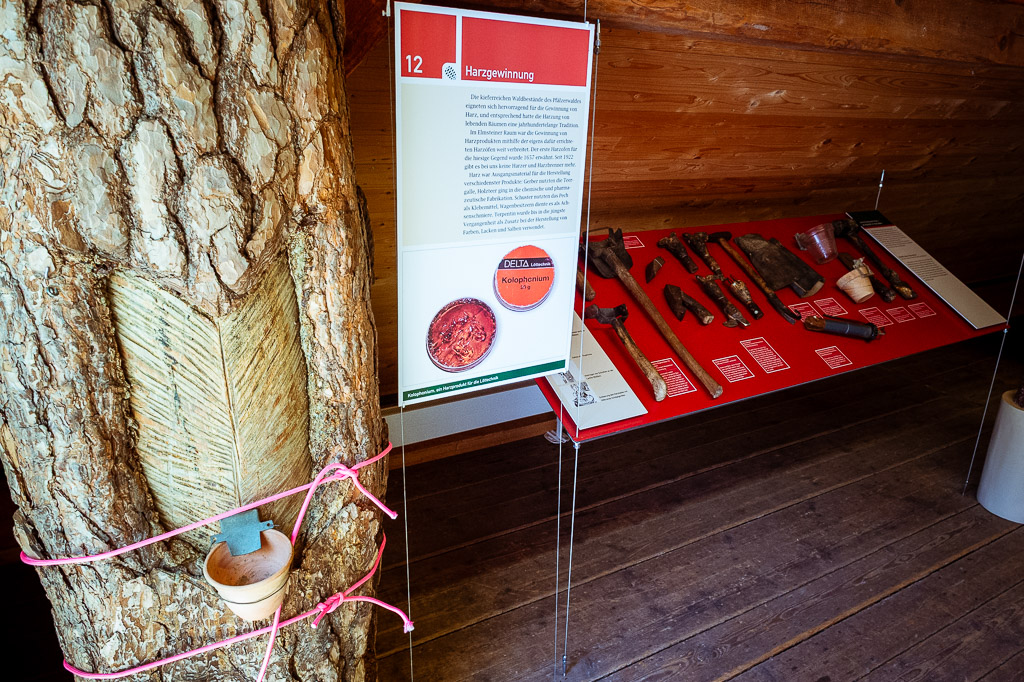
The top floor opens up secondary uses of the forest. Among other things, it displays the forbidden blueberry combs or tinder fungi, which were set alight and used to smoke out insects. The exhibition also explains how resin was extracted and potash boiled down to produce glass, soap or fertiliser. But it also explores how the forest is changing. An educational film on forestry covering a period from 1950 to the present day features many eyewitness accounts and touches on new techniques and climate change.
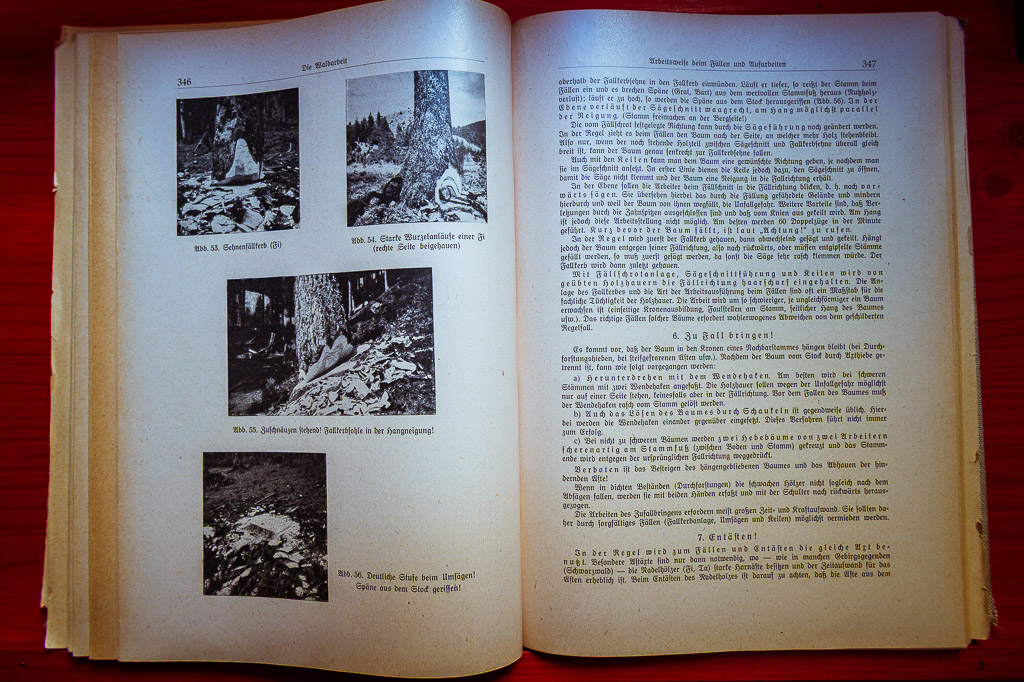
Visually, too, the museum is well worth a visit, with its many bright windows and wooden floors. The exhibits are displayed on attractive, bright-red exhibition areas and explained with panels utilising clear visual aids and informational text. There are many original photographs on display, along with old textbooks, standard works on forestry and a reprint of a classic piece dating from 1713: Sylvicultura Oeconomica by Hannß Carl von Carlovitz. “With this, he established the concept of sustainability—something we foresters are very proud of.”
Old textbooks and standard works show forestry through the ages.
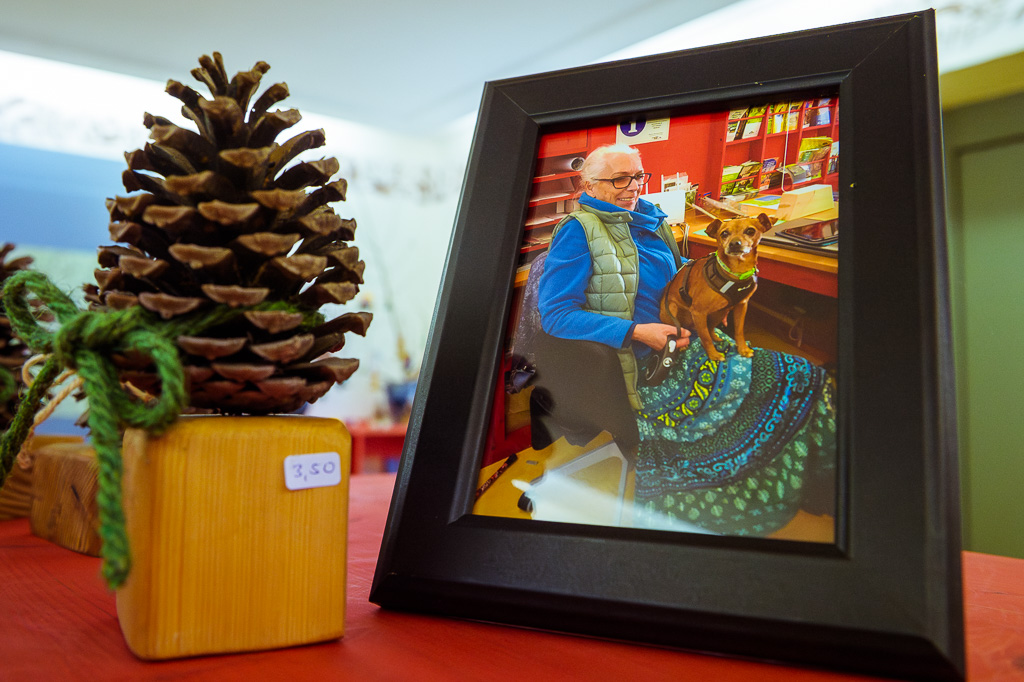
Upon entering the museum building, your gaze is drawn to a replica of a flint axe discovered in 1969. “It is believed that the forest around Elmstein was already being used for forestry some 5,000 years ago,” says Burkhard, who takes turns leading the guided tours with his colleague Kirstin Graichen. Both work for the museum on a voluntary basis and with great dedication. The furniture in the entrance area, painted a striking bright-red, is particularly eye-catching: next to the ticket office is a small shop for handicrafts as well as books about Elmstein or the history of forestry. Of course, decorative items made from dried pine cones are a must. Wreaths adorn the museum’s beautiful wooden doors with their sandstone door frames.
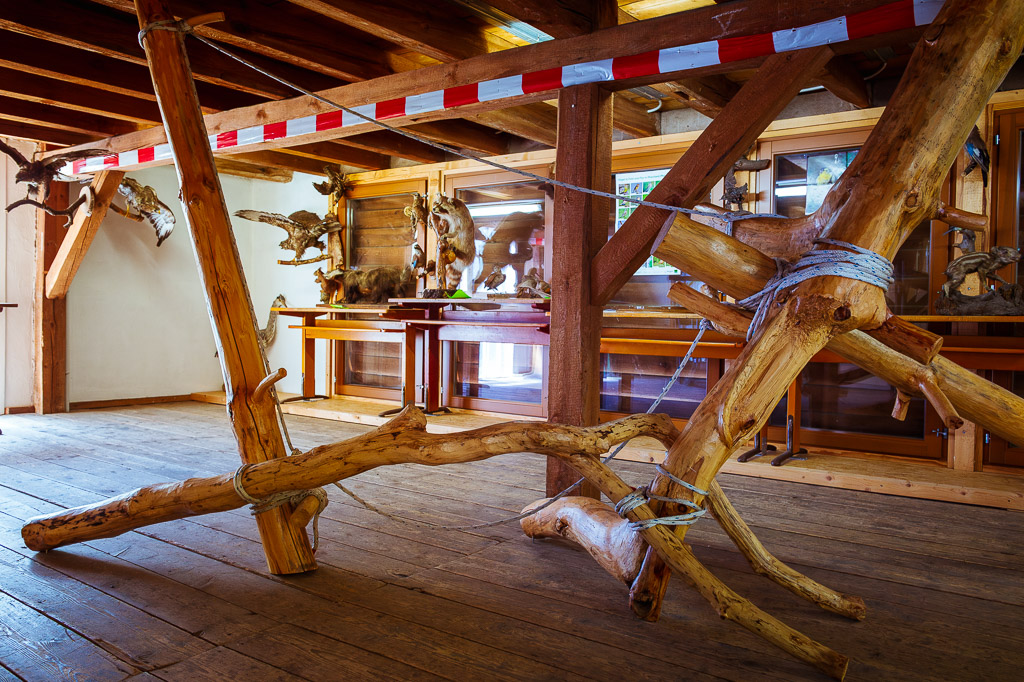
A tree to swing from—climbing is welcome in the children’s museum.
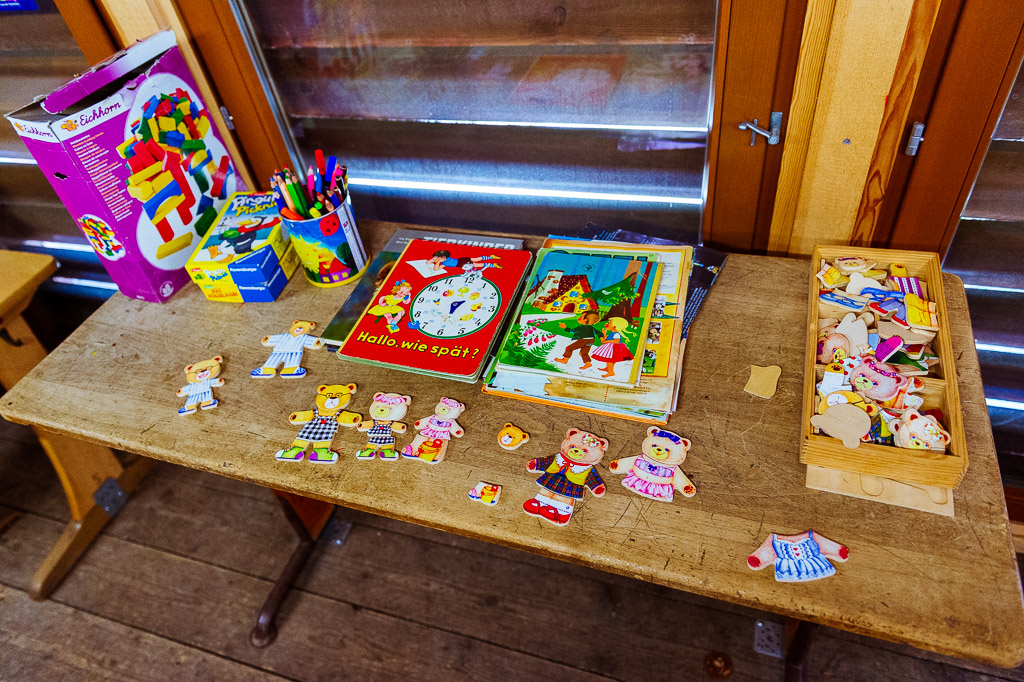
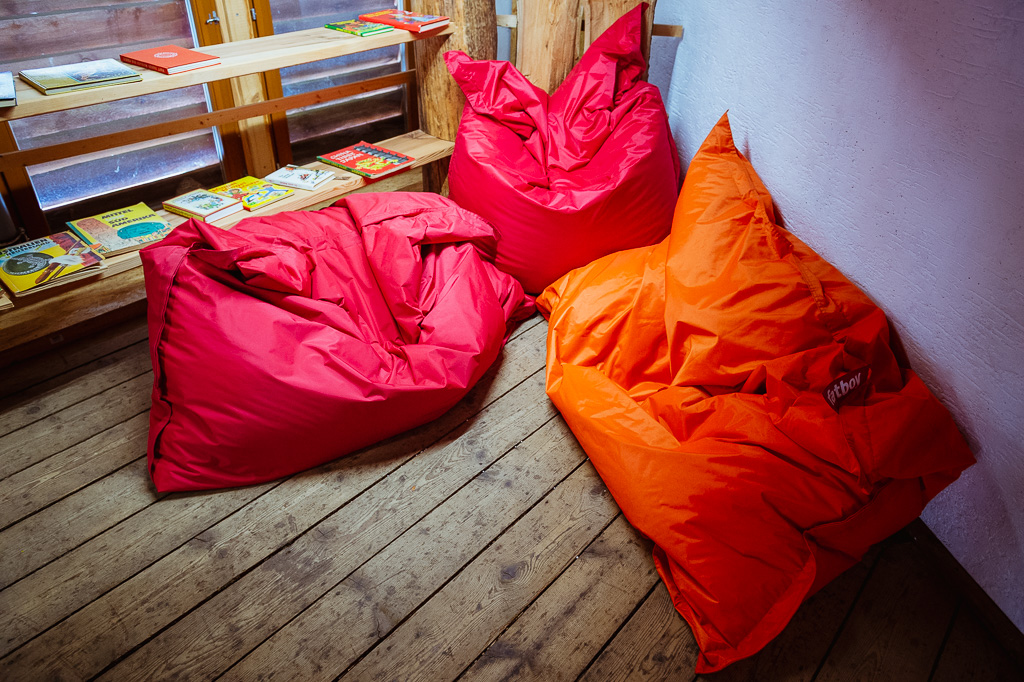
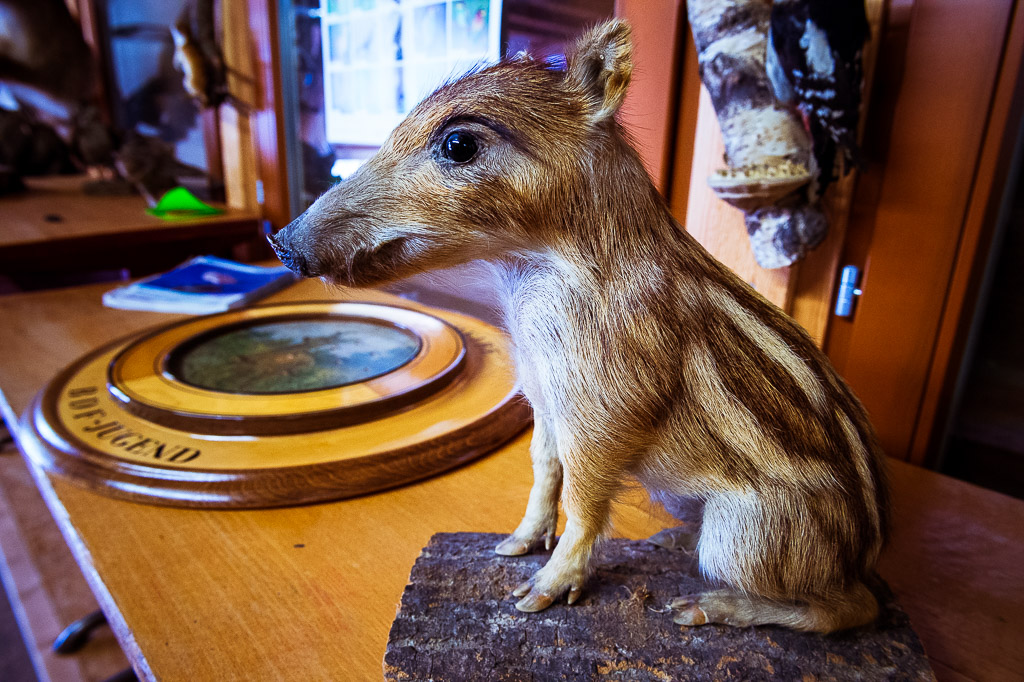
The children’s museum on the mezzanine level is a large, elongated, bright room with wooden floors and wood-panelled walls. Here you’ll find a replica charcoal burner’s hut, a large wooden sledge and a sensory box. The stuffed forest animals are particularly interesting: cute raccoons, badgers, tawny owls, impressive birds of prey, a small wild boar and a tiny weasel are depicted in their natural poses and can be viewed in detail. The aim is to engage all the senses. Anyone who fancies it can swing across a horizontal climbing tree, do crafts and paint at old school desks, or simply retreat to the book corner with its beanbags.
Tips for excursions and interesting stories about the Rhine-Neckar region can be found regularly in our newsletter.
And this is how it works: Enter your email address in the field and click subscribe. You will then receive an automatically generated message at the email address you entered, which you only need to confirm. Done!