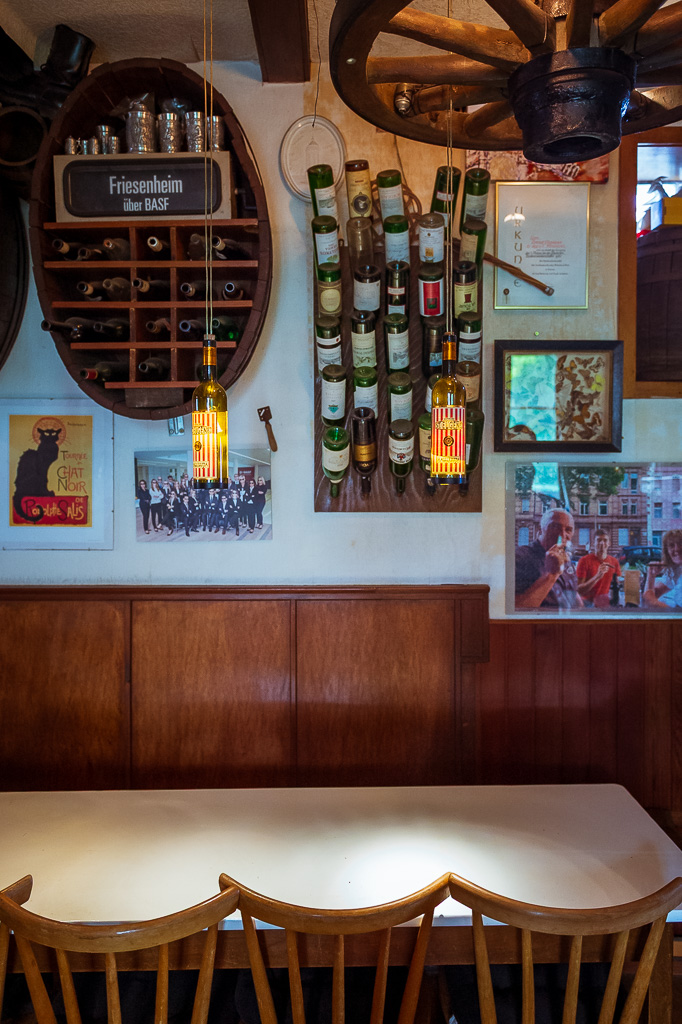
Once a year, the oldest pub in Ludwigshafen, which has been around even longer than BASF, comes back to life. The Enzenauer family opens up its quaint public room for a good cause just in time for the annual Kerwe fair.
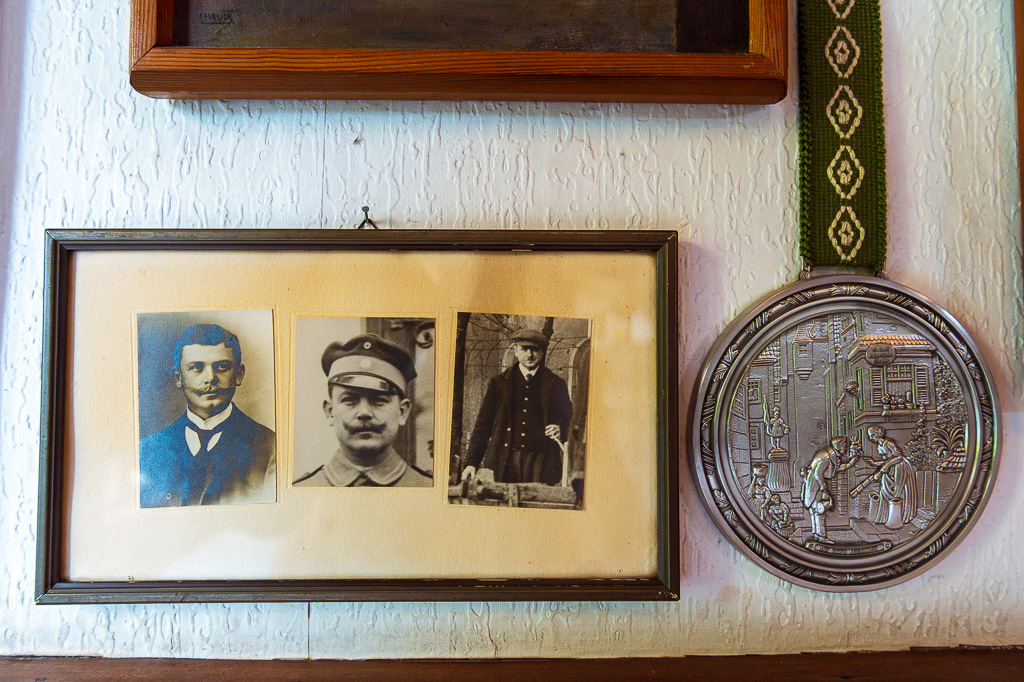
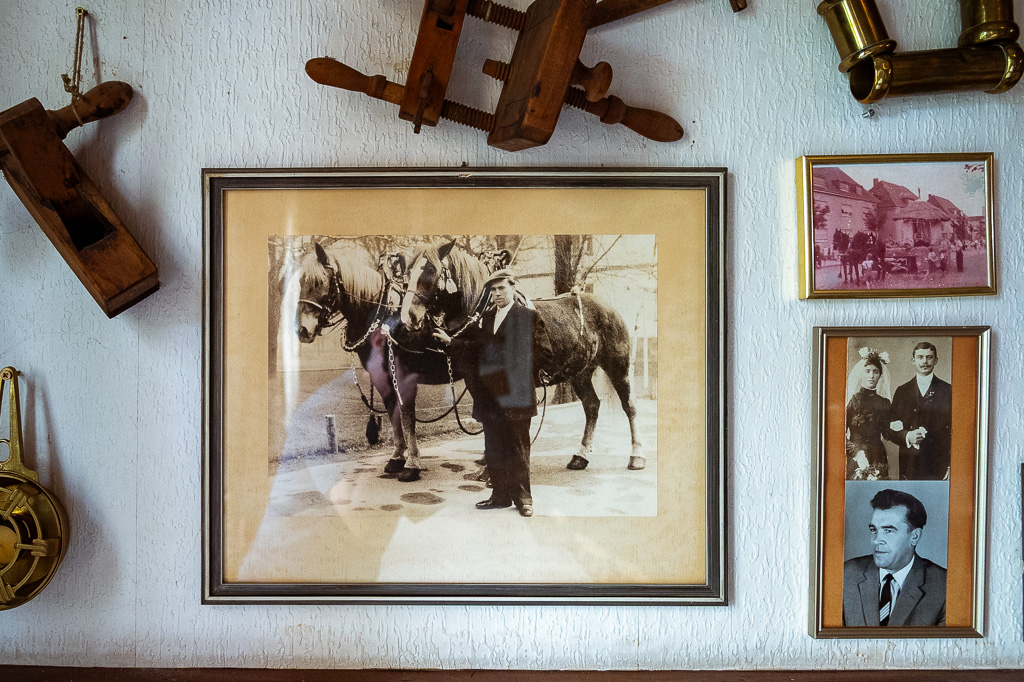
It is still shimmering softly in the former taproom of the Ludwigshafen pub “Schwarze Katz”, meaning “Black Cat”: the old horse’s harness. It hangs on the wall with its shiny, polished metal ornaments. Right next to it, there are two portraits. Of horses, mind you. And these two must have been very special—if only because they were the last ones the Enzenauer family owned. And sent to the last festive parade of the Kerwe fair. Adorned with the beautiful horse’s harness used for the parish fair day of the year 1905.
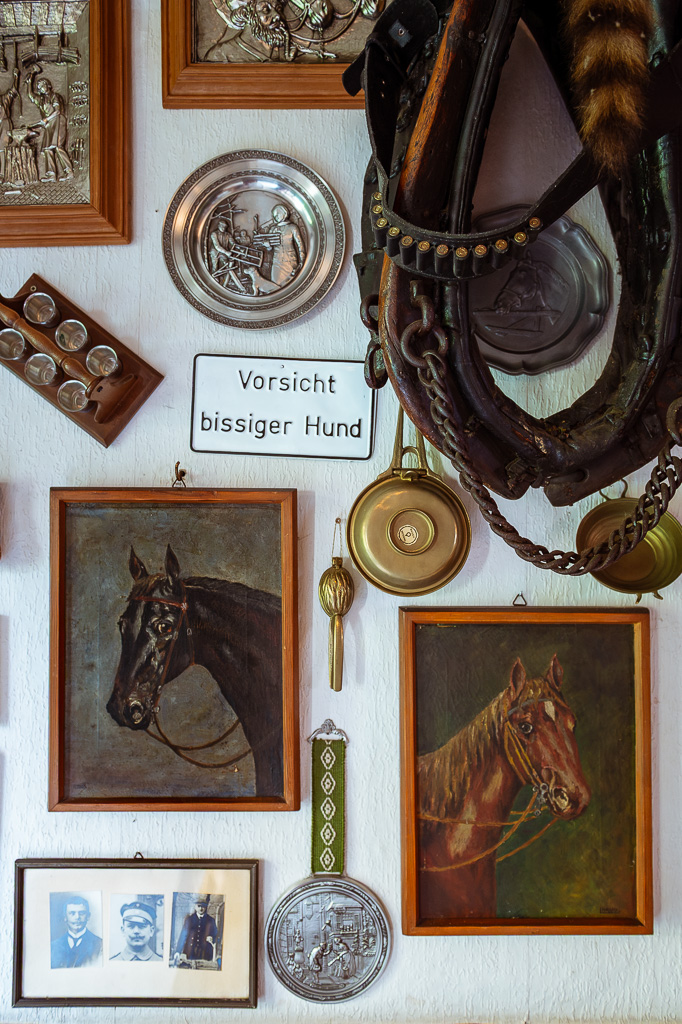
“My father owned a transport company,” Thomas Enzenauer says. And before Alois Enzenauer drove around Ludwigshafen with his trucks to supply the booming industrial city with gravel or sand, his two horses had served him faithfully. In the old pub that his son Thomas Enzenauer opens for a good cause once a year at the time of the Kerwe fair, you can still see them: such keepsakes of the family—that are also part of the history of Ludwigshafen, for that matter.
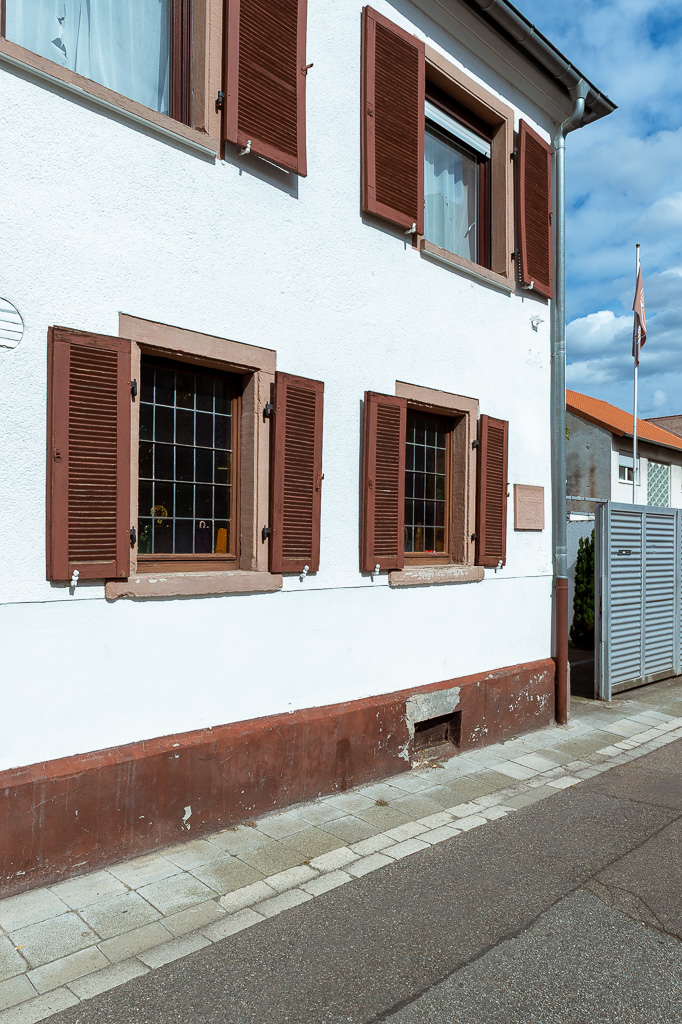
The “Schwarze Katz” was founded in 1864—you can still see the number of the year above the door with its beautiful sandstone lintel. And the fact that three fairly high steps lead up to it was by no means a coincidence—the area between Frankenthal and Oggersheim had already seen some nasty floods that could be prevented only after the rectification of the Rhine. The new pub was built correspondingly high. “Friesenheim was still a farming village when the public house opened,” Thomas recounts—the name of the street where the old pub is situated, Bauernwiesenstraße, literally meaning “farmer’s meadow road”, is still a reminder of that. So, it was the rural population that in the beginning had a beer there in the “Katz” after work—before, just one year later, the Baden Aniline and Soda Factory (BASF) began operations only a few hundred metres away. And grew into a global corporation.

As late as in 1859, the back then Bavarian Ludwigshafen had been granted city rights by King Maximilian II. Only a few years later, BASF had already increased its number of workers from initially 30 to more than 10,000 in 1914. And with this increase, the popularity of the “Katz” grew as well. “At times, Friesenheim was like a real Bermuda Triangle with countless bars,” Thomas reports. Born in 1961, he had worked in BASF’s finance department himself for a long time. He still remembers a historic photo from there very well: Countless women could be seen in it, as he reports, who had been waiting for their husbands in front of BASF’s factory gate—in order to take the pay packets from them straight away, so their earnings wouldn’t end up in the till of one of the bars.