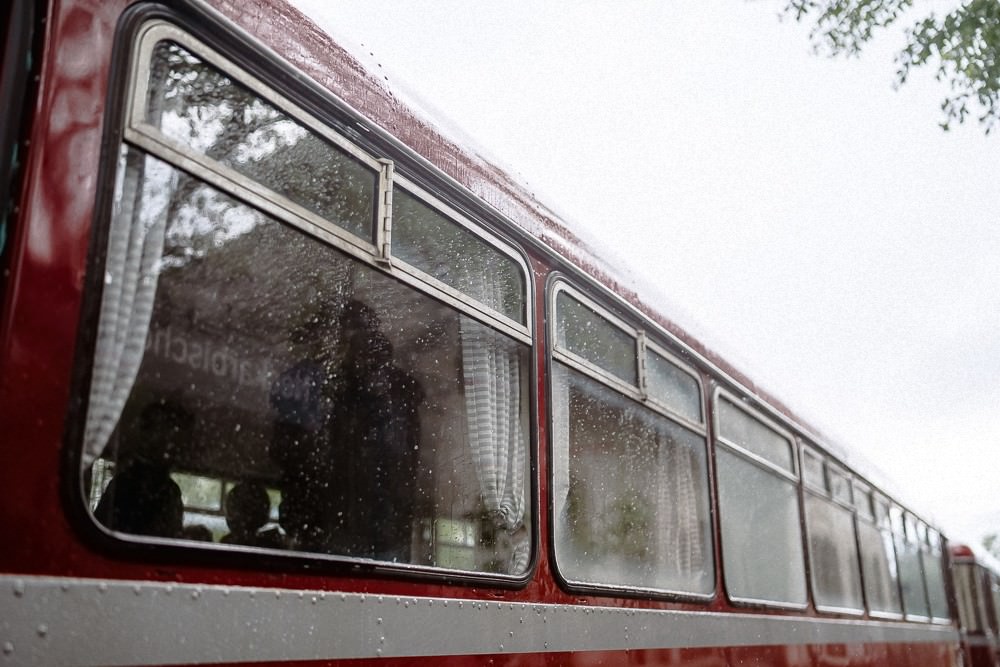
From May to early October, a historic railbus runs from Neckarbischofsheim through the picturesque Krebsbachtal valley. What sounds like railway nostalgia has a forward-looking purpose. With these sightseeing trips, the Krebsbachtalbahn Support Association keeps the branch line operational, so that regular trains can run along it one day again.
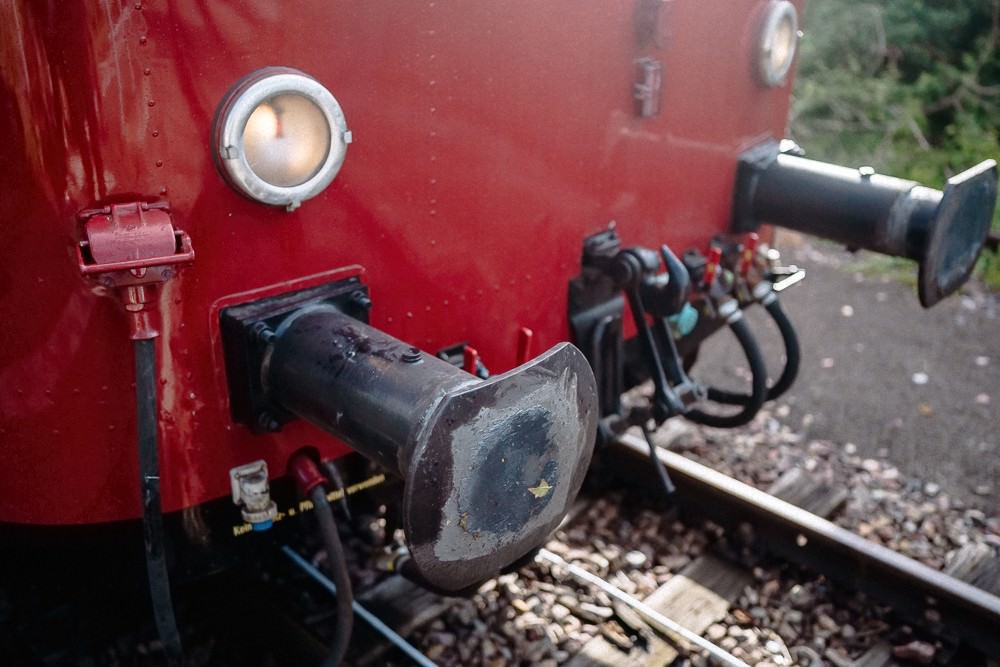
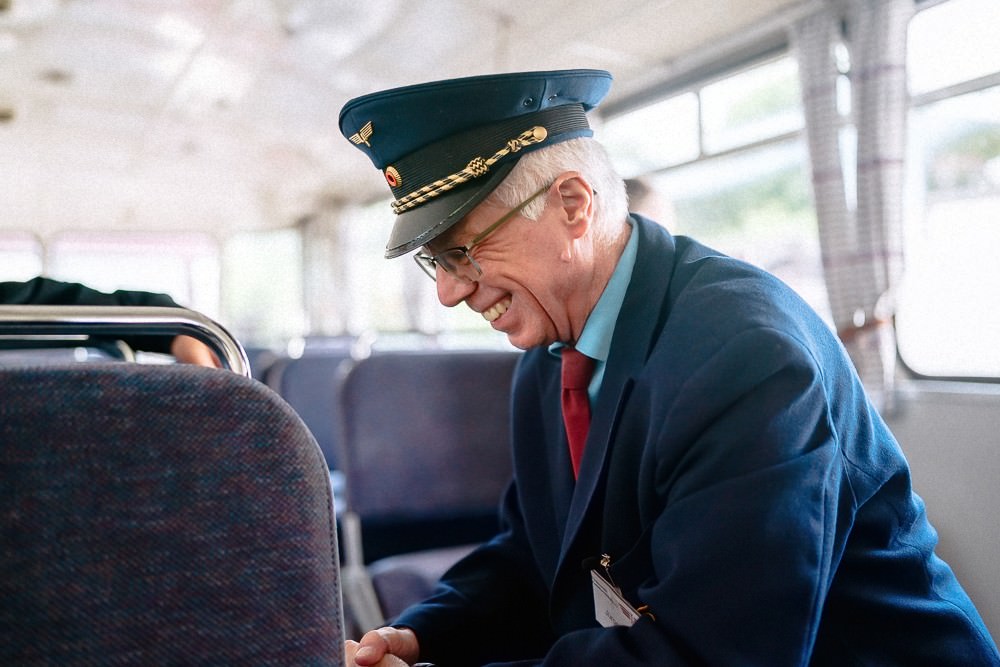
The railbus rolls in at a leisurely pace. A bright red speck that slowly grows larger against a backdrop of green trees and a blue sky. Jürgen Heß is already waiting for it, dressed in full train attendant’s uniform, with the colour well coordinated. He is wearing black trousers and a dark blue jacket, with a red tie and a conductor’s cap featuring a golden propeller, the symbol of the railway. A scene that could easily grace a postcard from the 1960s. It appears like a brief journey back to the era of the economic miracle, from which the Uerdingen railbus originates. Now it rolls into Neckarbischofsheim Nord station.

Mit dem Laden des Videos akzeptieren Sie die Datenschutzerklärung von YouTube. Mehr erfahren
All aboard, please! Join us on our video journey through the Krebsbachtal valley.
The railbus lets out a long, shrill whistle, then its doors clatter open. Jürgen gets on and with him the passengers: a few families with young children, a father and his son, and a couple of elderly gentlemen. Most of them are taking the trip for a rail excursion through the Krebsbachtal valley. But there is also a young man from Untergimpern who is making the most of the fact that a train is running to his home village today. The Krebsbachtalbahn railbus is visually distinctive, it is nonetheless a perfectly regular DB Regio service, operating under the designation RB 79. No one needs to buy a special ticket for the journey. You can board it with a ticket acquired from the Verkehrsverbunds Rhein-Neckar transport association or with a Deutschlandticket. You just need to be on time, as the Krebsbachtalbahn is integrated into the region’s regular timetable.
The RB 79 may be a special train, but passengers don’t need a special ticket.
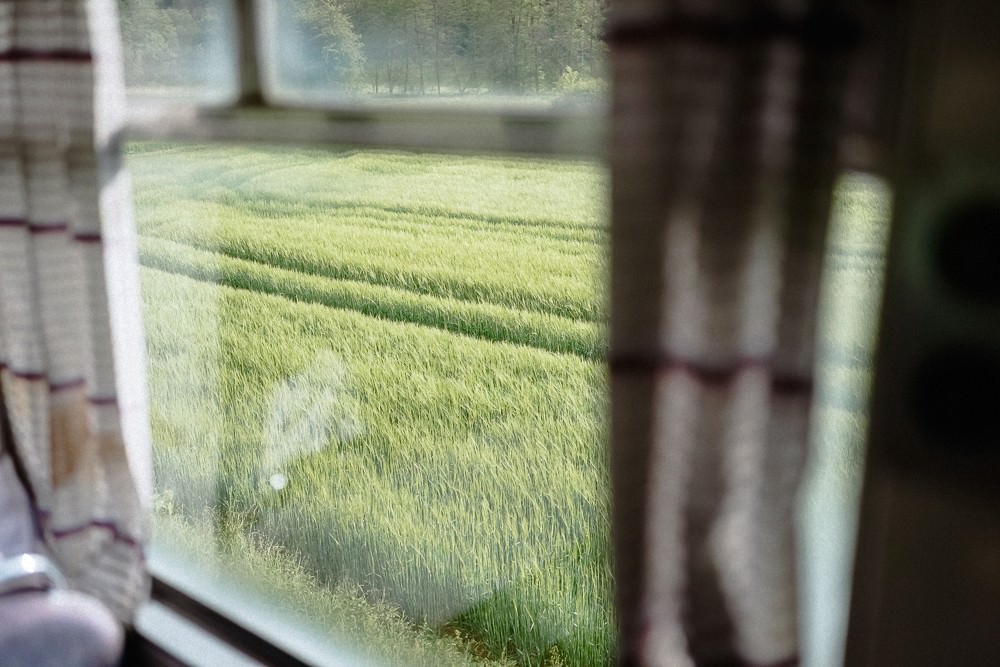
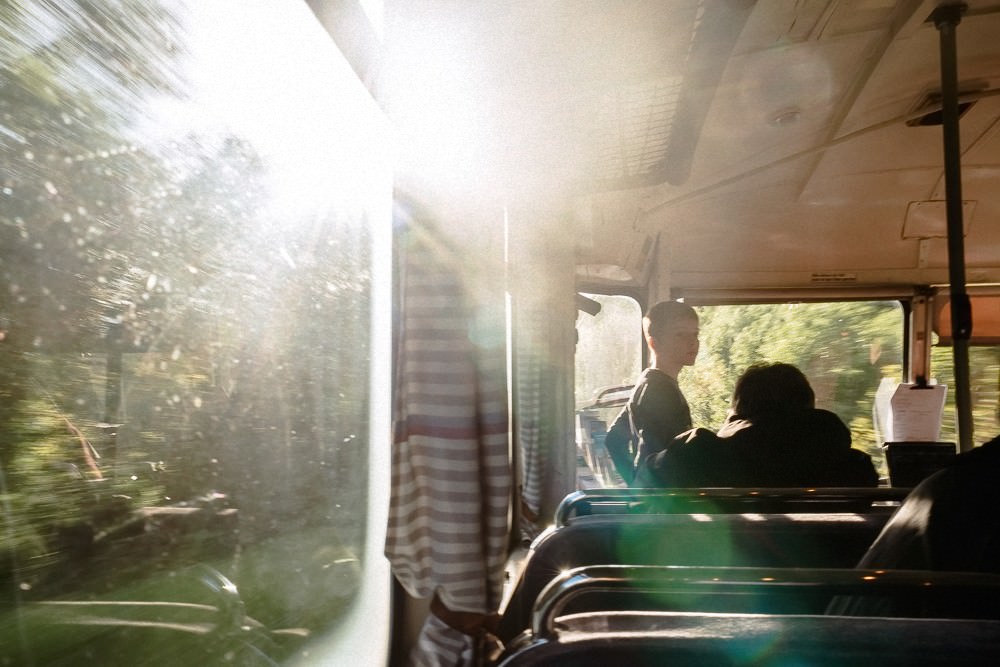
It whistles once more, then sets off. It rattles and clatters, jolts and lurches, clinks and clatters. The only thing it doesn’t do is puff and smoke like James Krüss’s famous “Henriette Bimmelbahn”. Instead, it chugs its way through the rolling countryside of the Krebsbachtal valley, which glides past behind blue-and-white striped curtains. The tourist train has been running through the valley since 2010, a good year after regular services on the line were discontinued. “It was considered unprofitable,” Jürgen explains. But they didn’t want to give up on the branch line entirely. “So it was decided to set up a leisure service so that the tracks would continue to be used and the line maintained.”
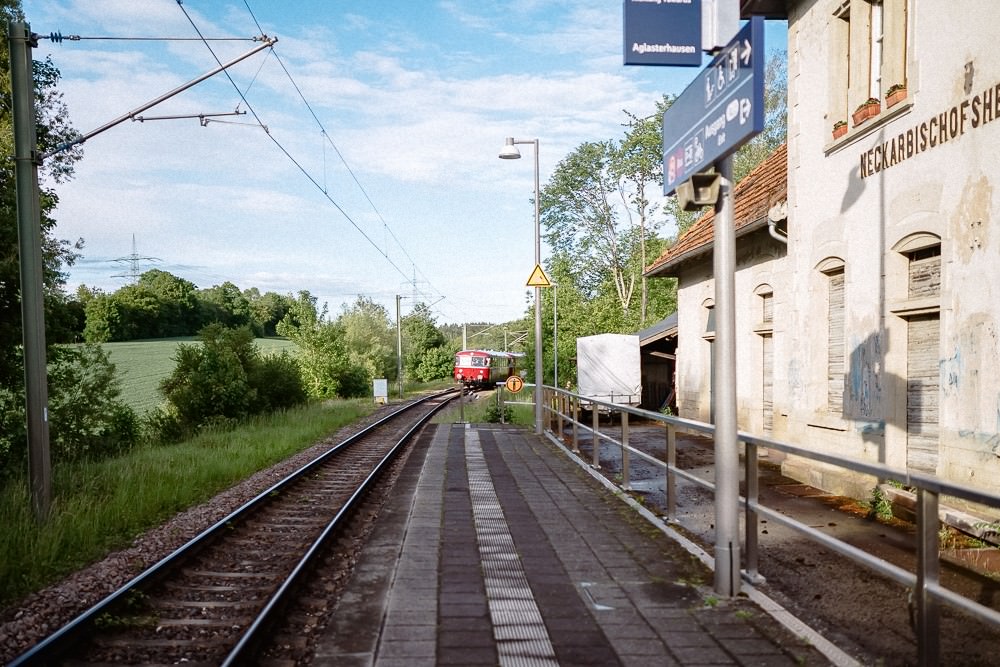
Departure from Neckarbischofsheim Nord.
The railbus sets off for the Krebsbachtalbahn from here.
The journey is also a special one for the train drivers…
… requiring an extra test from them.
Past fields and woods…
… the railbus heads to Hüffenhardt, where it changes direction.
Jürgen Heß chatting with passengers.
The first trip of the season traditionally takes place on Easter Monday, featuring an egg hunt and puppet theatre. The second trip, on the last Saturday in April, runs through the Krebsbachtal valley to Mannheim, just in time for the start of the Maimarkt event. From May until early October, it then runs every Sunday and public holiday, covering the 17-kilometre route from Neckarbischofsheim Nord to Hüffenhardt and back a number of times a day. On every third Wednesday and last Saturday of the month, it also runs to and from Mannheim.
Travelling on a railbus is a real treat,
Passenger Christian Schürholz
The railbus has reached Siegelsbach and is heading into the woods. “A fox!”, a girl shouts out excitedly. Her brother disagrees. “That was much bigger. A deer!” Jürgen hands the ten-year-old his set of keys. Proudly, the boy gets off the train with him, opens a box and activates the signals for the next level crossing. Jürgen accompanies the journeys as a volunteer train attendant several times a month. He is a founding member of the Krebsbachtalbahn Support Association. And he draws up the timetables.
Young assistants—on sightseeing trips, children are even allowed to switch on the signals.
Jürgen lives in Meckesheim and works at the municipal data centre in Heidelberg as a technical trainer. When he began his career in the 1980s with the City of Heidelberg, he commuted by train from Meckesheim to Heidelberg every day. “I always wondered why we stopped for so long in Neckargemünd and thought it must be possible to improve the timing.” He wrote to the railway company, got into conversation with those in charge and helped optimise the timetables for the service through the Elsenztal valley. Since 1991, he has been involved with Verkehrsforum 2000, a citizens’ initiative campaigning for improvements to local public transport in the Elsenztal and Schwarzbachtal valleys, which succeeded in the 2000s in having the line between Aglasterhausen and Meckesheim electrified and integrated into the S-Bahn network. “At that time, however, we had to do without the line through the Krebsbachtal valley to Hüffenhardt,” Jürgen explains.
Yet he hasn’t given up hope that regular trains will run here again one day. There are discussions about reactivating the line. It is also set to be electrified and connected to the Elsenztalbahn service via a new route from Obergimpern. But the talks are dragging on—hardly surprising for a line involving five towns and parishes, three districts, two transport associations, DB Regio as the operator and the Albtal-Verkehrs-Gesellschaft as the owner. “Sometimes one party pushes and the other puts the brakes on. Then it’s the other way round,” says Jürgen. He expects the first train to run again, taking children from the villages in the valley to school, in 2035 at the earliest.
Jürgen Heß hopes that regular trains will run through the Krebsbachtal valley again one day.
Of course, this won’t be in a smart red railbus, which requires the driver to haven a special driving test; something Alexander Schlott is currently preparing for. Whilst the duties of train attendants and the track maintenance are handled by the volunteer members of the Support Association, the train drivers are employed by DB Regio. “Once in a while, colleagues talk about who fancies driving on this line. There are actually always enough volunteers,” says Robin Hoffmann, who has been driving the Krebsbachtalbahn for two years and is showing Alexander the ropes today. Suddenly, the railbus jolts and comes to a halt, right in the middle of the track. Robin grins. “That happens quite often at the start. In modern trains, we have to keep stepping away from the safety control switch—to check that we’re still there and conscious. And when you do that on an old train like this, it can happen that it just stops.”
A ride on the Krebsbachtalbahn offers views and insights.
It’s also special that the passenger area and the driver’s cab aren’t separated. “And the passengers are always happy to ask questions,” says Robin. “You’ve got to like that.” He himself enjoys the change of pace and loves chugging through the Krebsbachtal valley on rails. Behind him, Jürgen is talking shop with Christian Schürholz, who has travelled all the way from Geislingen with his father specifically to ride the Krebsbachtalbahn. “Because travelling on a railbus is a real treat,” says the young man. He is actually involved in efforts back home to reactivate an old railway line, the Teckbahn to Weilheim.
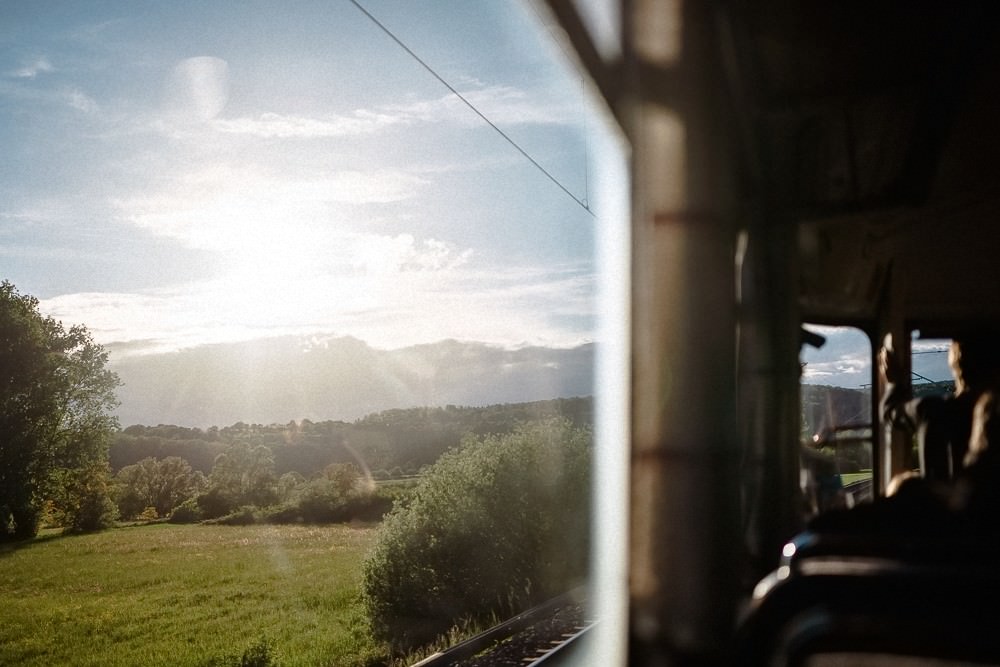
Evening atmosphere over the Krebsbachtal valley—particularly beautiful when watched through panoramic windows.
The railbus has changed direction in Hüffenhardt and is pulling into Neckarbischofsheim station again. It is the last journey of the bank holiday, ending only in Mannheim; but to get there, the Krebsbachtalbahn first has to shunt a little and switch onto the S-Bahn tracks. Then it continues on to Neckargemünd, riding along the Neckartal valley via Heidelberg to Mannheim. At every station, the red railbus is met with astonished stares. At first confused, then delighted that this is indeed the train shown on the display. So: the next time the timetable shows the RB 79, be sure to hop on!
Tips for excursions and interesting stories about the Rhine-Neckar region can be found regularly in our newsletter.
And this is how it works: Enter your email address in the field and click subscribe. You will then receive an automatically generated message at the email address you entered, which you only need to confirm. Done!