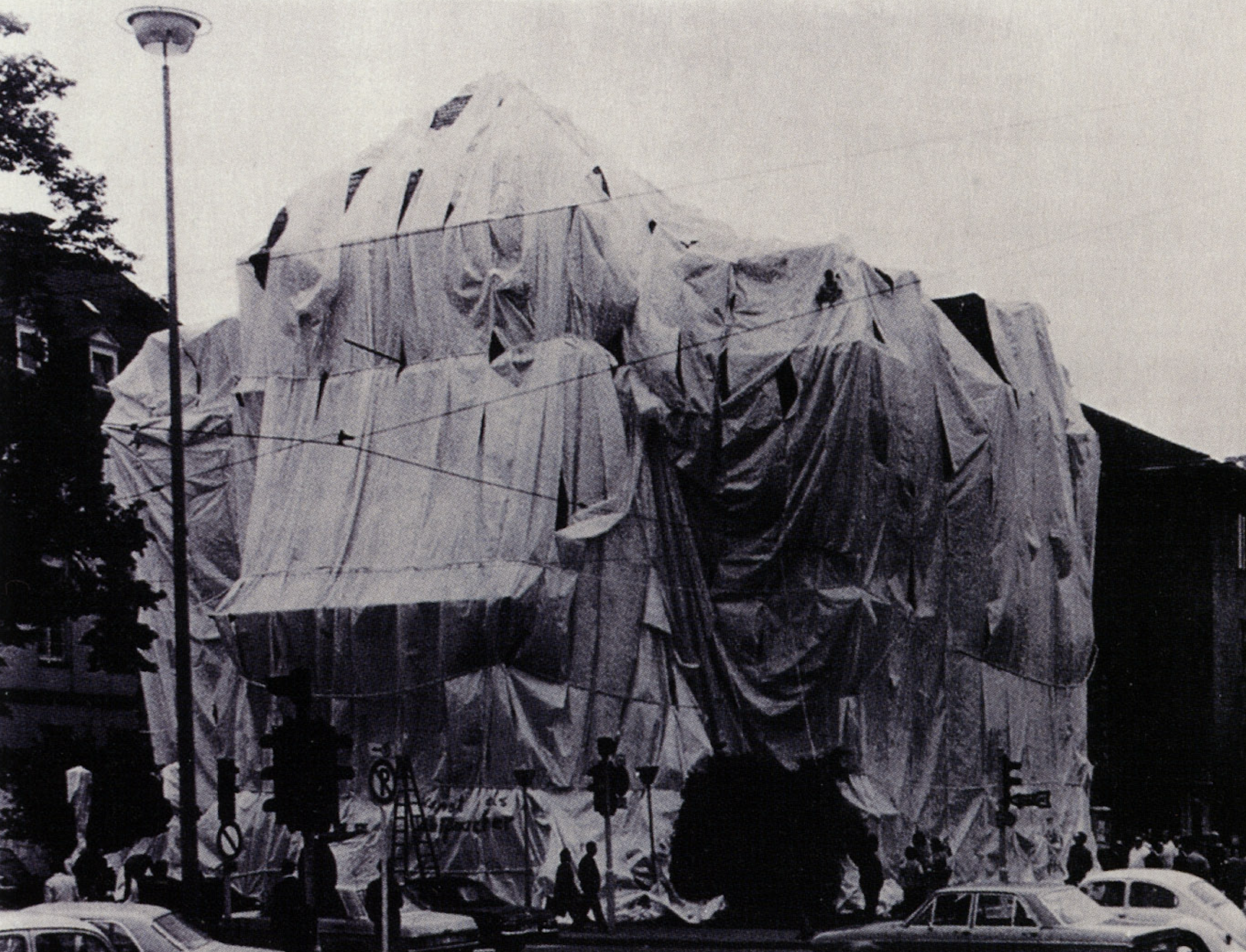
The German-American Institute in Heidelberg (DAI) has been a place for international exchange, debate and art for decades with Christo’s first major wrapping project in 1969 being a remarkable example of that. Founded in 1946, the institute was intended to bring values of the Western world to former Nazi Germany. Today, discussions on the survival of democracy—and on the state of the world—take place in the DAI House of Culture.
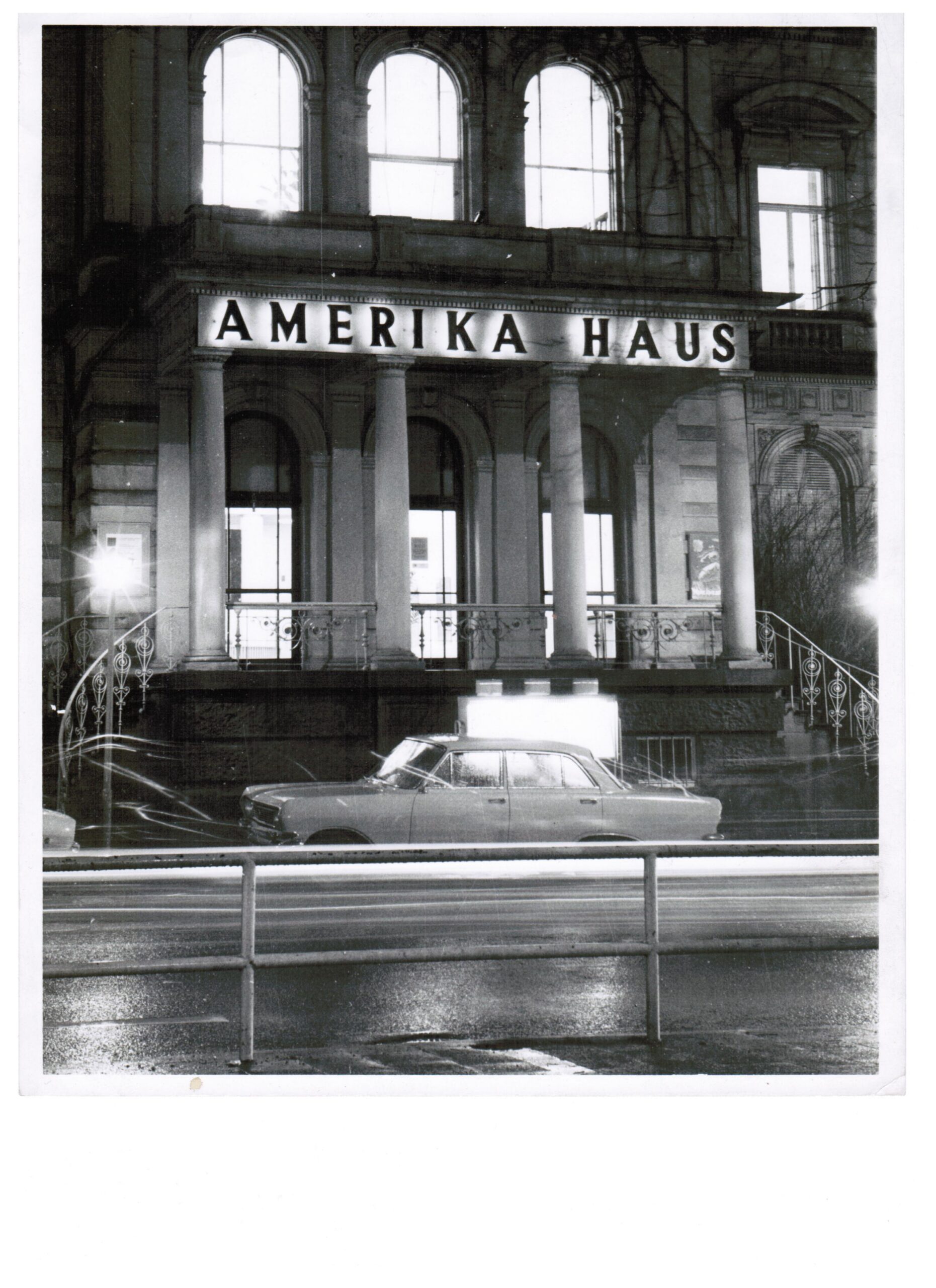
Wrap up Heidelberg Castle? No way! When Christo submitted a request to Heidelberg’s local council in May 1969 asking if he could wrap the bell tower of the venerable building in fabric, the answer was quickly clear. The building was dilapidated and must not even be touched, the city authorities ruled. Let alone wrap it up! So the then completely unknown artist promptly sought out another location: the German-American Institute (DAI).
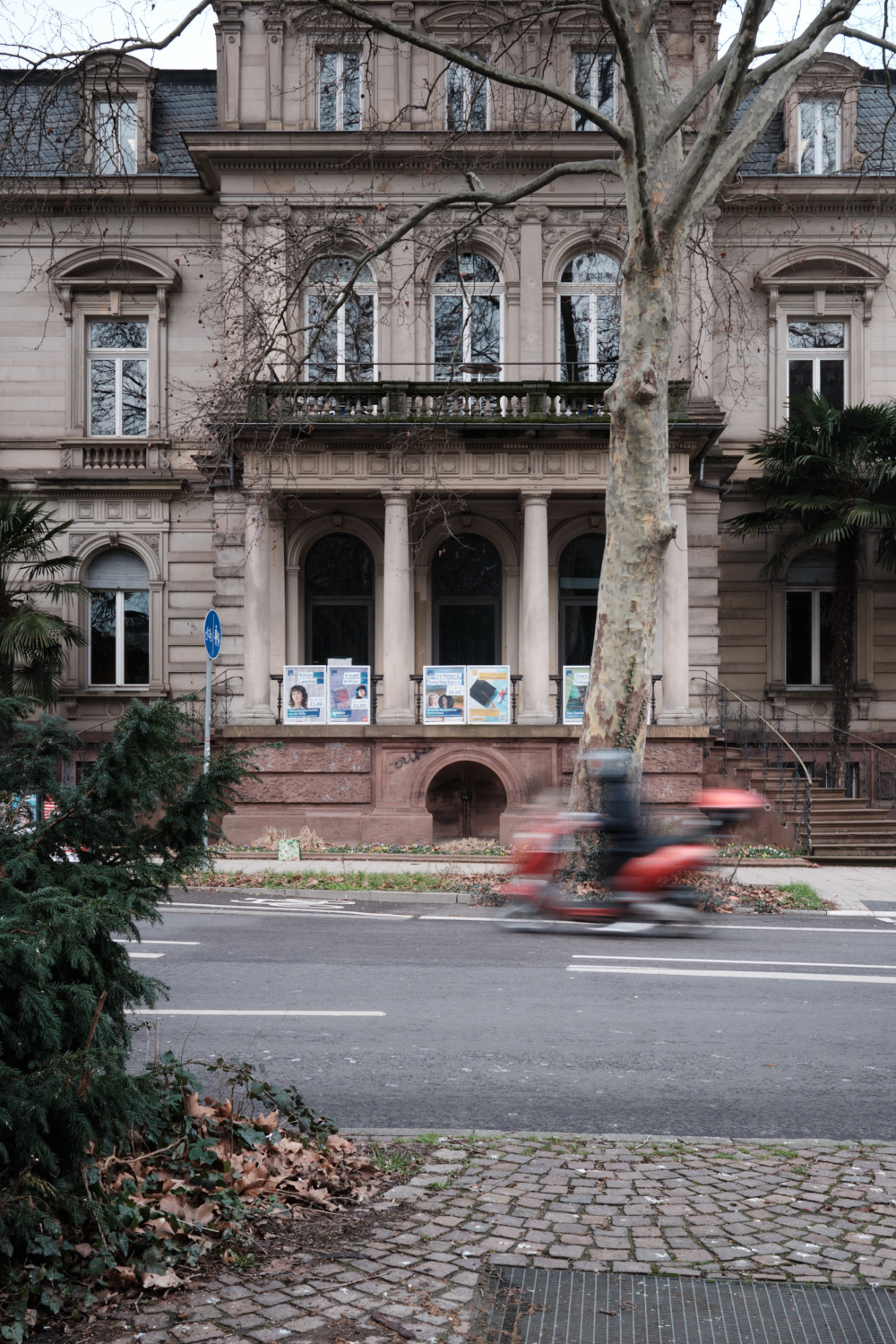
The DAI in Heidelberg is situated on a busy road. But a closer look reveals remnants of a botanical garden that was once here.
Decades later, Lena Jöhnk, who has been director of the DAI since early 2025, is still impressed by the feat of strength that Christo’s first wrapping project presented. With a team of 20 people, 1,900 metres of white woven fabric panels, 900 metres of wire and 450 metres of rope, he transformed the building into a work of art—even if some people grumbled that his project resembled an oversized makeshift bandage rather than an installation. “But Christo wanted to show the role art can play in public spaces,” says Lena, and the role that the DAI played. In any case, he was sure to spark debate—and attract attention.
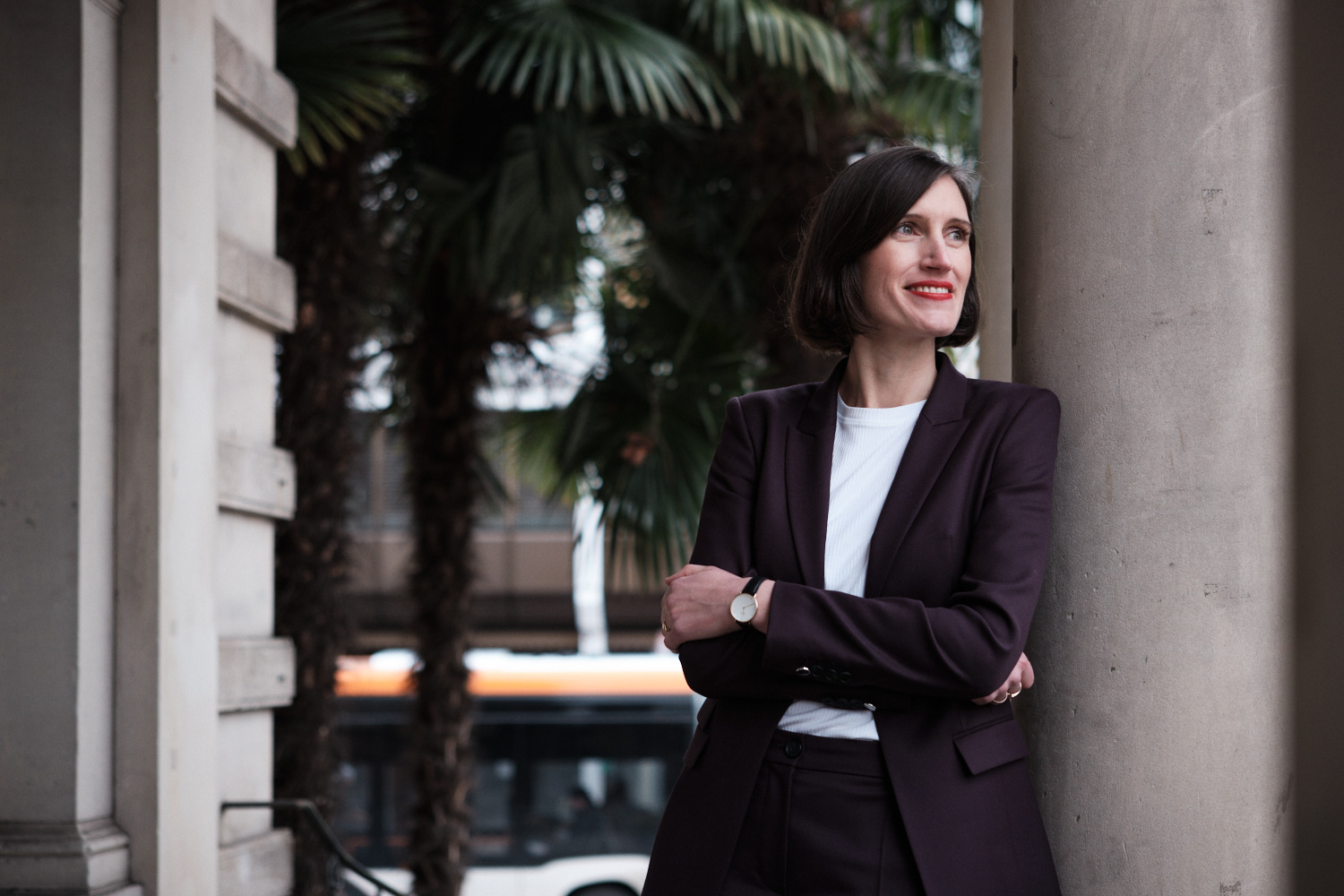
Lena Jöhnk has been director of the DAI since early 2025.
Lena took over the DAI from its long-standing director, Jakob Köllhofer, after she had spent years at Goethe-Institut branches in Türkiye and the US. The question of the public image of her cultural institute is perhaps more relevant now than ever. The changing nature of transatlantic relations poses ever-new challenges for the former Amerikahaus. The director is all the more committed to making space for dialogue. “Promoting democracy is part of our DNA. We are always looking for new ways to do this.”
The DAI Library could one day be extended to become a café.
The DAI’s programme is open to everyone and has an international focus. There is plenty on the calendar, especially for children.
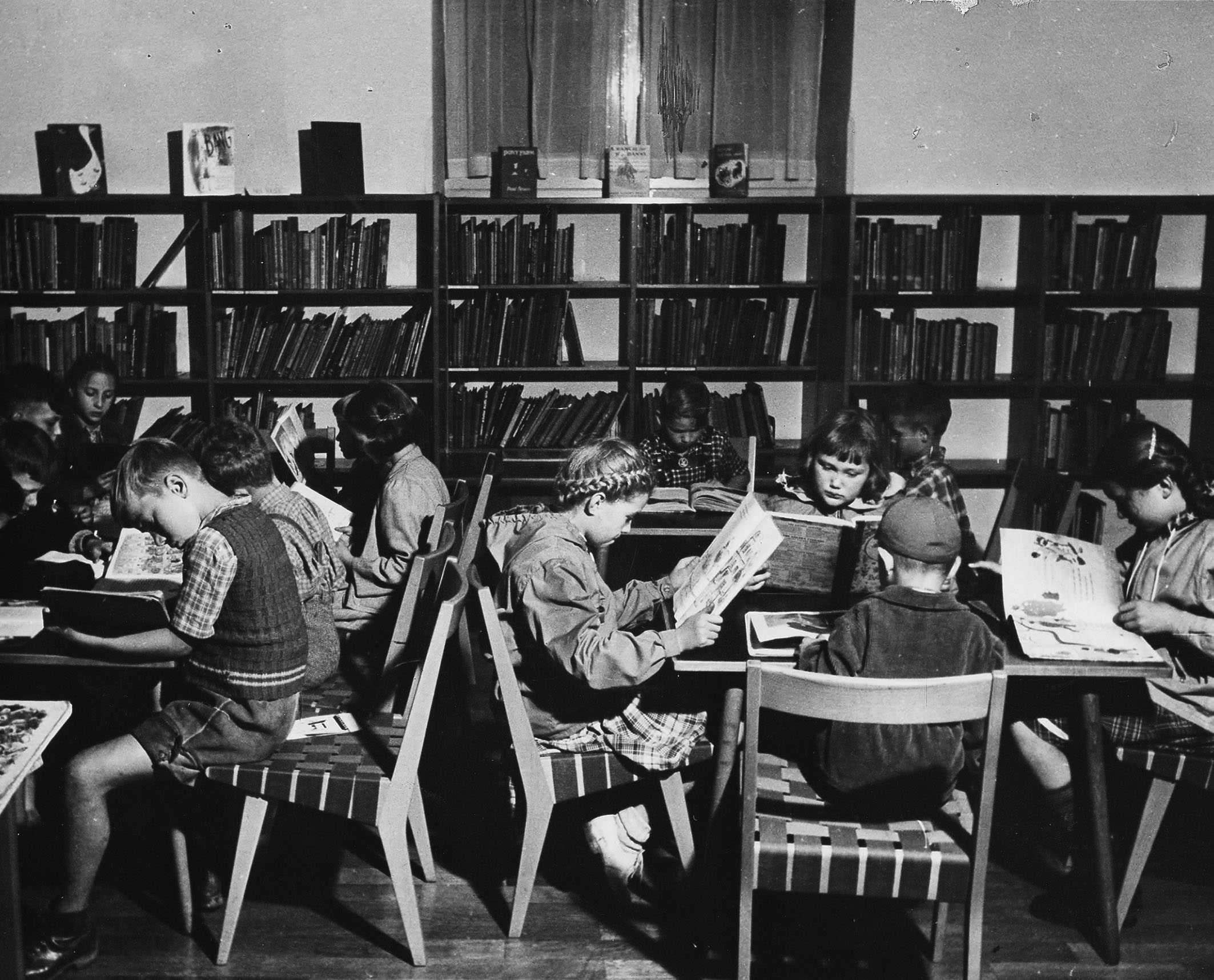
The DAI Library has always been a magnet for visitors, as shown in this historical photo from the former Amerikahaus.
The world of books can be wonderfully explored at the DAI—in the English-language library.
Spending holidays in front of a laptop? That’s possible at the DAI, as film courses are (also) on the programme.
On this sunny morning, discussions take place in the public library of the beautiful, stucco-adorned villa designed in historicism style. Today’s content of the discussion is short films and children’s literature. A group of ten-year-olds has set themselves up in front of laptops amongst the floor-to-ceiling bookshelves as part of a film camp. They plan how to make short videos together. This small glimpse into the DAI’s holiday programme shows who the programme is intended for: everyone. There are sewing cafés and debating clubs, reading sessions and language courses at all levels. A children’s book festival, an international literature programme and an annual autumn science festival are all part of the institution’s programme. The DAI is also affiliated with three English-speaking nurseries.
We operate politically independently
Lena Jöhnk
The DAI Library is the only non-academic English-language library in the Rhine-Neckar Metropolitan Region offering a wide range of literature for children, young people and adults. Part of it could become a café in the future. “We want to be a public living room,” says Lena. Together with her team, she regularly invites musicians, artists, journalists and writers such as Daniel Kehlmann, Nora Gomringer and Bernhard Schlink as well as the entire urban community.
The Dalai Lama was a guest in Heidelberg in 2018—and also visited the DAI. Standing behind him is the DAI’s long-standing director, Jakob Köllhofer. Photo by Diemer Schemel
There are twelve German-American centres in Germany, each with a different focus. The institution in Heidelberg is one of the largest and has a varied offering. Located in a former doctor’s villa at the busy road junction just a few metres from Plöck and Bismarckplatz square, a small remnant of what was once a lush botanical garden has been preserved. Over the course of its history, the building has witnessed a number of election nights (and parties), but also protests such as those against the Vietnam War. Politicians such as Angela Merkel and dignitaries such as the Dalai Lama have been guests here. The lecture programme is high-calibre but not elitist, affirms Lena, who headed the Goethe-Institut’s programme in Washington from 2013 to 2018.
Stucco-adorned, the DAI building was originally built as a doctor’s villa.
What has she learnt from Americans during this time? “Openness,” says the native of northern Germany. She explains that a “culture of welcome” has become established in the US over a long period of time. Yes, the country has changed significantly in recent times; the gap between cutting-edge science and stark educational deprivation, for instance, is widening ever further. But the idea of freedom and the belief in the power of self-realisation remain as strong as ever.
However, the history of the DAI also shows just how much Germany has changed since the institute was founded. “Re-education” was the buzzword back then, used to introduce democracy to the people of former Nazi Germany. When the DAI was founded in 1946, 100 per cent of its funding came from the US. Today, the institute makes its own profits and is funded by the City of Heidelberg and the State of Baden-Württemberg. In addition, there are minor financial contributions from the Federal Foreign Office and some US funds. “We operate politically independently,” Lena explains.
However, she says it is becoming increasingly important to create and defend “spaces for thought”. How should we deal with crises evolving or prevailing in the US, the Middle East and globally? “Our primary aim is to foster dialogue and start conversations and to keep them going,” says the scientist with a doctorate in cultural studies. To this end, she is constantly experimenting with new event formats—such as the “fishbowl”. The audience sits in the middle of a panel of experts. This blurs the boundaries between the participants on stage and the people in the audience. The spoken word, exchanged directly, remains irreplaceable. All too often, debates are conducted digitally and, as a result, unfortunately become highly polarising.
In 1969, the Intermedia art festival, organised by Klaus Staeck, took place. Part of this was Christo’s first major wrapping project—of the DAI. Photo by Jochen Goetze
“I’m seeing society becoming increasingly polarised.” That is why it is so important to Lena to promote shades of grey in this “ever-increasing black-and-white” world. In an institution with an international outlook that embodies cosmopolitanism it is “our task not to convert, but to inspire and convey new perspectives.” Her greatest wish? “I’m happy when people say: ‘Now I’ve learnt something new.’” That certainly fits perfectly with the approach Christo pursued in 1969. With stoic composure, he had the DAI building wrapped, even though roof tiles were destroyed with significant damage being caused. The fact that the artist’s first wrapping project seemed so amateurish at the time did not bother him. For the foundation of his artistic career had been laid. “It was probably Christo’s most imperfect work,” the artist Klaus Staeck later recalled of their joint project. Yet it gave rise to a fascination “that is rarely achieved through perfection.”
Tips for excursions and interesting stories about the Rhine-Neckar region can be found regularly in our newsletter.
And this is how it works: Enter your email address in the field and click subscribe. You will then receive an automatically generated message at the email address you entered, which you only need to confirm. Done!