When it gets dark on Shrove Tuesday, fires flare up in the south of the Odenwald region. Large fire wheels roll down the hills, bringing spring and fertility—according to popular belief, that is. But where does this custom come from? Larissa Anton made a film about the customs in the Odenwald region.
Larissa, you live in the very north of the Odenwald region, in Reinheim in Hesse. How did you come across the tradition of the fire wheels, which is actually more common in the southern part of the region towards the Neckar?
Larissa Anton: This was 2014, when I was making a film about ghost stories and the belief in the supernatural in the old days. Back then, I came across diverse customs using fire that were supposed to drive out the spirits of winter. Among them were the fire wheels.
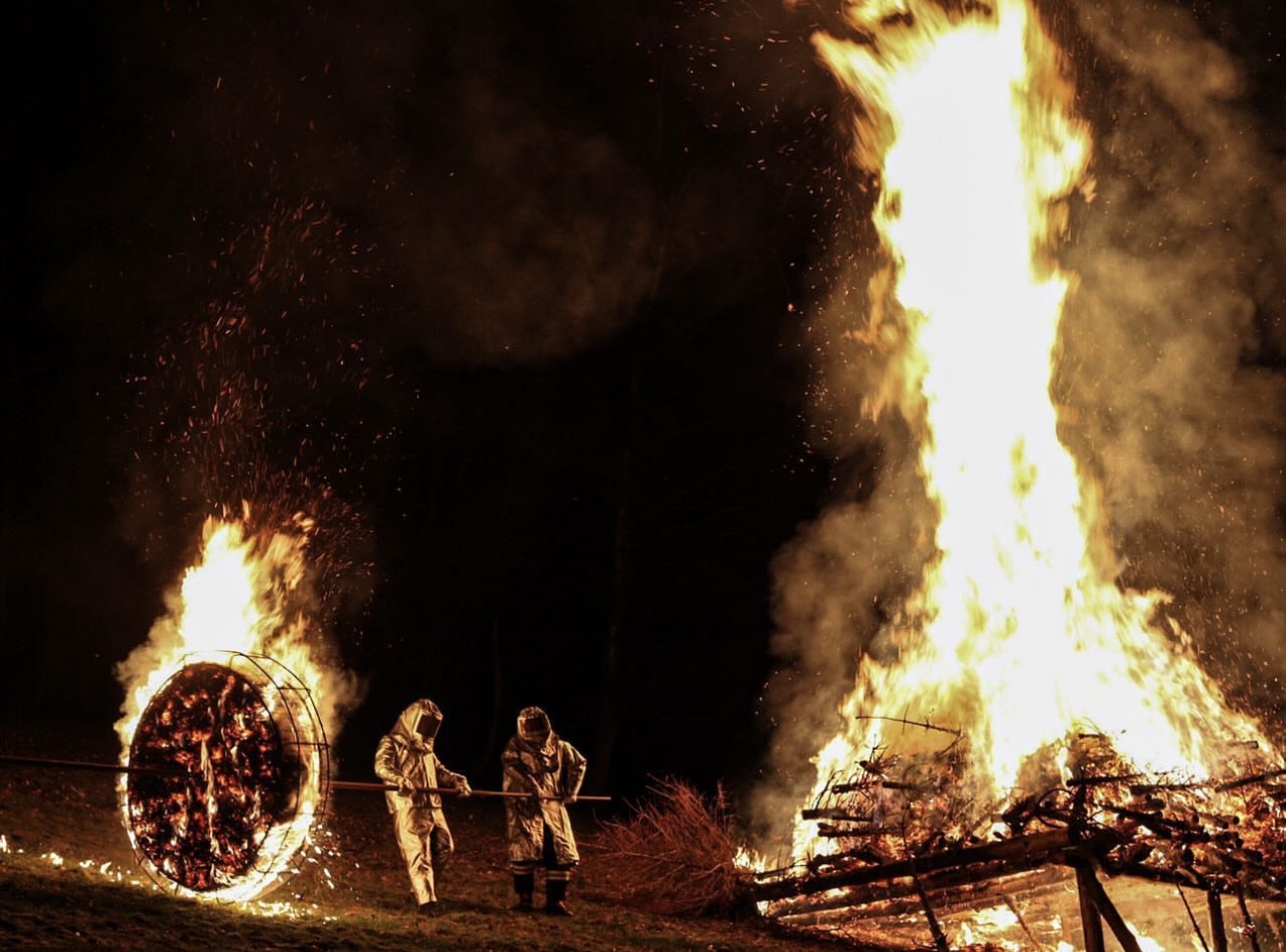
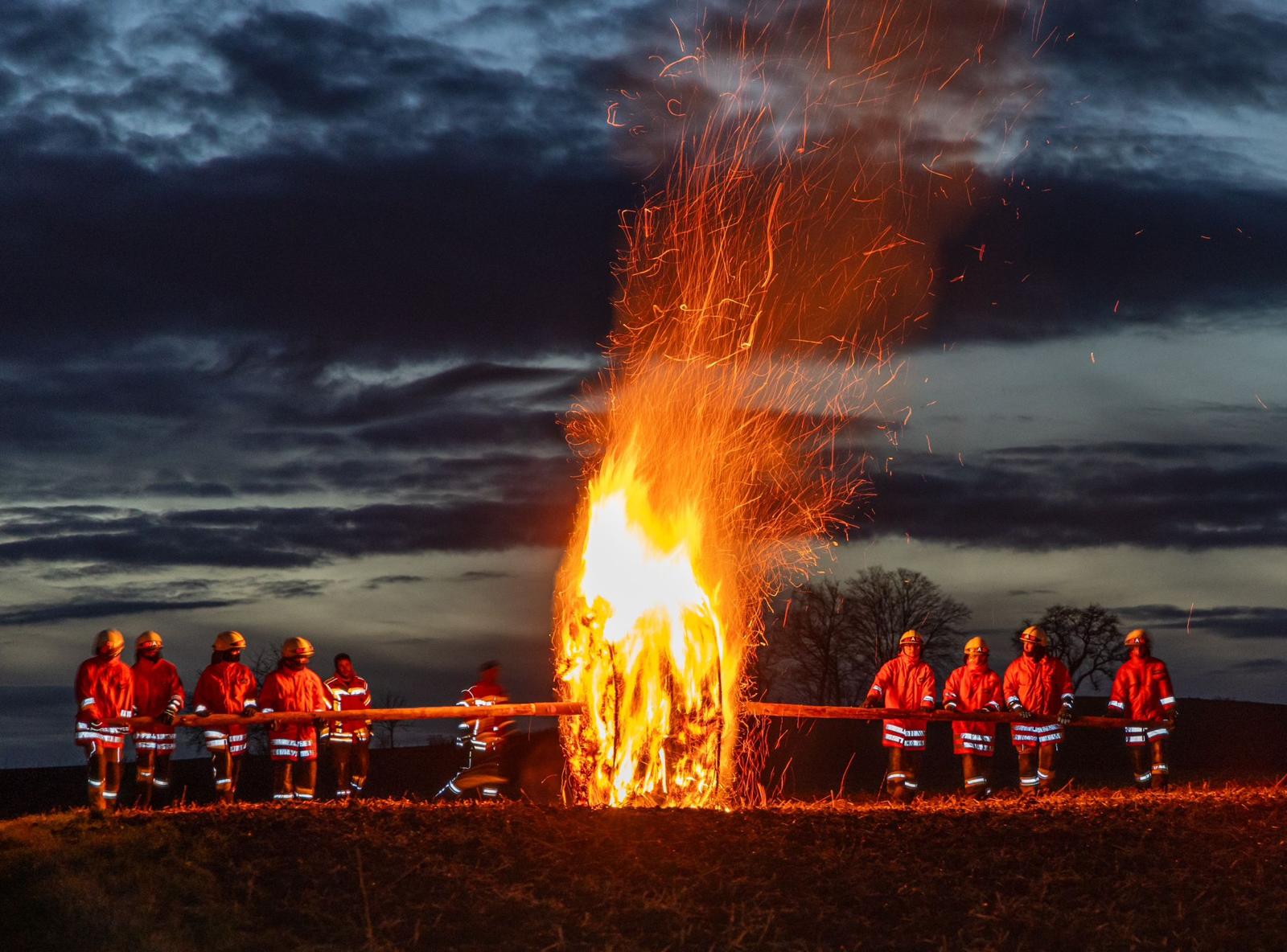
Hot stuff: The fire wheel in Wilhelmsfeld is guarded by firefighters. Photo: Voluntary Fire Brigade of Wilhelmsfeld
How should one imagine such a fire wheel looked like?
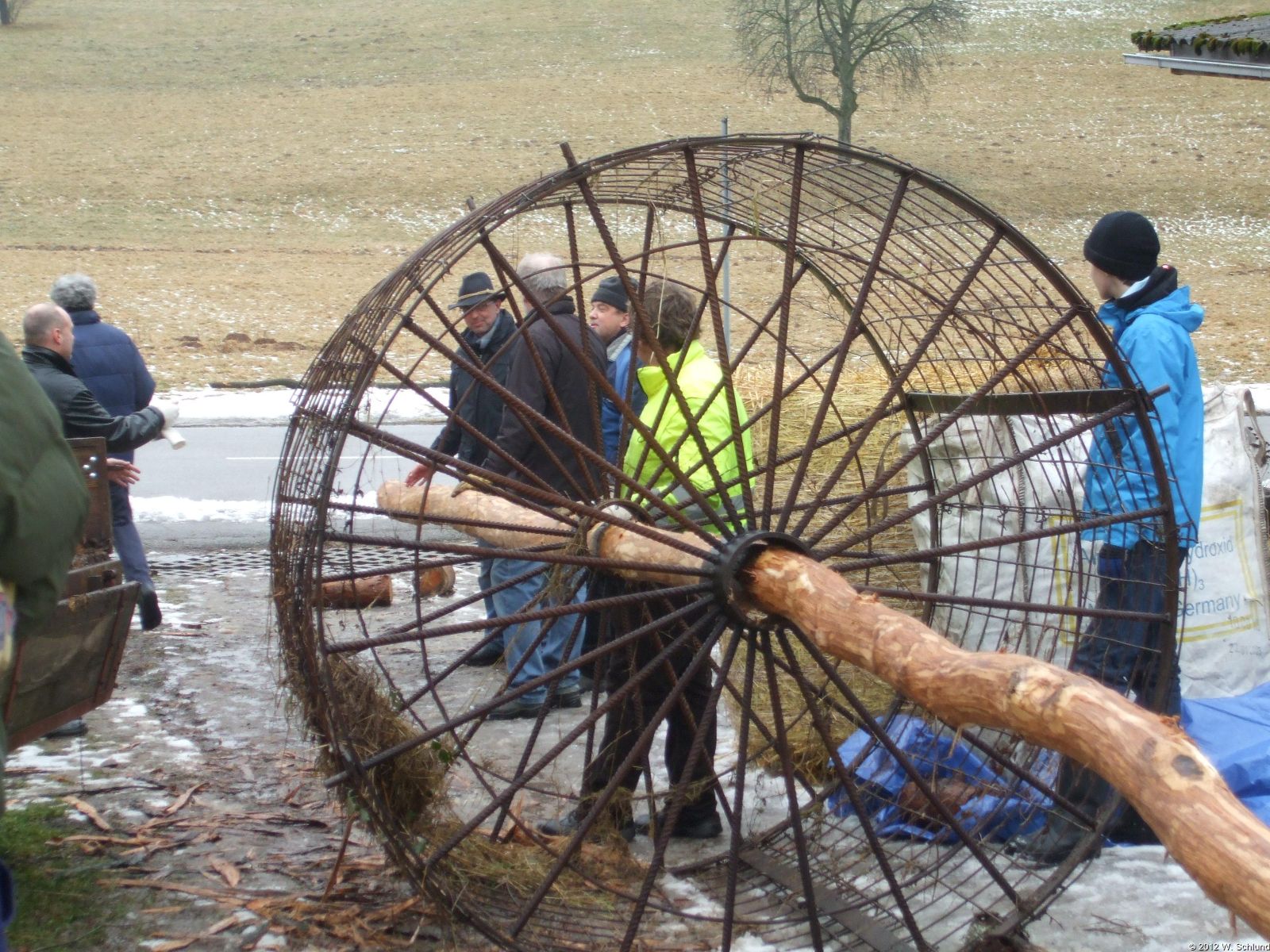
In the old days, it consisted of a big wooden wagon wheel that had been soaked in water for weeks before it was rolled down a slope. By doing this, people back then wanted to prevent the wheel itself from catching fire. The wheel was then wrapped with straw and set on fire. Today, the fire wheels look more like cylindrical metal cages stuffed with straw.
You saw your first fire wheel in Brombach, a part of the town of Eberbach. How was that?
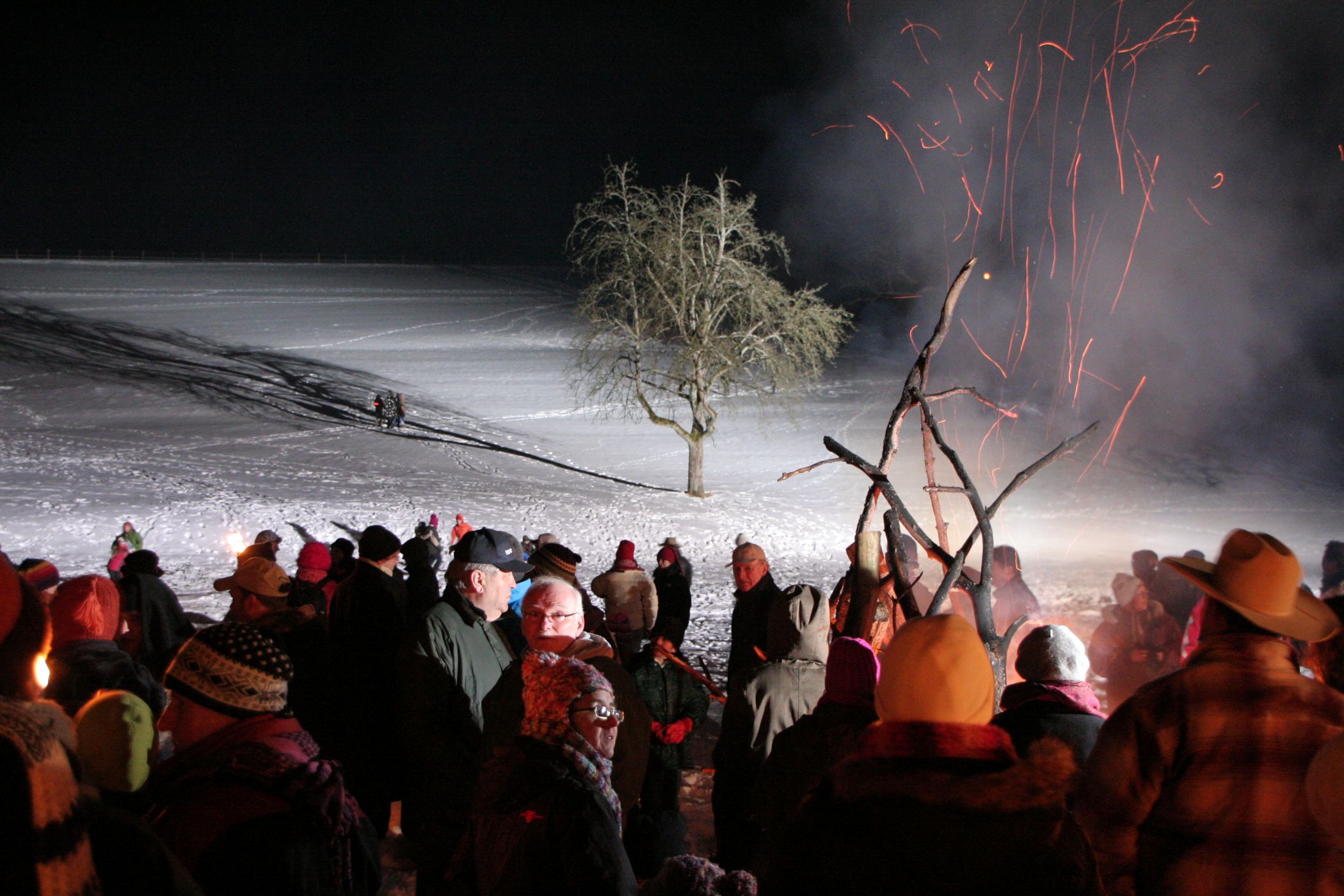
Actually, it was really beautiful. There was a lot of snow at the time and incredible amounts of sparks were flying off the fire wheel. It must have been similar to this in past times, when the fields were usually still covered in snow during the carnival season and the people longed for the green meadows to emerge. The people in Brombach are also the only community far and wide to let their fire wheel roll downhill the last bit of the slope unchecked—just like in the past. In all other towns the fire wheel is led downhill on two long, narrow tree trunks, stuck sideways in the straw. At least five men are needed for this on each side. In Brombach, the men pull out the tree trunks on command. The fire wheel then becomes really fast indeed.
When the people in the Odenwald have had enough of snow and cold weather… (Photo: Wolfgang Schlund, Holger Ludwig)
...they turn up the heat on winter. (Photo: Voluntary Fire Brigade of Dühren)
During the carnival season, they get out large metal wheels… (Photo: Wolfgang Schlund, Holger Ludwig)
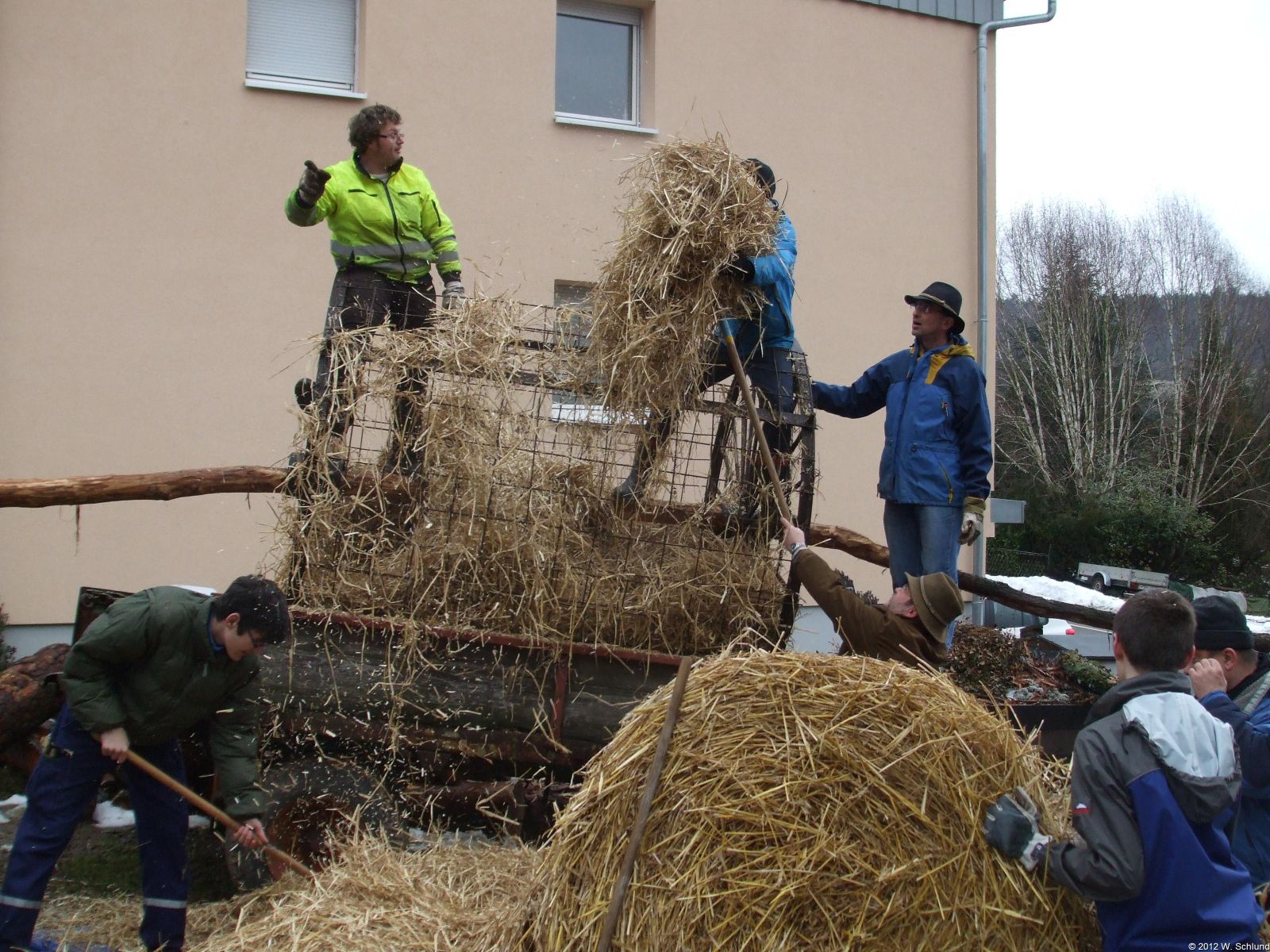
… fill them with straw... (Photo: Wolfgang Schlund, Holger Ludwig)
… and attach even more to them on the outside. (Photo: Michael Menges)
The straw is then set on fire... (Photo: Michael Menges)
...and rolled down a hill. (Photo: Michael Menges)
What is the message behind this custom?
The fire wheel symbolises the sun, rolling over the open fields and meadows, disseminating fertility. In Brombach, the saying “Symbol of the sun, down the hill you run, greetings to the spring, many thousand times you bring” can be seen as an indicator of this. This custom presumably goes back to the times of the Germanic tribes. In any case, it was already around in the early Middle Ages. Back then, large parts of Lorsch Abbey were destroyed by fire because they were hit by burning wooden discs. The so-called “shooting of the discs” used to be part of the tradition of the fire wheels at that time, too. People back then put the wooden discs into the fire to make them glow. Then, they tossed them towards the sun. But where the discs came down was hard to control. In Brombach, special oakwood torches are hurled in a circle instead. This also symbolises the circling of the wheel of sun.
Symbol of the sun, down the hill you run, greetings to the spring, many thousand times you bring
Saying in Brombach
Traditions often differ from one village to the next. How is that true for fire wheels?
In Darsberg, for instance, a parade of witches with Alemannic witch masks is part of the event of the downhill rolling of the fire wheel today. In some places, a shrove pile is set on fire instead of the fire wheel on Shrove Tuesday. This might be, for example, a conical bonfire or an iron grate on which discarded Christmas trees can be burned. One village, however, is strikingly different from all the others, and that is Groß-Breitenbach. Until 1900, they had what they called a Fasselsäule— an approximately eight- to ten-meter-long spruce trunk that was wrapped with straw, set up, and then lit. This custom was quite unparalleled in the region. However, you can find it under the name of Hom Strom in Switzerland. How it came to Groß-Breitenbach, though, is something I unfortunately couldn’t find out.
You have just released a two-part film about customs of the Odenwald. What other traditions did you find especially fascinating?
As a horse enthusiast I love the Gangolfsritt that you can encounter in Amorbach, Neudenau, and Schlierstadt. On the second weekend in May, the horses receive a blessing to protect them from illness and harm. Many equestrians and carriages participate in this event, and in Neudenau many of them wear historical costumes. In previous times, a horse was essential for peasants’ survival. If the horse fell sick or died, the farmer wasn’t able to get his work done and food then became scarce.
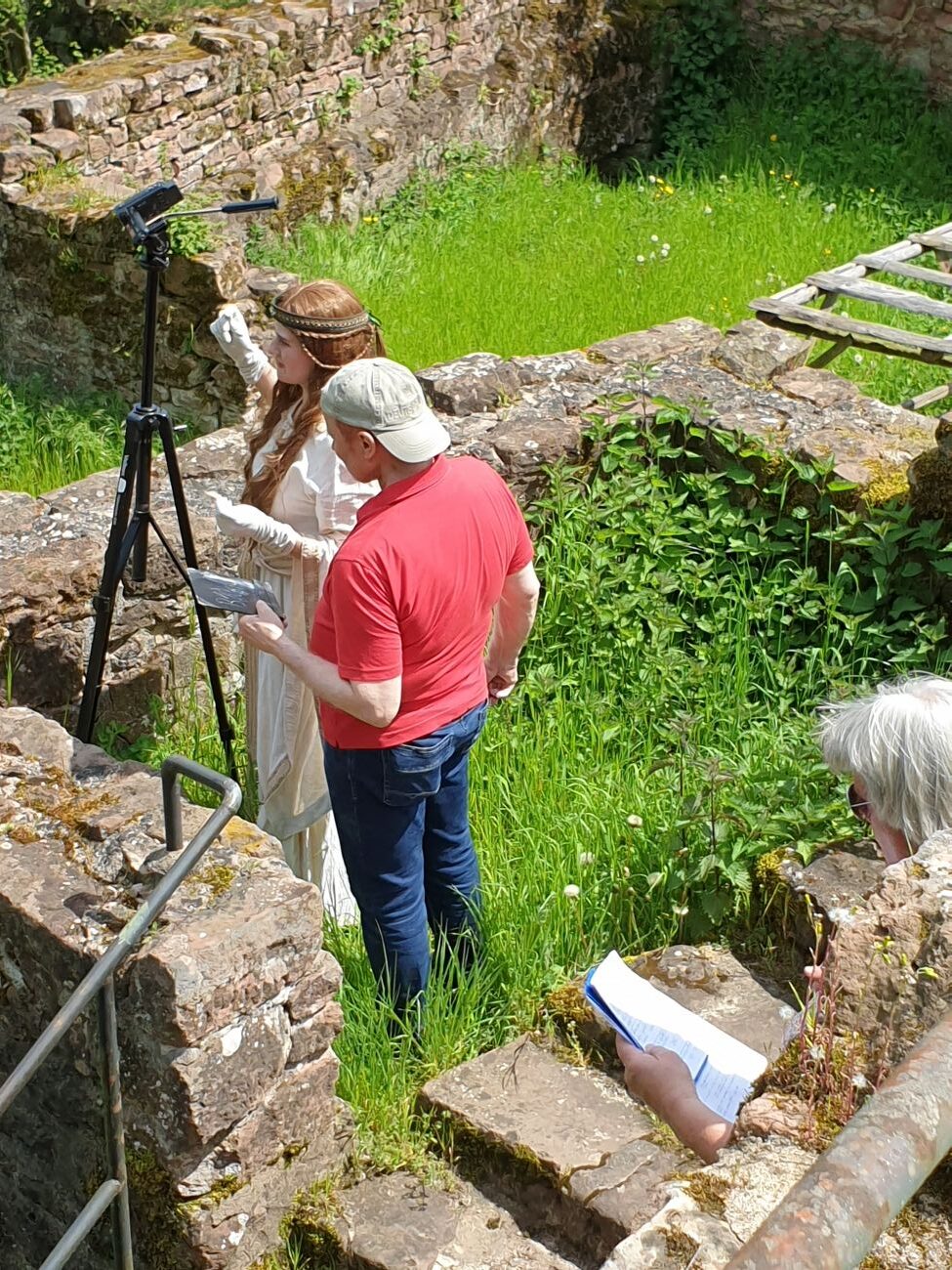
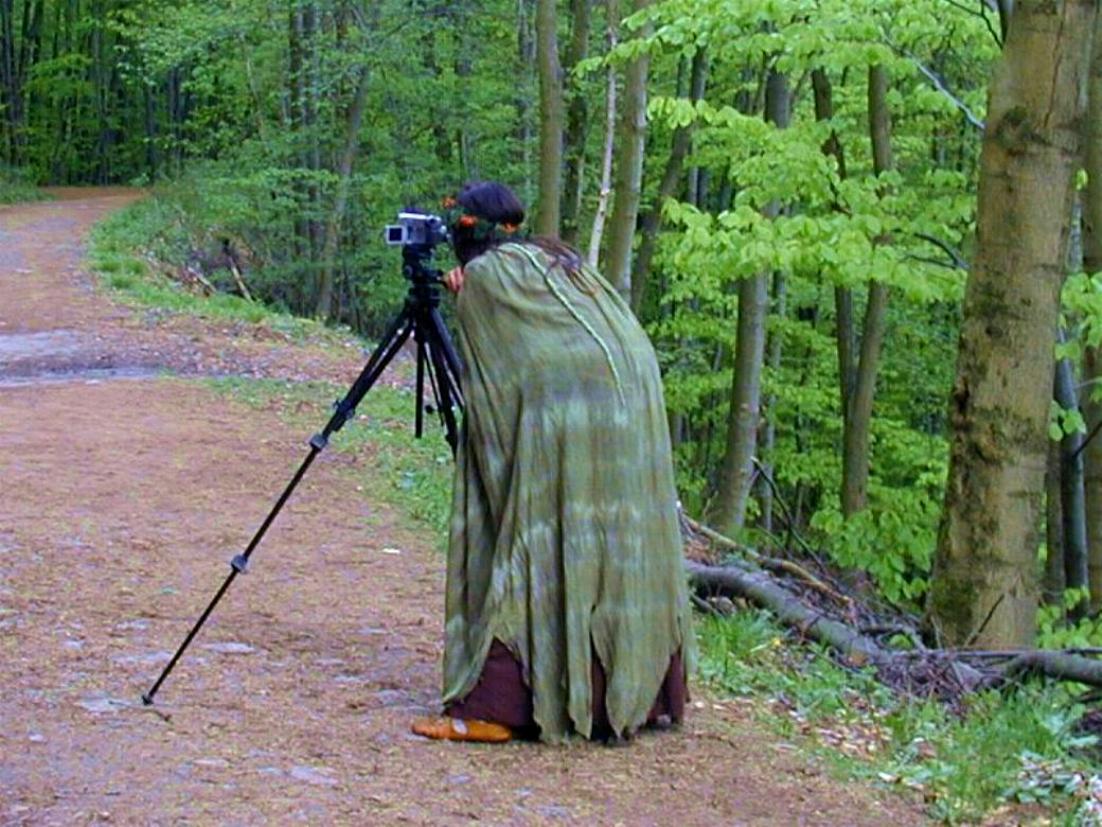
Fascination for old legends and myths—Larissa Anton, shooting one of her films. Photo: Larissa Anton
As your main profession you work as a primary school teacher. How come you occupied yourself with legends and traditions of the Odenwald?
I grew up with fairy tales, and this inspired my imagination a lot. When I started making films and couldn’t come up with an exciting plot myself at the beginning, it seemed natural to fall back onto legends and myths. There are so many stories that nobody knows—that’s such a pity.
What is so special about the Odenwald for you?
The multifariousness of the landscape and also of the three states that come together in the Odenwald. There are, by the way, some distinctions with regard to traditions in Hesse, Baden, and Bavaria. In the Franconian part of the Odenwald, which is to a large extent influenced by Catholicism, there are, for instance, more Christian customs. One example for this would be the Muttergottestragen, the carrying of the Virgin Mother,during the Advent season, which depicts Mary’s search for shelter. Children go from door to door with a statue of the Virgin Mary, reciting traditional rhymes. The statue is then invited into a house for one night at a time. Only a few kilometres away, this tradition is not customary.
In her films, Larissa Anton loves to tell stories of old traditions and customs.
Do you have the impression that the local traditions of the Odenwald are still cultivated a lot—or are they slowly falling into oblivion?
The people of the Odenwald are very proud of their region. This is why I got a lot of support during my filming—no matter if I needed a carriage, costumes, actors, or a stag that I could film. Whenever I show my films about legends and myths in the Odenwald it attracts wide interest. But the interest in the documentation of the customs is even stronger—which came to me as a surprise.
A fire wheel in Dühren—a flickering symbol of the sun. Photo: Voluntary Fire Brigade of Dühren
Do you think that the tradition of the fire wheels will be preserved?
The fire wheels are very spectacular and attract a good many visitors each year—even from outside the region. That’s why I think chances are good that they will be rolling on for a long time.
On request, Larissa Anton will be glad to show her films about legends and myths of the Odenwald at an event. If you are interested in a particular film, contact her at wildweibchen@gmx.net
Tips for excursions and interesting stories about the Rhine-Neckar region can be found regularly in our newsletter.
And this is how it works: Enter your email address in the field and click subscribe. You will then receive an automatically generated message at the email address you entered, which you only need to confirm. Done!