The Rohrbacher Schlösschen, an enchanting little palace, is situated on the grounds of Heidelberg’s Thorax Clinic. It tells the stories not only of persons of historic interest who once lived there or visited the place. It also houses the only museum in Germany exclusively dedicated to tuberculosis. And all of this in a setting that could not be more fitting.
When you visit the little palace called Rohrbacher Schlösschen in Heidelberg, you step into a world of its own—a world of kings and aristocrats, that is. But also a world of illness and death. The property, where the Bavarian King Ludwig I spent happy childhood days or Tsar Alexander I of Russia had dinner with Emperor Franz I of Austria in the banqueting hall in 1815, was actually built in 1770 as a hunting and summer palace. During the first world war, though, it was turned into a military hospital and later into a sanatorium for people with tuberculosis. Since then, the beautiful classicistic palace has been considered the nucleus of today’s Thorax Clinic where, due to its affiliation with Heidelberg University Hospital, pulmonary diseases are treated.
Classicistic splendour: The palace tells stories of the horrible hidden within the beautiful.
In the banquet hall, in the adjoining cabinets or in the Blue Salon, the tiled stoves and—to some extent—the floors might be the only things that were preserved here, yet the atmosphere in these rooms nevertheless is impressive. This is due to the paintings and replicas of the furniture with their detailed accuracy as well as elegant wall paintings and wallpapers in delicate shades of light green or rose. They are descriptive of a time when there was a constant coming and going of the who’s who of European aristocracy. And of times, too, when the dreaded tuberculosis raged. The floor-to-ceiling windows open out onto the well-maintained remains of the former palace garden where, by medical prescription, countless sick persons once had to spend many hours in the fresh air every day.
The Tuberculosis Museum is unique in Germany.
Since 2019, Oswinde Bock-Hensley has been the first chairperson of the Förderverein, the association that funds the work of the tuberculosis museum. “The collection has existed for even longer than it has been on display on the first floor,” the paediatrician recounts, who ended up at the museum more by chance—and stayed. The Rohrbacher Schlösschen palace is one of approximately 50 medical-cum-historical museums in Germany and the only one exclusively dedicated to tuberculosis. The affiliation with Heidelberg University Hospital through the Thorax Clinic, which provides the space at no fee, is not exactly commonplace, either. “It is really fantastic that we were allowed to move here,” Oswinde says, “this has led to a very good cooperation.”
The Rohrbacher Schlösschen palace in Heidelberg....
...is situated somewhat hidden on the grounds of the Thorax Clinic.
In the past, countless tuberculosis patients recovered here...
...from the dangerous pulmonary disease.
Oswinde Bock-Hensley is the first chairperson of the Förderverein association...
...that funds the tuberculosis museum.
The palace also tells many stories…
...of the splendour of days gone by.
Claudia Denkinger, medical director of the Department of Infectious Diseases and Tropical Medicine of Heidelberg University Hospital, has served on the board of the Förderverein funding association since 2019, contributing her expertise on tuberculosis diagnostics. That the neighbouring clinic works so closely together with the museum has a lot to do with Oswinde Bock-Hensley, too. She used to be in charge for infection protection at the public health authority of the Rhine-Neckar region for about 30 years. “During that time, I walked in and out of the Thorax Clinic—and I am still around here, in great part due to the association.” The palace is the perfect place—not only for Oswinde: “It might be a bit small in proportion, but compared to other museums of that kind, it has by far the most beautiful ambience.”
It is important to us to put the historical exhibits into a contemporary context
Oswinde Bock-Hensley
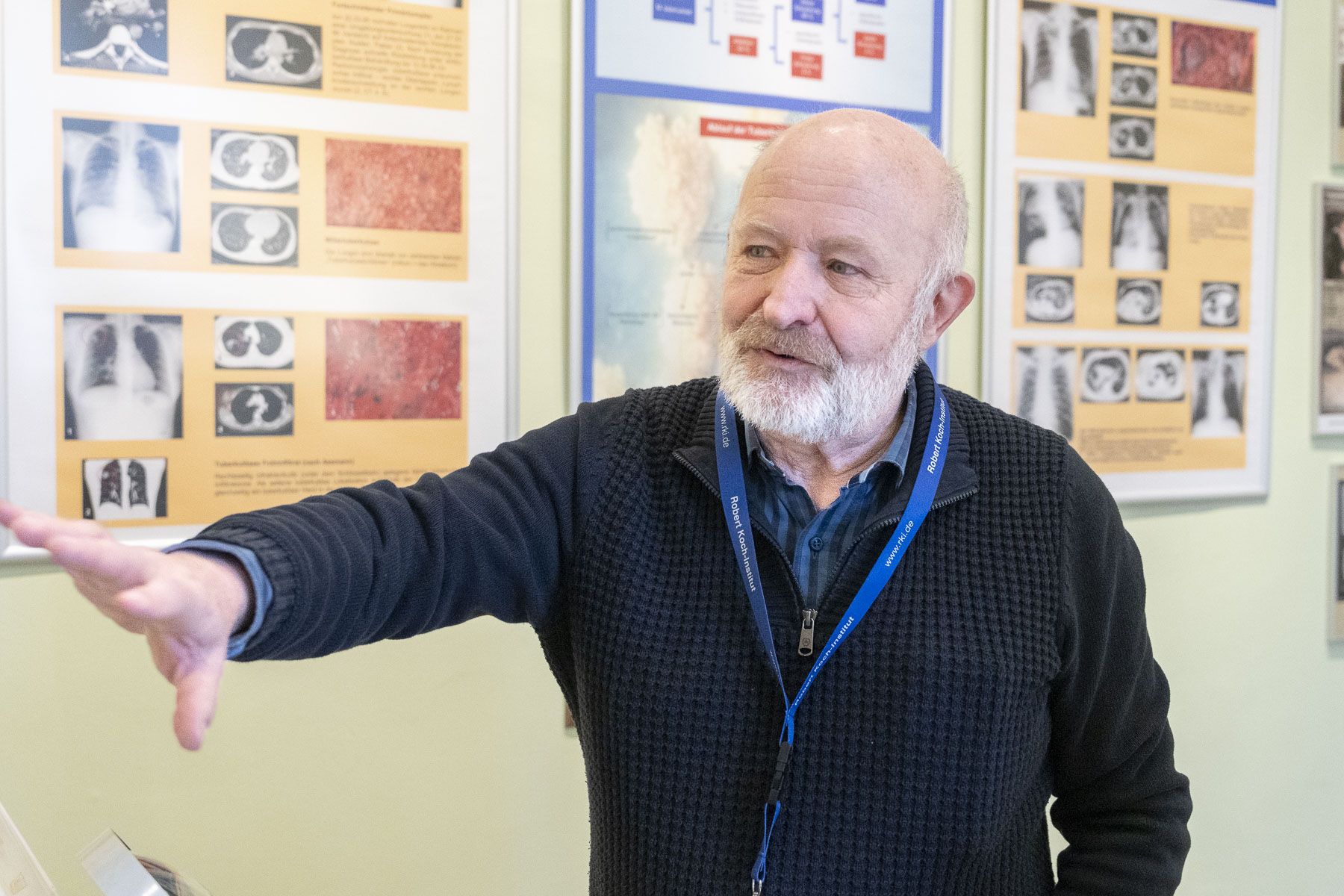
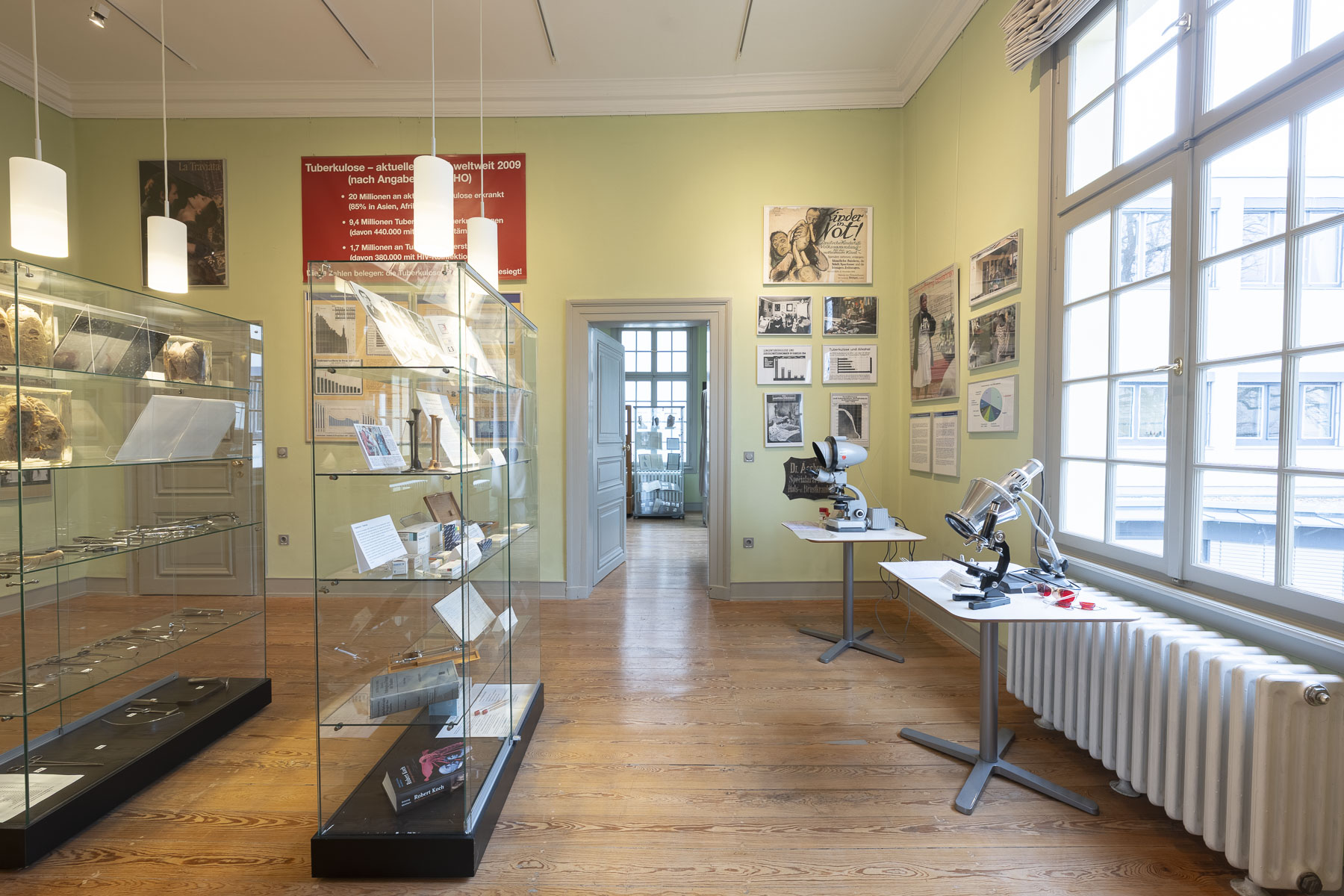
As volunteers, Oswinde and her colleagues Rainer Eickhoff and Ingrid Erhard show visitors all the exhibits that the German Tuberculosis Archive has gathered up since its foundation in Fulda in 1996 by pulmonary specialist Robert Kropp. Pointing out tiny metal and glass syringes, lab notebooks, surgical instruments, microscopes and highly sophisticated equipment over the course of approximately 60 guided tours per year, the team conveys a sense of the desperate fight medicine and science waged against tuberculosis—having been one of the deadliest infectious diseases for centuries affecting mainly the lungs.
Oswinde Bock-Hensley and Rainer Eickhoff regularly give visitors guided tours of the museum.
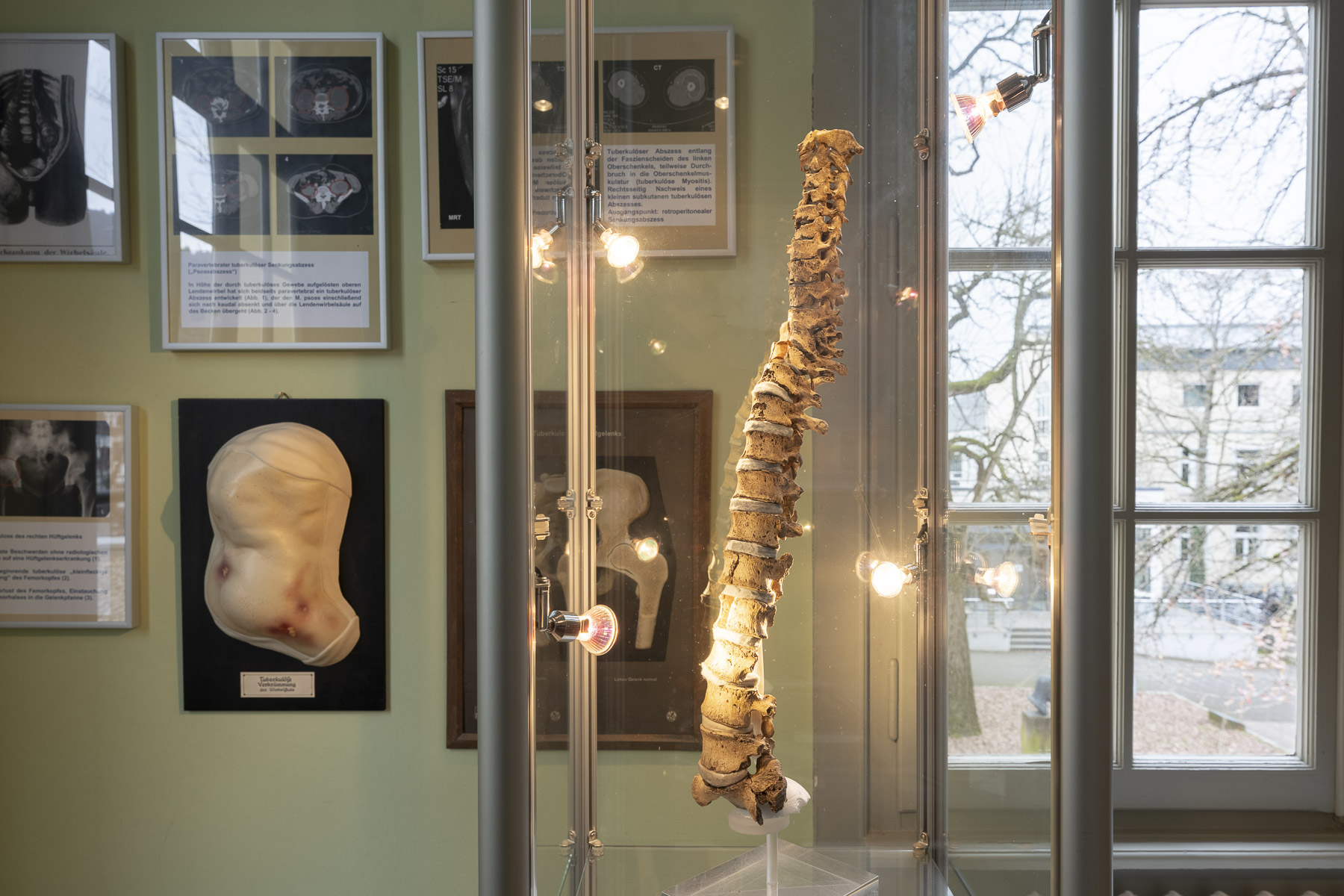
Naturalistic depictions made of wax, so-called moulages, and a spine from the Neolithic Period with changes caused by tuberculosis illustrate the progression of the disease, since—besides the lungs—skin and bones can be affected, too. Spectacles with glaring red glasses that were used to assess the radiographic images come across as almost modern by comparison. Film posters and educational posters to raise awareness in the public create a lively impression of a time in which tuberculosis used to be an ever-present topic.
The exhibits show how tuberculosis affects the body.
Oswinde plays an active role in the museum’s outreach activities almost on a daily basis. Together with her fellow volunteers of the Förderverein association, she curates the exhibition, organises events, or maintains contact with supporters and colleagues. “We would be very glad to welcome new members to our association.” The chairwoman warmly encourages people to participate: “We are open to new ideas, and also for suggestions for our archive and the library.”
With these glaring red glasses medical doctors used to assess radiographic images.
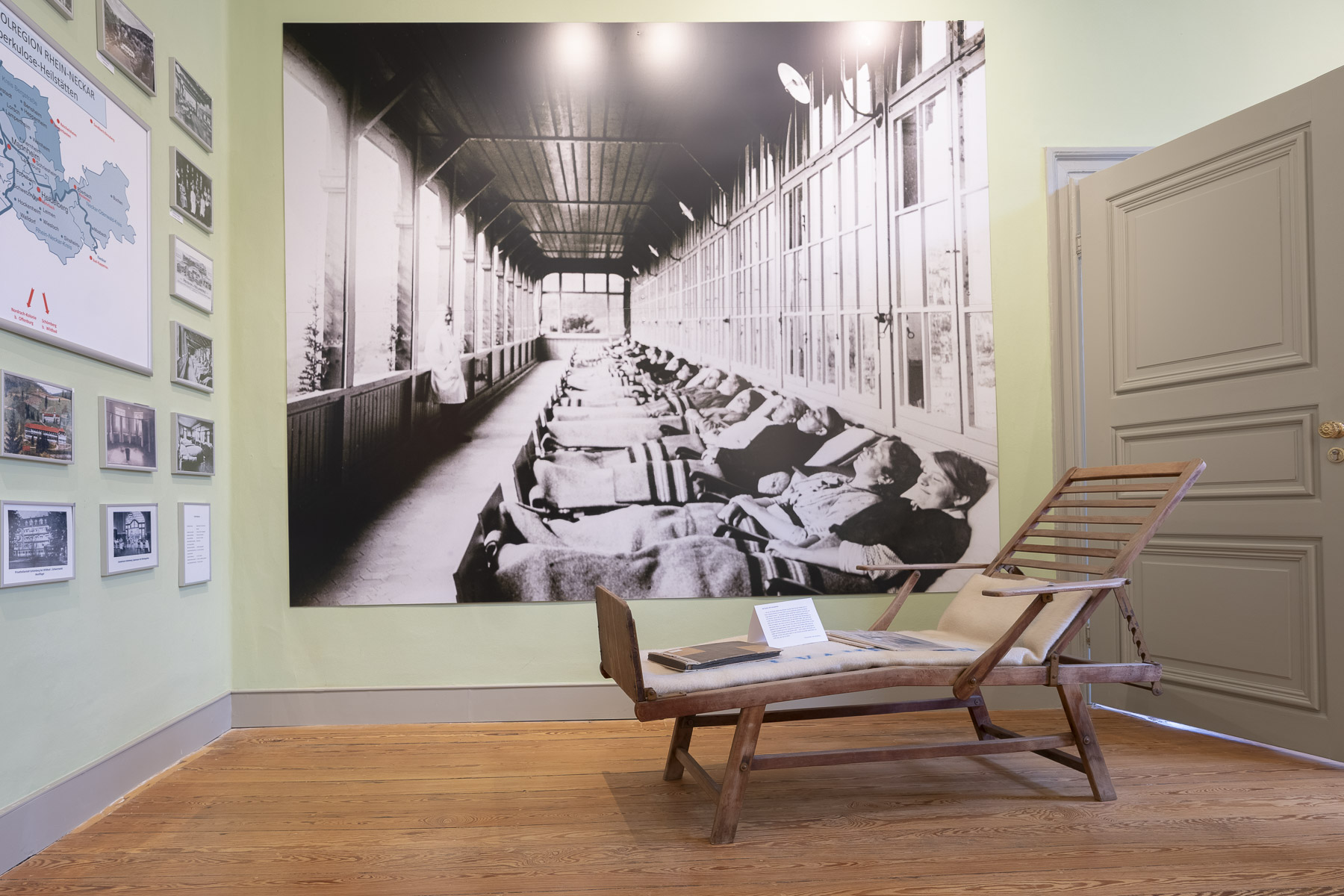
In the room dedicated to sanatoriums, an atmosphere is palpable of the kind that you usually only encounter in novels and films. In this room, an original deckchair visually blends into a historical photograph showing patients lying side by side, resting in the fresh air. And here you can also encounter the so-called “Blue Henry”, a rather pretty, bright blue spittoon for takeaway purposes or the “Silent Nurse”, a thermometer without a scale to rule out any manipulation. Rainer Eickhoff explains how treatment was carried out about 100 years ago. “High-calorie nutrition and rest were important,” the paediatrician says. “Doctors prescribed open-air rest cures for people suffering from tuberculosis, but surgical interventions were performed as well.”
Countless people suffering from tuberculosis recovered here in the palace’s beautiful ambience.
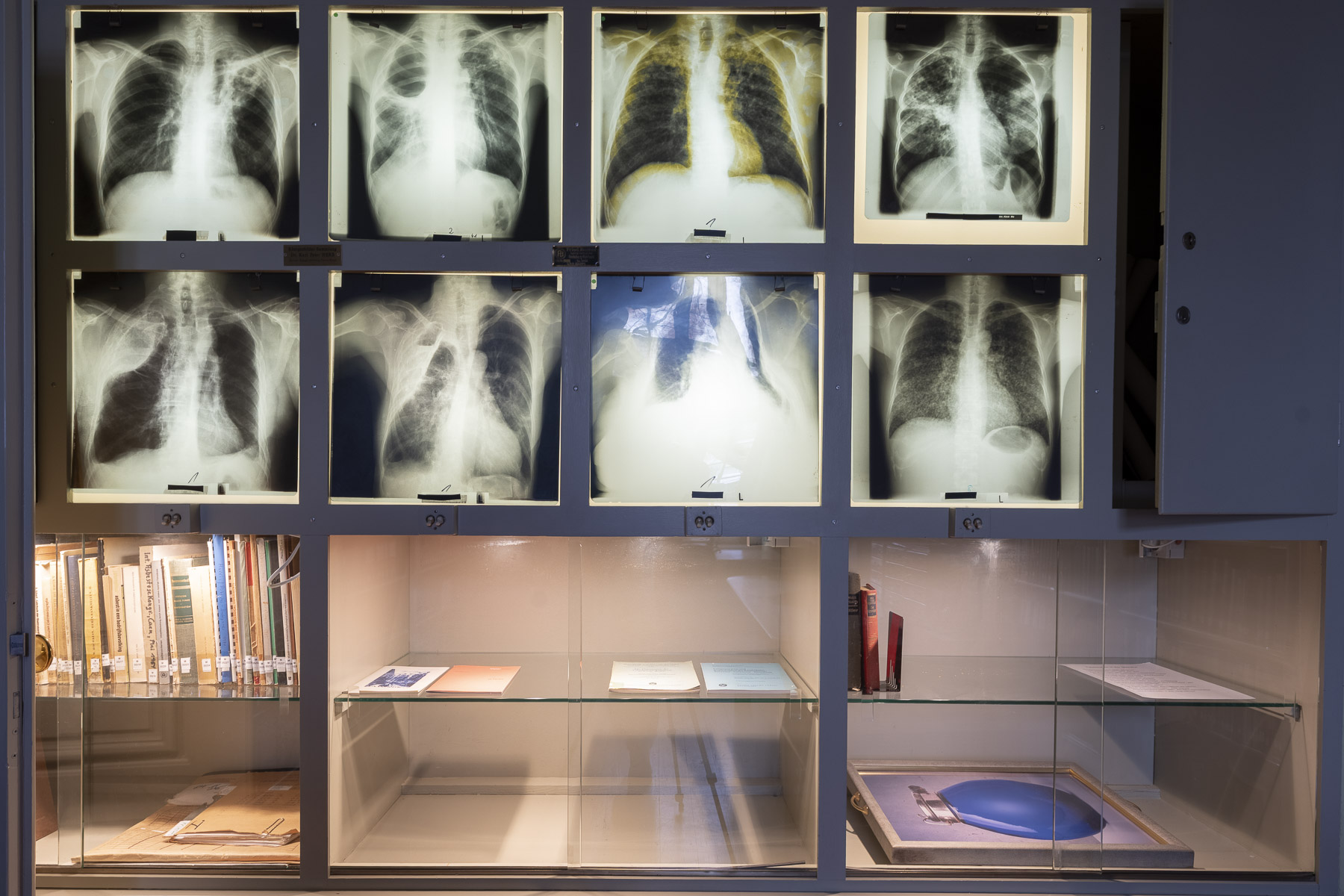
The library displays about one-third of the archive, comprising several thousand books and magazines—a treasure not only for research. One example of the exhibits there is the illuminated original radiographs showing lungs affected by the disease. These were presumably made after the second world war. A portrait of Robert Koch can be found there as well—his discovery of the tuberculosis pathogen in 1882 is considered a milestone in medicine. “It is important to us to put the historical exhibits into a contemporary context,” the medical doctor says. The reason for this is, as the doctor explains, that this infectious disease still is potentially lethal, even if it has become quite rare in Germany and can be cured with the right medication. But this has not always been the case. This is evidenced by a long list of names that have been given to this disease over the centuries: it was called, for instance, “consumption” or “white death”. Countless literary or cinematic masterpieces focus on it: amongst them is Alexandre Dumas’ “The Lady of the Camellias” or—the classic one—“The Magic Mountain” by Thomas Mann.
In the past, Oswinde Bock-Hensley walked in and out of the Thorax Clinic for work, now as a volunteer.
A painting of Auguste Wilhelmine Marie of Hesse-Darmstadt illustrates just how often the symptoms were misinterpreted. On a first glance, you perceive a healthy-looking young woman. Yet, as Rainer Eickhoff explains: “The rosy cheeks are a sign of high fever, a typical symptom of tuberculosis.” The supposed aristocratic pallor together with the emaciated body is classified as a clear symptom of the illness. The young patient was the mother of King Ludwig I of Bavaria and died of tuberculosis in Rohrbach at the tender age of 30. She, by the way, is not the only prominent victim of the “ugly disease”, as Oswinde calls it. Amongst them are also Karl Marx, Francis of Assisi, and Emily Brontë, who with high likelihood died of pulmonary tuberculosis also at the age of only 30.
Auguste Wilhelmine Marie of Hesse-Darmstadt died of tuberculosis.
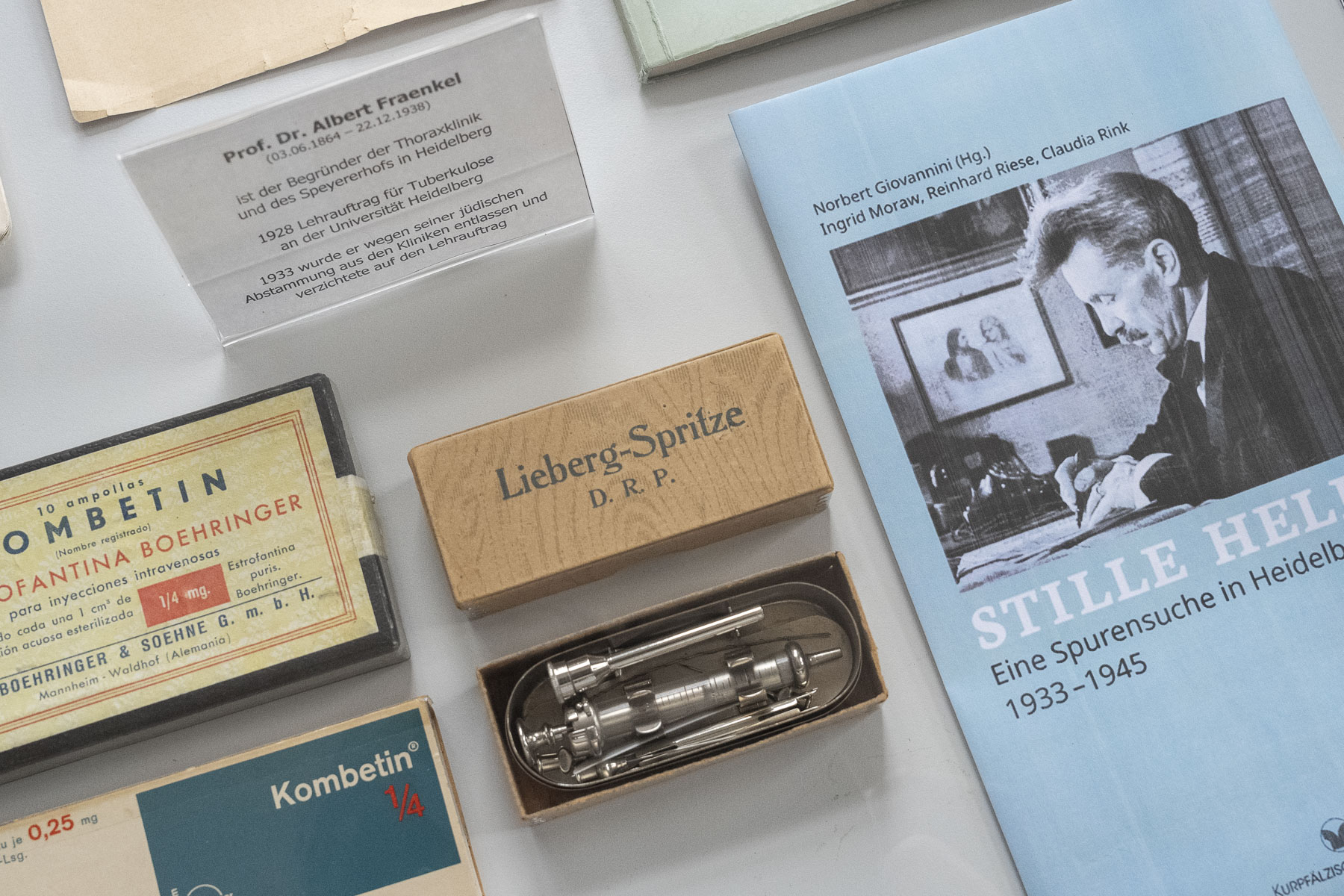
The oversized silver pinhead with its futuristic appearance is another example of the museum’s exhibits of the rather impressive kind. It was on display for the first time in the Hygiene Museum in Dresden in 1920 and, magnified 500 times, shows how miniscule the dangerous tuberculosis pathogens are in comparison. Another exhibit of artistic value is the torso of the cardiologist Albert Fraenkel. He had survived tuberculosis himself and by developing strophantin, he introduced an important cardiac drug. And it was him who ensured that a tuberculosis clinic was established in Heidelberg in the 1920s—in the place where aristocrats once lived. And where countless people have become healthy again.
Tips for excursions and interesting stories about the Rhine-Neckar region can be found regularly in our newsletter.
And this is how it works: Enter your email address in the field and click subscribe. You will then receive an automatically generated message at the email address you entered, which you only need to confirm. Done!