First, mix a little water polo with a little bit of standard polo, then add a shot of rugby. Shake it thoroughly, get into your kayaks, and voilà—you are ready to play canoe polo. Sounds crazy, but it is—above all—great fun on the water—as the players of the Lampertheim water sports club demonstrate.
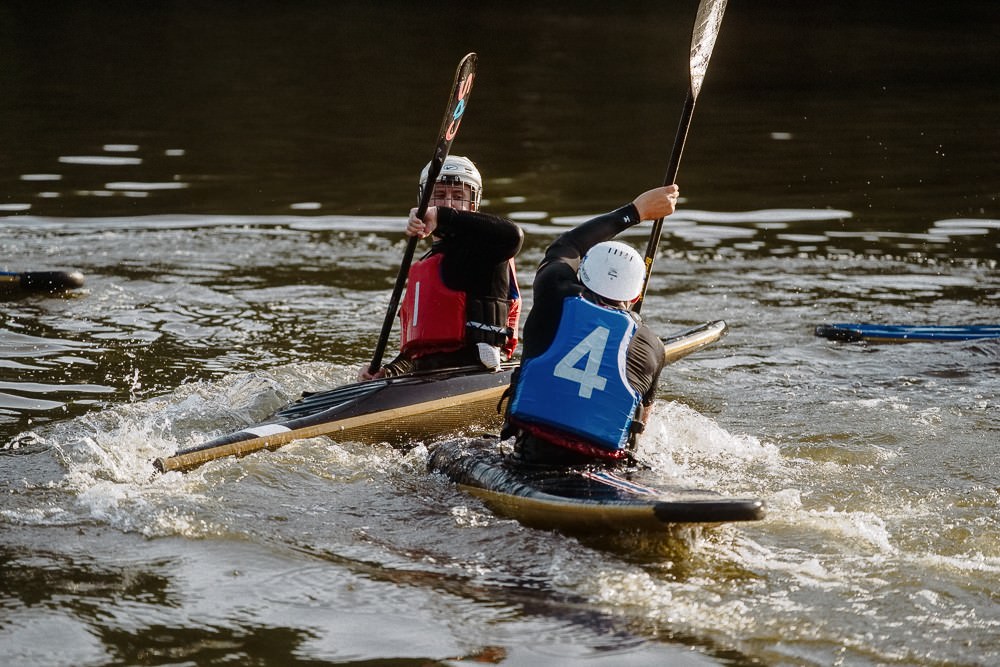
Right before the kick-off: The players paddle to their goal line on the pitch and take up their positions. Emily Bildat is standing on the landing stage holding a ball in her hand. “Ready?” she shouts across the Old Rhine, a cut-off meander of the river, at Lampertheim. One player of each team leans forward and plunges his paddle half-way into the water. They confront each other directly. Then, Emily throws the ball into the water—and the players dash towards each other. No-one reduces speed before he has reached the ball. Michael Vetter has gotten possession of the ball only split seconds before Yannick Engelhardt and is able to deflect it with the tip of the boat just before Yannick rams into his boat from the side. His kayak lifts out of the water. Both of them almost capsize but they manage to steady themselves quickly and paddle on—chasing the ball.
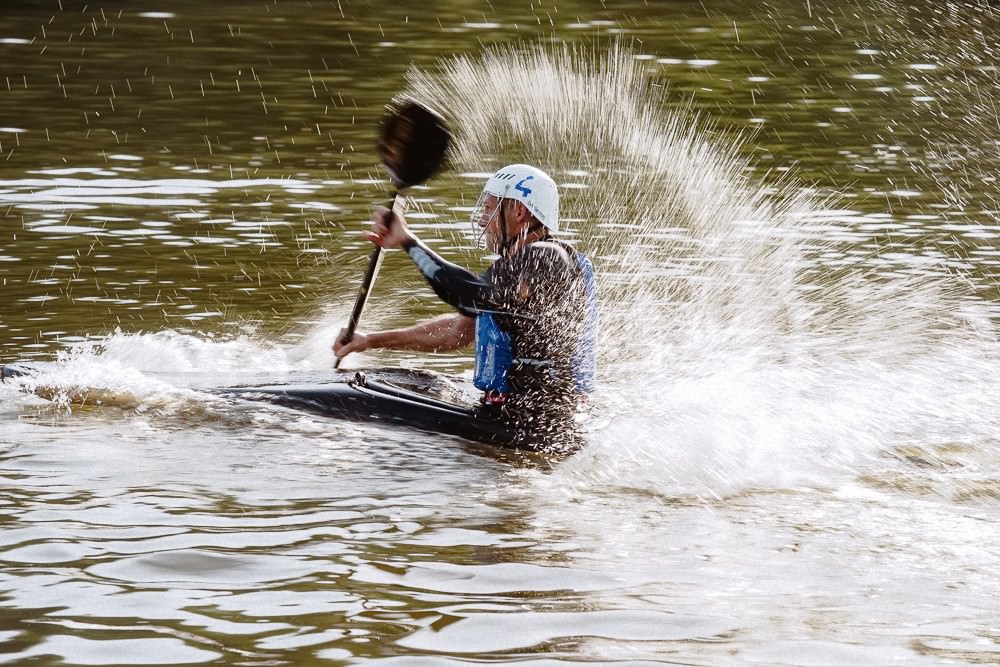
Fast-paced sport: you shouldn’t be squeamish as a canoe polo player.
What begins like a bumper car race on water is actually an ordinary kick-off in canoe polo. And quite a harmless one, too, as Emily explains from the landing. “This sport is only for a special kind of guys,” she says laughing. During her time in the under-21 national team, she preferred to leave this job to other players. Today, she is attending training only as a spectator. Yannick is now attempting to throw the ball past the goalkeeper’s paddle into the floating goal, which is a good two metres high. He slams it into the net with all his might.
Team sport on the water: canoe polo is quite a unique mix.
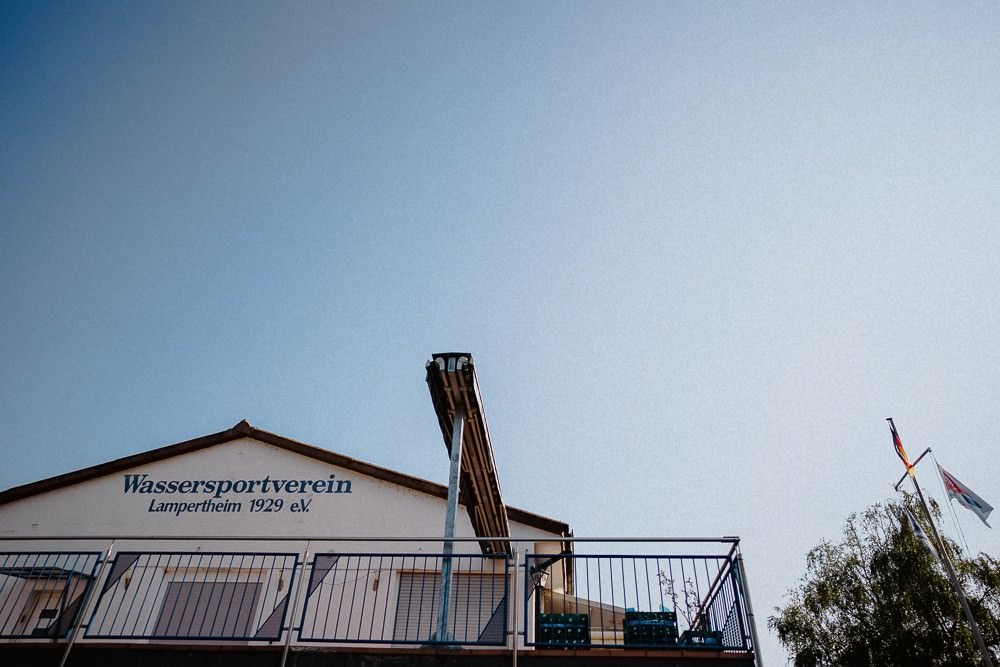
Just a few minutes ago, Olympic champion Nicole Reinhardt was kayaking along here. In 2008, she won gold in the quadruple kayak in Beijing. The Lampertheim water sports club (WSV) has grown due to the kayak racing sport. Since 1980, canoe polo has also been played on the Old Rhine meanders.
The canoe polo team of the WSV Lampertheim...
...trains on the Old Rhine—right on the doorstep of the players.
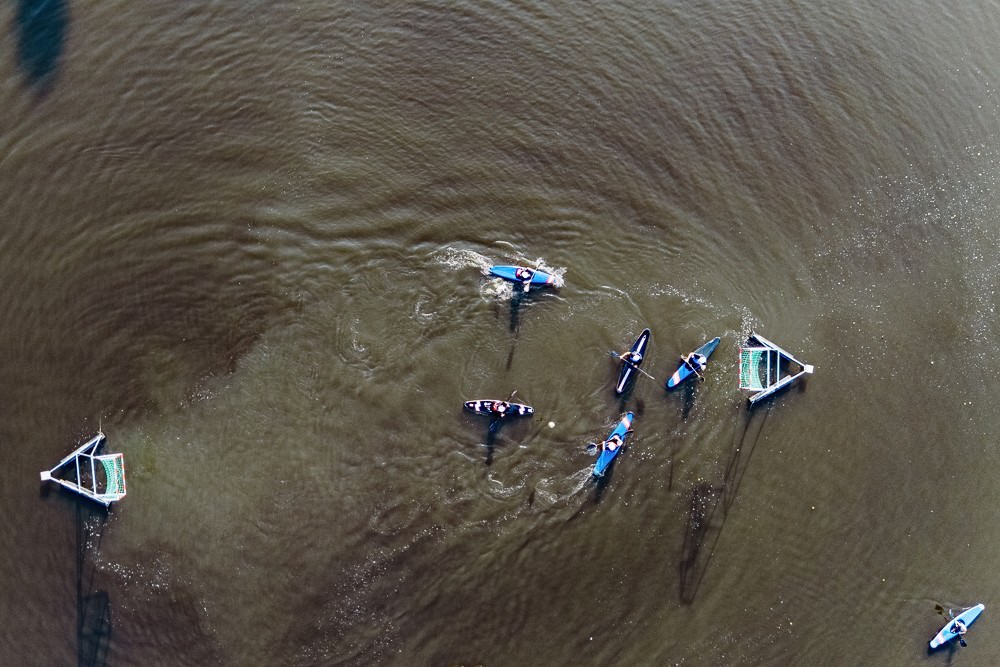
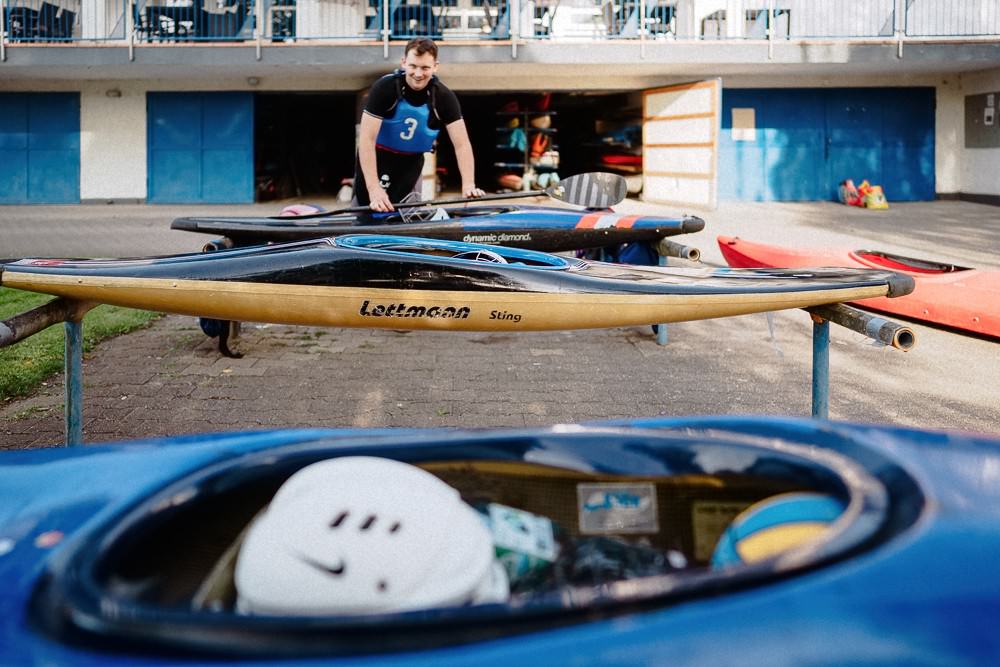
Before the match can get started, the goals have to be positioned.
A rough pitch is sufficient for training…
…where things actually can get quite rough.
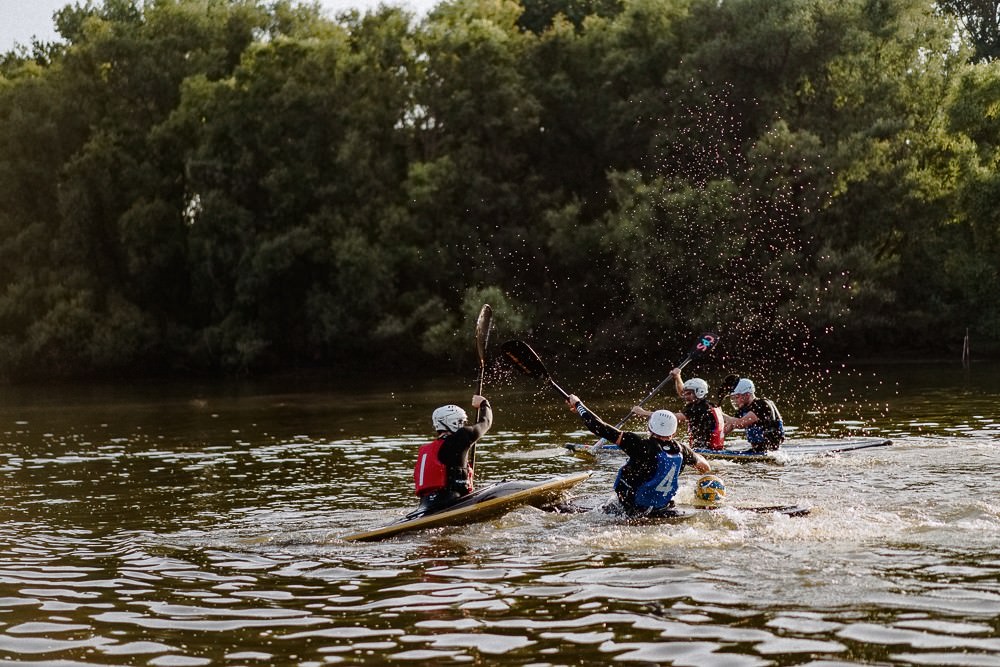
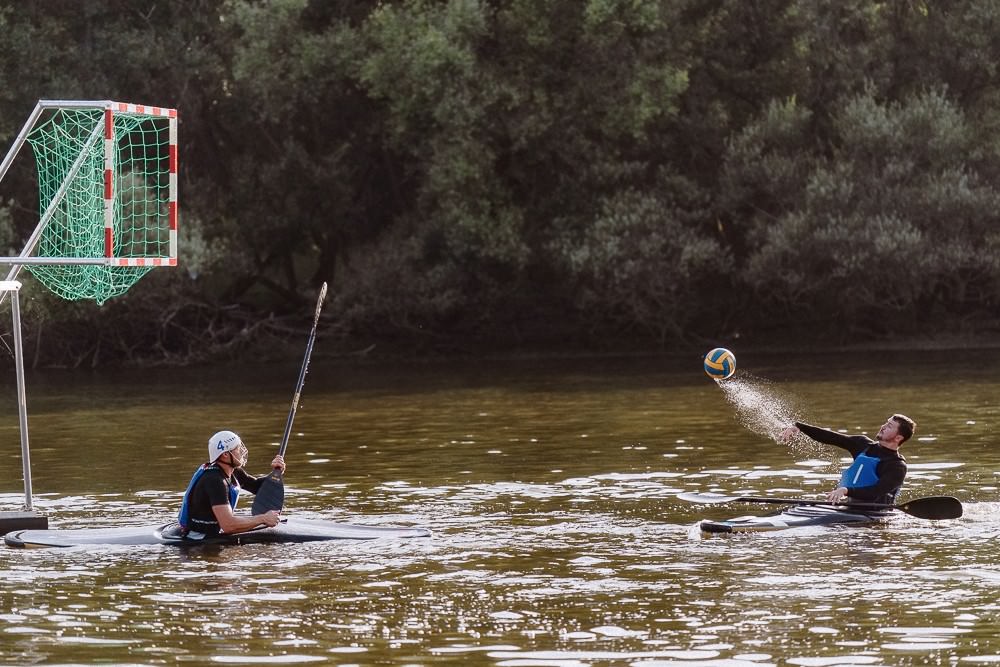
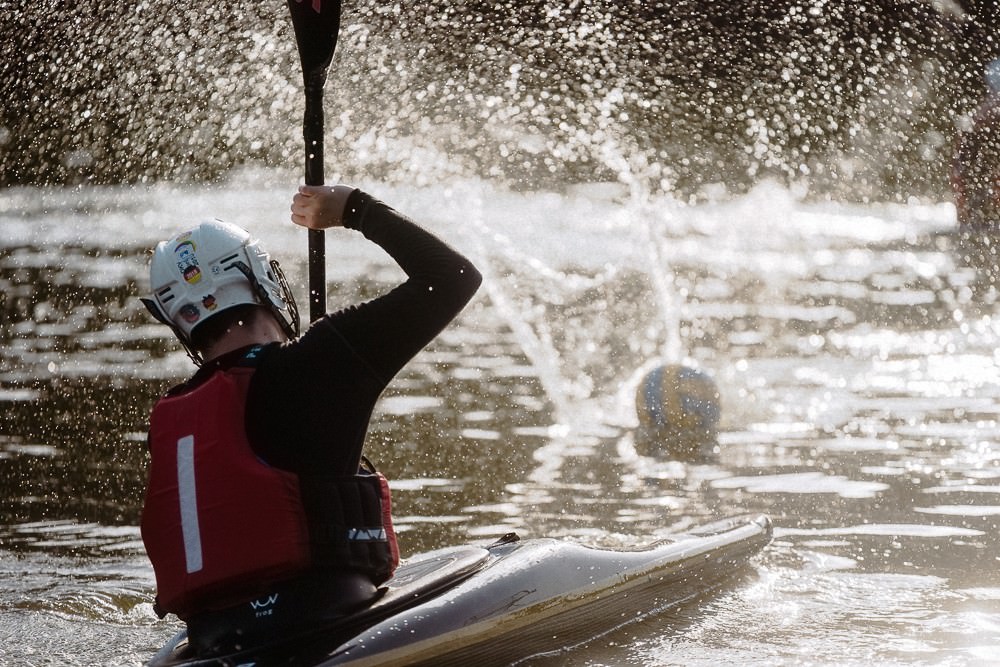
The aim, of course, is—the ball must enter the goal.
Yet, it can, of course, also be warded off with the paddle.
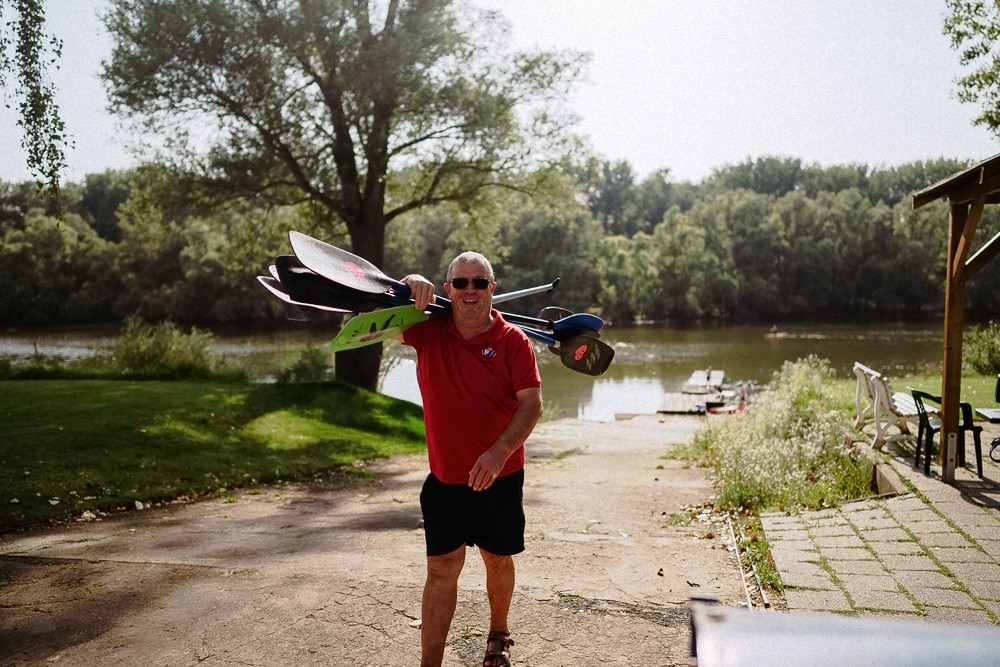
Chairperson Rainer Vetter would be happy to welcome new players interested in canoe polo.
At the beginning of the 20th century, clubs in Germany and England were simultaneously thinking about what kayaking as a team sport could look like. Or simply how training could be made a bit more fun. At first, the players sat in collapsible canvas boats and were only allowed to hit the ball into the goals with their paddles—because of this similarity with standard polo the sport was named canoe polo. Over time, the rules changed, and so did the equipment.
You can combine both in canoe polo—paddling and team sport. I thought that was perfect.
Yannick Engelhardt
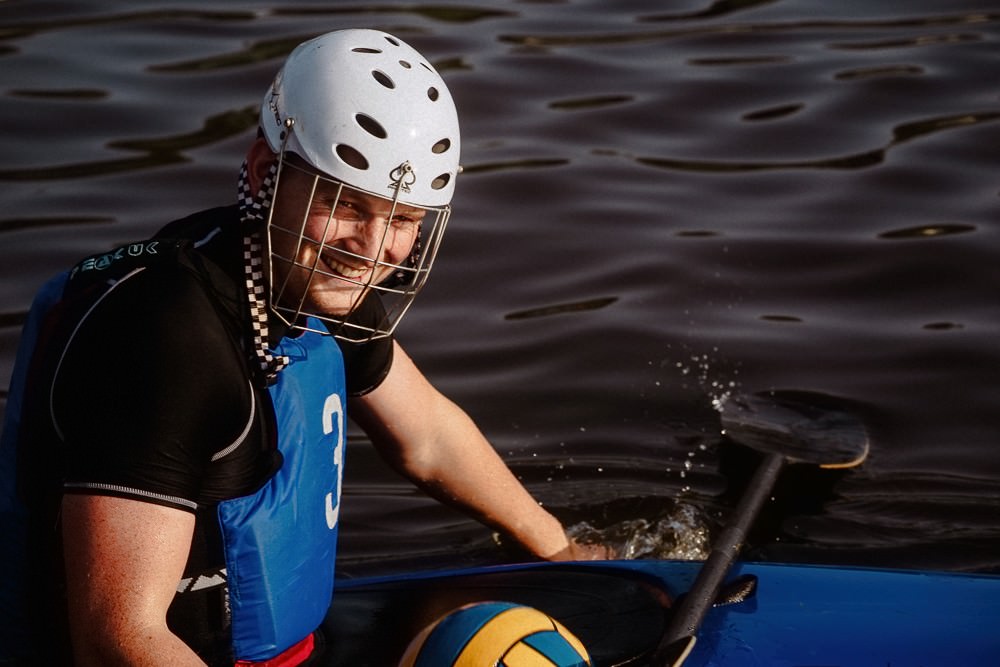
Today, the players sit in very manoeuvrable kayaks that are fully covered by spray skirts. “Otherwise, they would probably be filled with water right after the kick-off,” Yannick explains. That’s because ramming and pushing are actually allowed in canoe polo. But if you capsize, you can quickly steady yourself again in your kayak with the waterproof skirting. If need be, you perform a kayak roll. The kayaks are padded with foam at the front and rear to soften impacts. The well-cushioned life jackets also help. Head and face are protected by helmets and visors. As the equipment alone shows, you shouldn’t be squeamish as a canoe polo player. Because of these facts women and men play in separate competition classes, only the youth divisions play in mixed teams. “It can get quite rough in the men’s teams.”
Yannick already went kayaking at the age of eight—but just paddling soon became boring for him.
Yannick is originally from Mannheim. At the age of eight, he went kayaking for the first time—at the Neckarau canoe sports club. “Paddling only straight ahead got a bit boring, though, after a while,” he recounts. “You can combine both in canoe polo—paddling and team sport. I thought that was perfect.” Yannick changed to canoe polo and since then has been playing for several clubs. “In the south, there are not many clubs right now that have enough players for a team in the national league.” This is why he now trains in Lampertheim but plays in the second league with the Neuburg Danube rowing club. However, the sport is becoming increasingly popular. In the 2025 World Games in Chengdu, China, men as well as women won gold medals.
The manoeuvrable kayaks suitable for canoe polo can sometimes cost several thousand euros.
“The last time our men’s team played in the national league was back in 2007,” Rainer Vetter, chairperson of the WSV states. Several players have quit since then, he recounts. He would be glad if the club would be able to set up its own team again. “Canoe polo might be a marginal sport even within the club—but it is a sport that is practised with passion.” And Yannick goes to great lengths for this passion. “It is a time-consuming and costly sport, indeed,” he says. The costs of a new kayak suitable for the national league range between 2,000 and 3,000 euros. Training is set once or twice a week, and between May and September Yannick travels to matches almost every weekend. “When you are also working full-time, this actually is quite a tough schedule.” Yet, the sport for him is the ideal compensation for work. “Canoe polo is a very dynamic sport. You need coordination skills and strength, and the right tactics, too.” Furthermore, there is the community spirit and the special atmosphere during the matches, as he explains.
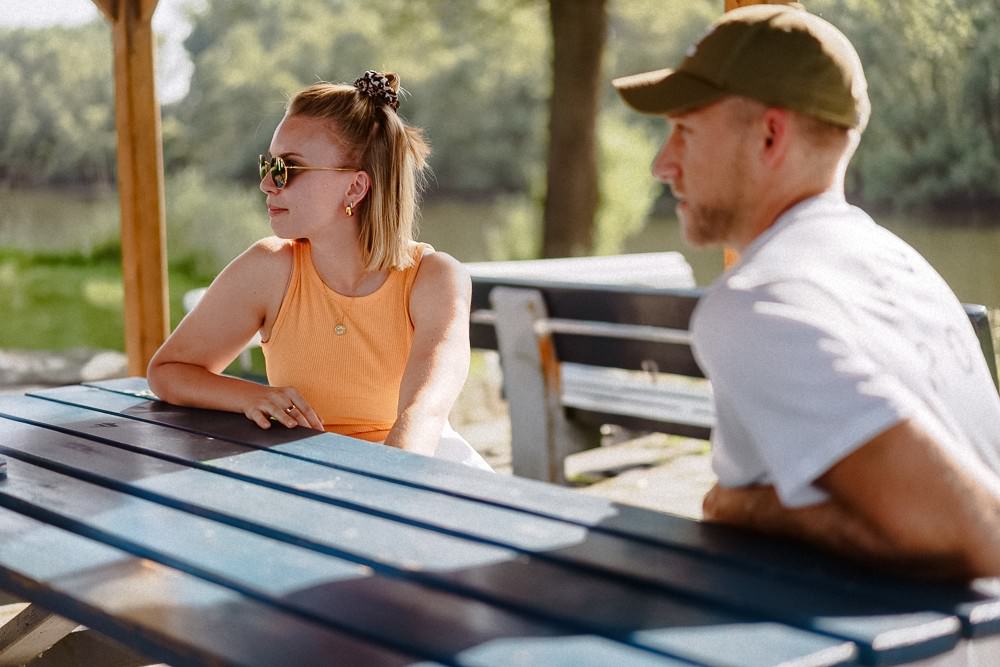
Emily Bildat might not be an active player anymore—but she does not want to miss out on the world of canoe polo.
“The atmosphere is always great and the people are really nice and funny—people know each other, it is a bit like being in a big family,” as Emily also confirms. This is one of the reasons why she accompanies her partner Yannick to his matches even though she does not actively play the sport anymore. At the age of six she started kayaking. She was enrolled in the children’s gymnastics group of the water sports club back then and was getting too old for it. So, she tried out canoe polo—and stuck to it. At the tender age of 16, she played in the under-21 national team for the first time and won the European and world championships together with her team. She won the German championships with the PSC Coburg and later again with the Northwest Berlin kayaking club that she most recently played for—although she still lived in Lampertheim. “Alongside my job as a physiotherapist, this got too much for me at some point.” But she cannot quite imagine a life without canoe polo for herself. “I just love the sport and the people too much. And apart from that, my knowledge as a physiotherapist is sometimes needed during the matches.” She laughs.
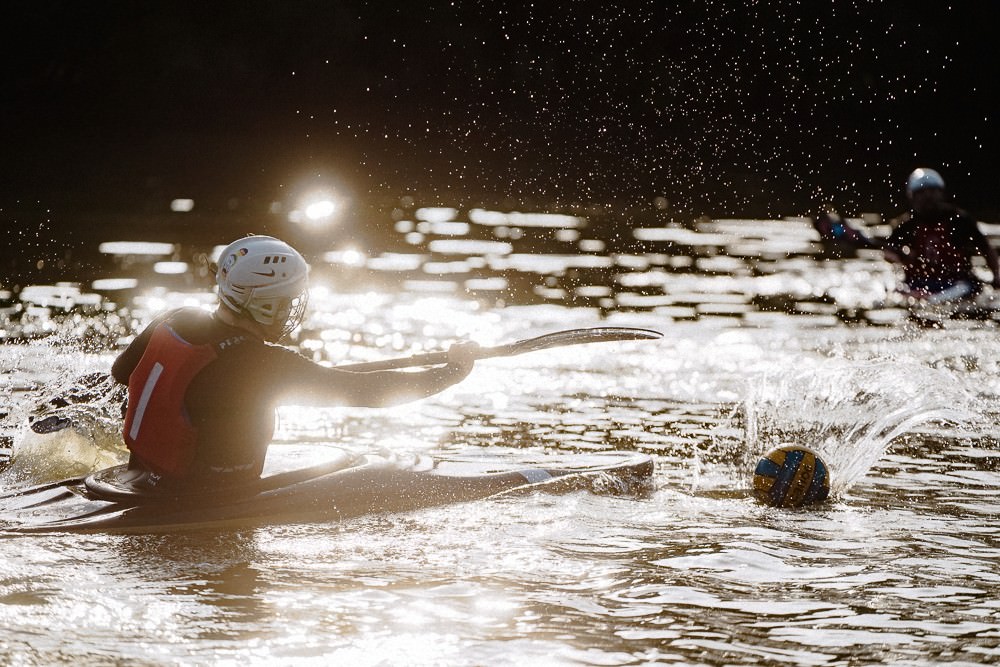
Interplay of light and water during canoe polo training on the Old Rhine.
Two teams of five players each compete against each other in canoe polo, plus there are another three substitutes. The aim of the game is to slam the ball into the net, which is two metres high. The ball is usually played with the hands, yet players are allowed to hit it or ward it off with the paddle. The person who has the ball may be pushed or even capsized. An attack is allowed to last a maximum of 60 seconds—that alone goes to show that canoe polo is a fast-paced sport. But when you play it at sunset on the winding Old Rhine like the Lampertheim players do, there is also something quite idyllic about it.
Training takes place Tuesdays from 6 p.m. to 8 p.m. It is also suitable for beginners. For further information, send an email to info@wsv-lampertheim.de.
Tips for excursions and interesting stories about the Rhine-Neckar region can be found regularly in our newsletter.
And this is how it works: Enter your email address in the field and click subscribe. You will then receive an automatically generated message at the email address you entered, which you only need to confirm. Done!