Be it in Mannheim, Heidelberg, Speyer or Landau, or even in Australia, Austria, Finland, Japan, Malaysia, Norway and Namibia—every Saturday morning at 9 am, people meet up to jog or walk together. Just why? WO SONST asked David Sweeney, who brought the parkrun concept to Germany.
It was on a beach in Croatia that David Sweeney suddenly thought of jogging. Of all places it was whilst on holiday there that the thought struck him of how good it would be to go running regularly with other people. His wife Michelle knew of an initiative from her home country of England and knew straight away what to do. “Why don’t you start a parkrun?” Since then, a global initiative has transformed their weekends. Every Saturday morning at 9 am, they help organise a run in Mannheim’s Waldpark.
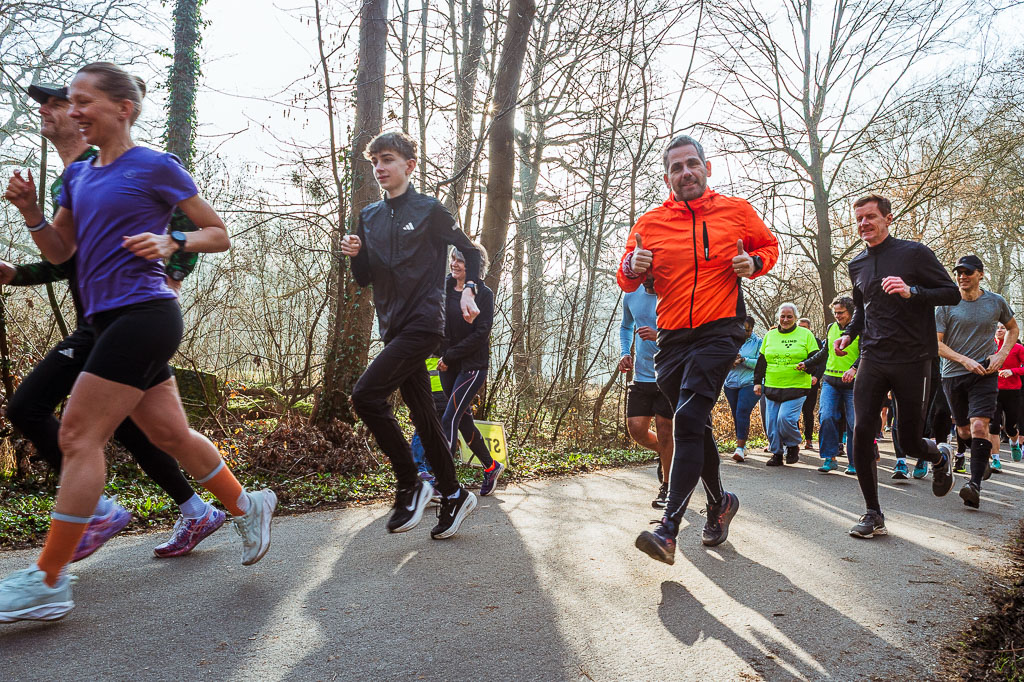
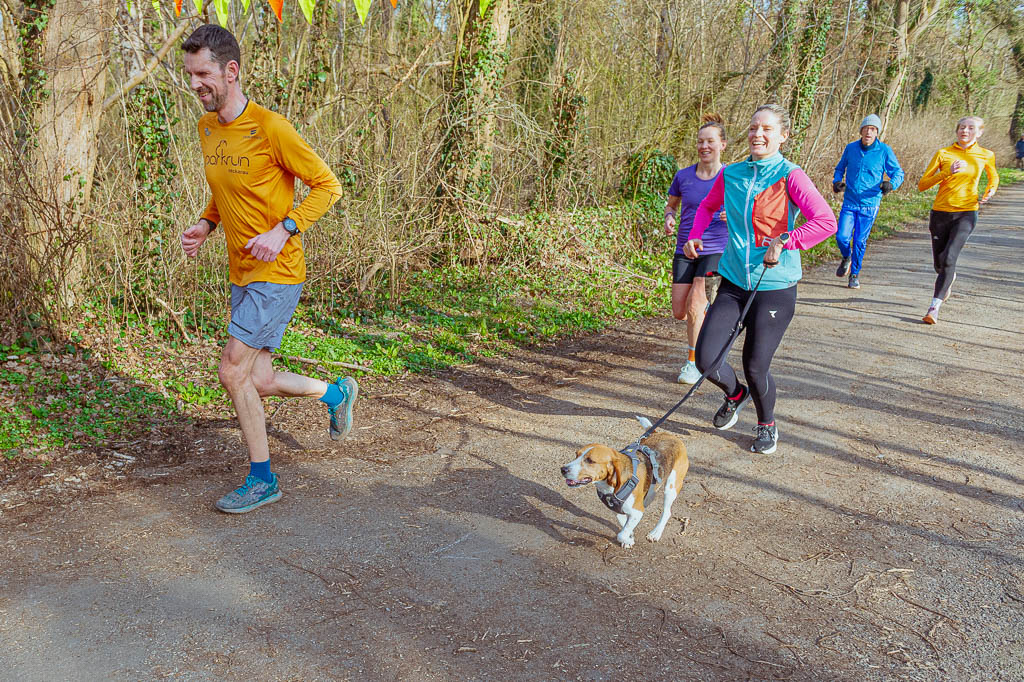
David Sweeney (in the orange jacket) enjoys jogging, but doesn’t like doing it alone.
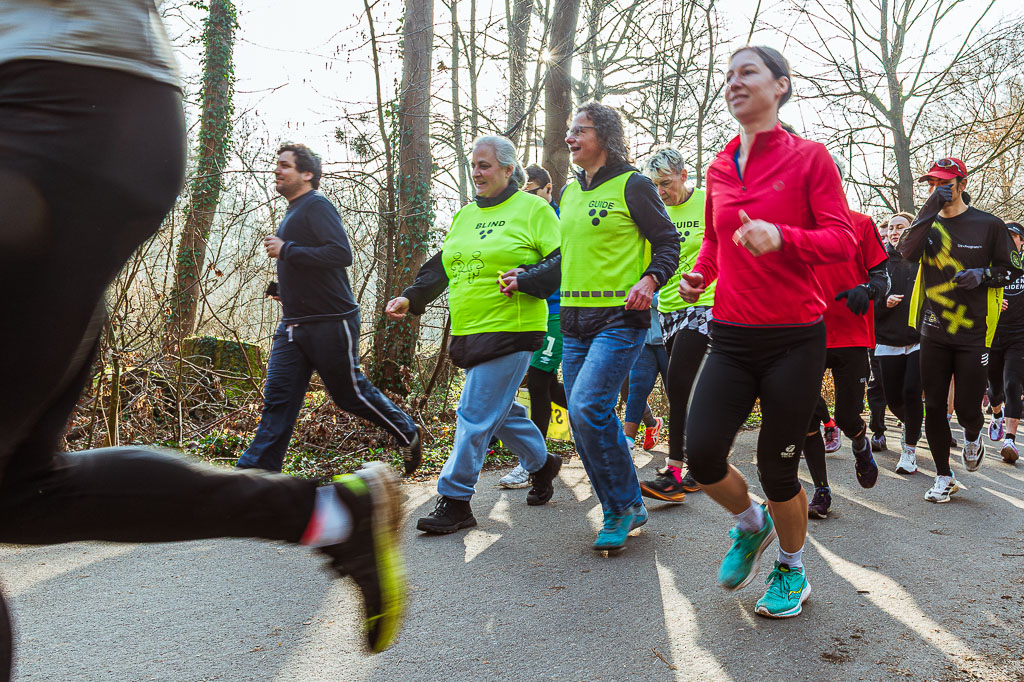
David has been jogging regularly ever since—and no longer alone. The journey is the destination. The rule for a parkrun is that those who run, run; those who walk, walk; and those who want to set a personal best, go for it! People with disabilities take part, as do babies in pushchairs and dogs on leads. There is no time limit. Participation is free and, above all, accessible to all. The last ones to reach the finish line are always the marshals, once they have collected the cones marking the course. Bringing up the rear is not the runners’ concern at a parkrun; it’s the job of the marshals.
Dogs are also welcome at parkruns.
Back then, David had been commuting to Ramstein every weekday morning to sell cars to US military personnel stationed there: “used cars from the US”. Actually, the Irish-born man had just joined a running group in his neighbourhood. “But I often got back from work so late that the meet-up was long over.” He could have run on his own. “But I wanted to spend time with people from the neighbourhood.” While still on the beach in Croatia, he sent an email to organisers from the parkrun English charity. At that time, people from Leipzig and Hanover had also enquired whether they could join the initiative. So the founder of parkrun, the Englishman Paul Sinton-Hewitt, announced a visit to Germany and explained the rules to David, Michelle and a handful of other fellow runners. “Parkrun must take place at the same time and in the same place every Saturday; no roads may be crossed, and the authorities must give their approval.”
Every Saturday morning at 9 am…
… the parkrunners meet in the car park at the lido..
Chatting before the start.
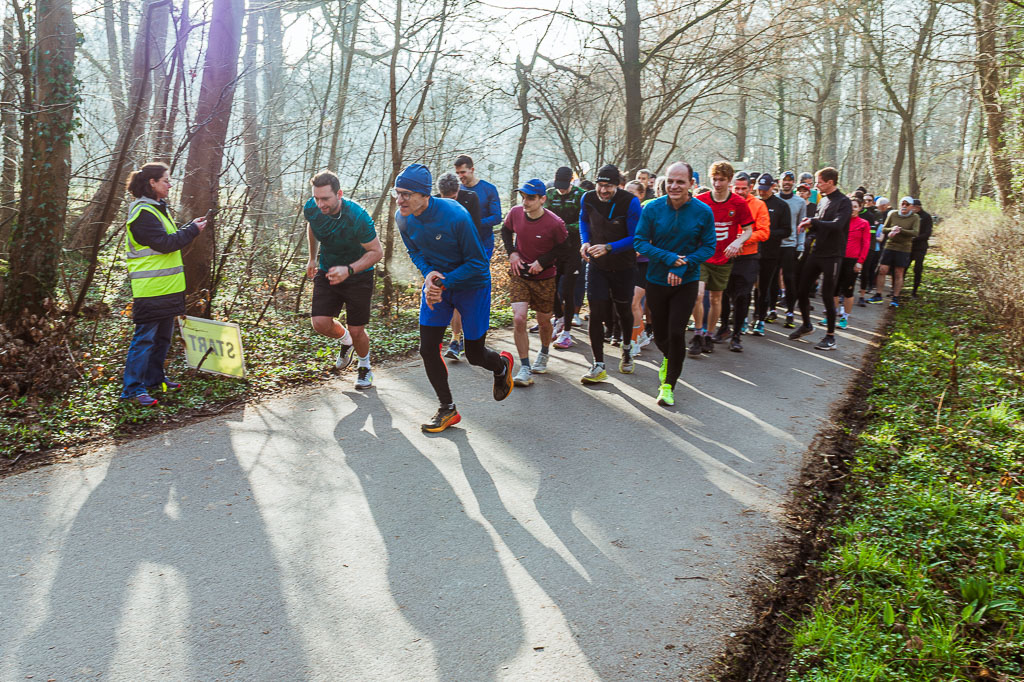
On your marks, get set…
… go!
The marshals cheer them on, too …
… until all markings are collected up again.
At that time, people from Leipzig and Hanover had also enquired whether they could join the initiative. So the founder of parkrun, the Englishman Paul Sinton-Hewitt, announced a visit to Germany and explained the rules to David, Michelle and a handful of other fellow runners. “Parkrun must take place at the same time and in the same place every Saturday; no roads may be crossed, and the authorities must give their approval.”
It’s all about community.
David Sweeney
Paul had come up with the idea because, following an injury, he could no longer keep up with professional runners. So he rounded up a dozen people and launched the first parkrun in October 2004. Ever since, everyone in the running community has known Bushy Park, the spot in Richmond in south-west London where the global movement began. There’s even a photo from that day when 13 runners lined up at the start—some in shorts, a few shivering as they waited for the “Go!”.
Waiting for the start, but at least in the sunshine.
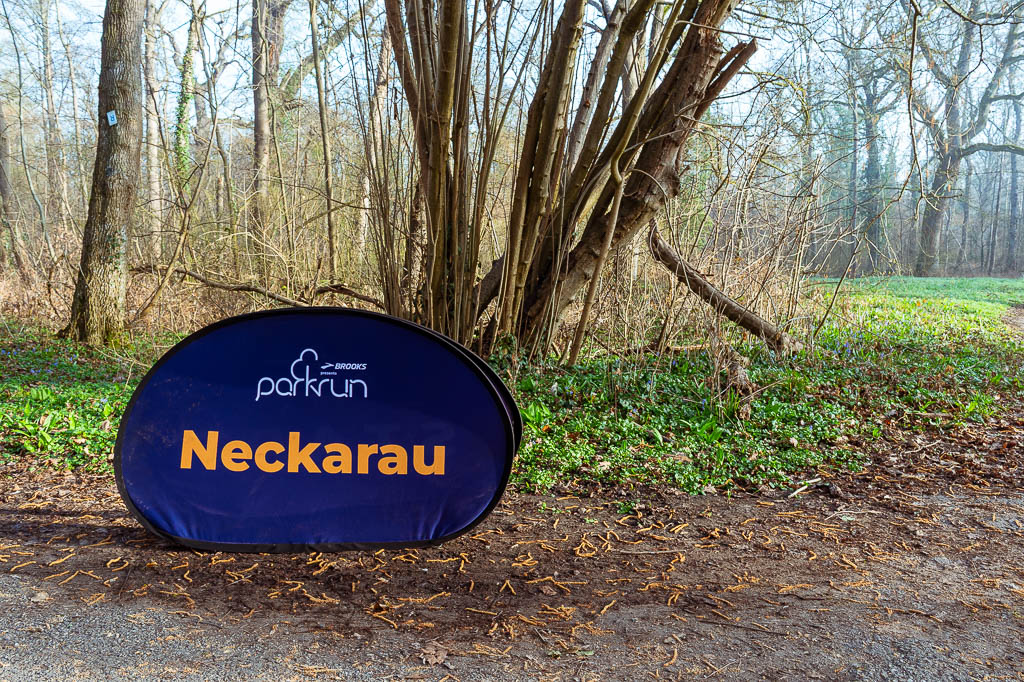
In Mannheim, the authorities had initially suggested the Dossenwald park as the venue. “But there’s no café there,” says David, as he spoons up some scrambled eggs after today’s parkrun. Sitting in a restaurant at a lido in Mannheim he looks out over the Rhine, which glistens in the spring sunshine. Anyone who fancies it and has the time comes together for a communal breakfast after the run. “It’s all about community,” says David. He suggested the Waldpark in Neckarau to the forester, who had been tasked by the city with handling the enquiry, with the lido as the starting point, because there is a large car park there. “He wrote back saying that as long as we didn’t put up any permanent markings and didn’t charge any entry fees, we could go ahead.”
Parkruns leave no traces; all markings are packed away again after the run.
On 2 December 2017 at 9 am, some four or five dozen people gathered in the three German cities of Mannheim, Leipzig and Hanover to run five kilometres together. The Neckarau parkrun has since been held more than 360 times with over 2,800 runners registering, some of them coming from neighbouring districts or even further afield to take part in the event. Parkruns have also sprung up at other locations in the Rhine-Neckar Metropolitan Region, such as in Speyer, Heidelberg or Landau. There are now more than 70 locations across Germany, and almost 2,900 worldwide in 23 countries, including Australia, Austria, Germany, Finland, Japan, Malaysia, Norway and Namibia. Twelve million people have officially registered as parkrunners.
The Mannheim route leads from the car park along a tarmac path first, then along the Rhine down to the Lindenhof district. After around two and a half kilometres, there is a U-turn, and the route heads back to the starting point. Course marshals, some dressed up as such, point the way with encouraging words, whilst colourful cones and white chalk arrows ensure that no one gets lost.
Blind runners are supported by a network of guides.
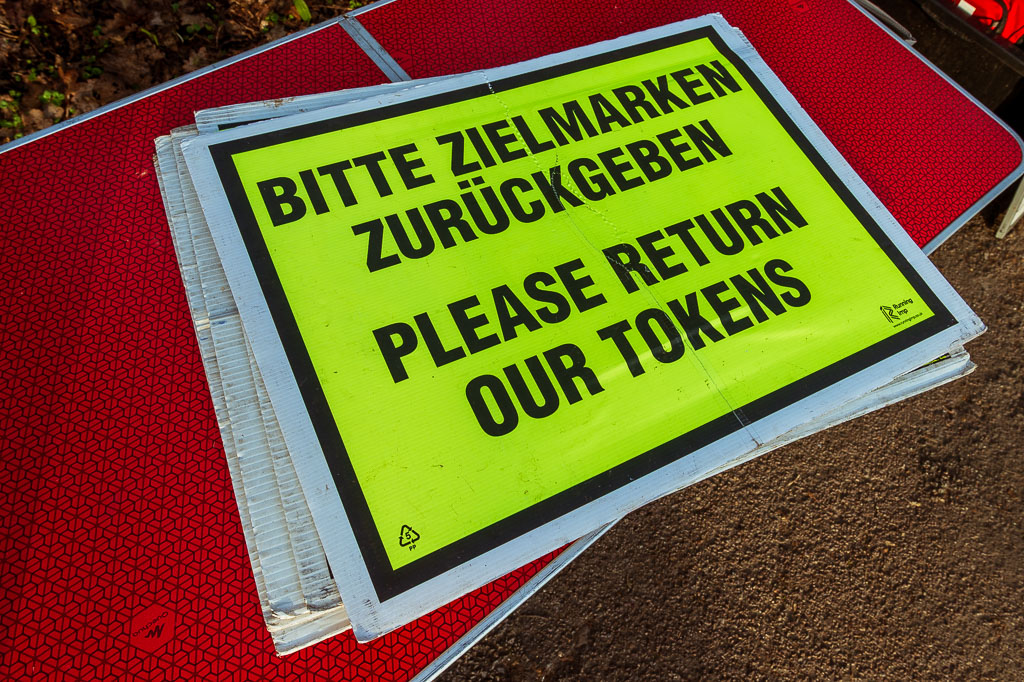
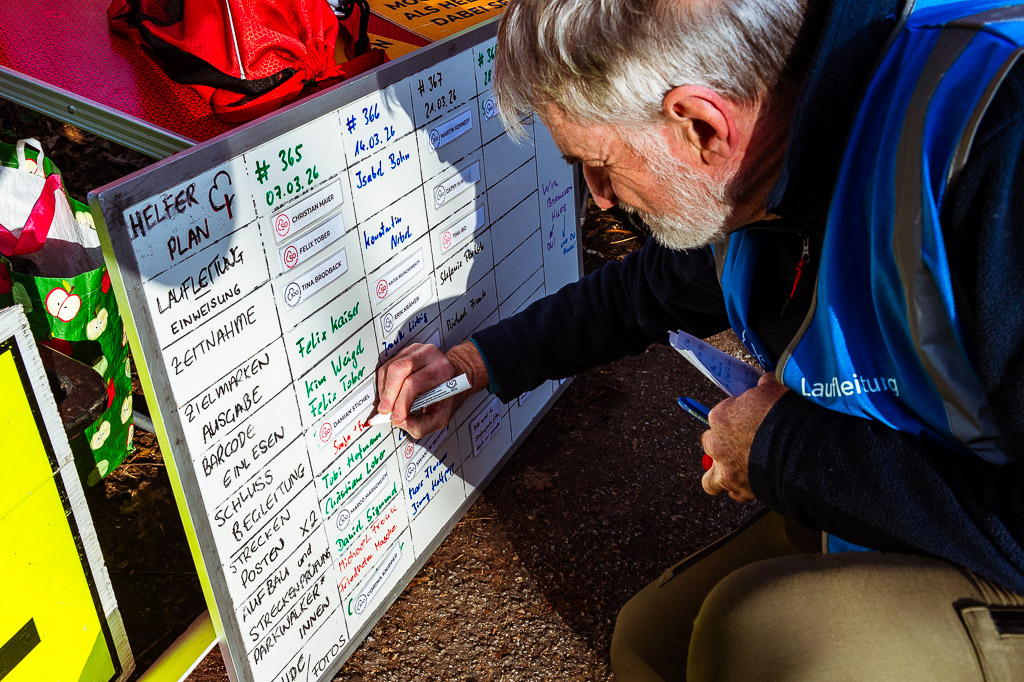
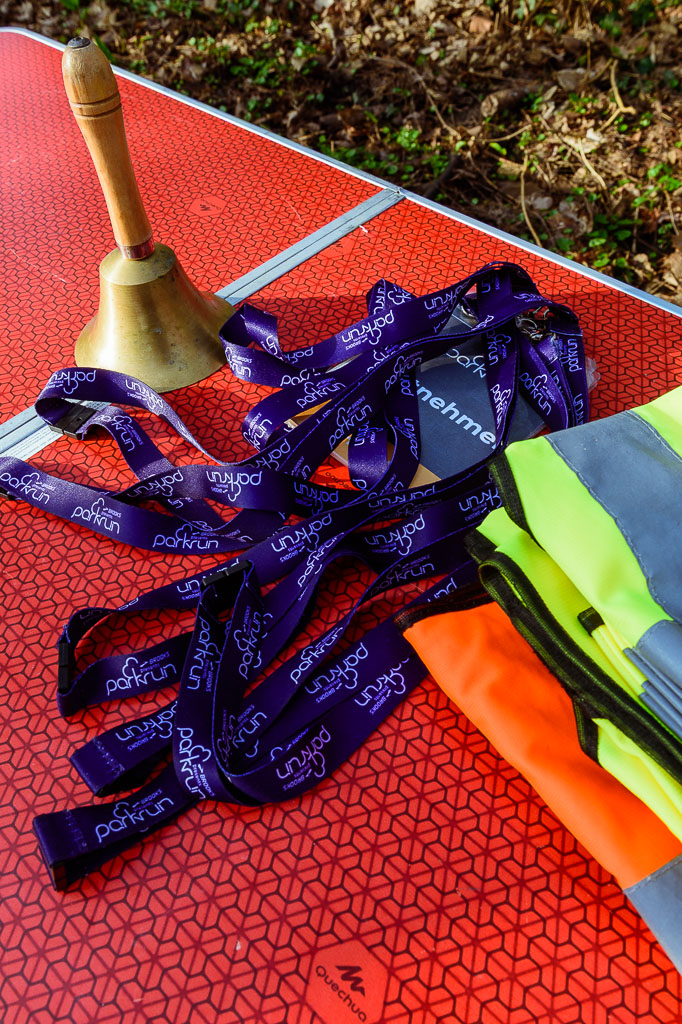
Volunteers play a central role in parkrun. Although the initiative is backed by a non-profit organisation, the British parkrun Global Limited, which advises the groups and supports them in acquiring equipment, the project is run locally by the volunteers. “We need a manager for every Saturday, plus marshals, timekeepers, scanners and the ones bringing up the rear,” explains David. Unlike at most running clubs, anyone who wants to can have their time recorded. When registering for the first time, a barcode is generated, which is then scanned at the finish line along with the chip issued. The data is subsequently collated, so that everyone receives their personal running time. “We always put up a whiteboard where anyone interested can sign up as a volunteer. And the great thing is that there’s actually never a slot left free for the coming weeks.”
The volunteers’ whiteboard is always well-staffed.
But before the runners set off on the course, the manager asks them who has reached a milestone today? “Those who have taken part 25, 50 or even 100 times, or who have helped out as a volunteer, are called out and the group applauds,” David explains, and to mark the occasion, there are T-shirts available to buy in the parkrun merchandise shop. Just as important is welcoming guests from other cities and countries, such as the visitor from the US, the student from South Africa and the runners from Frankfurt or Berlin. Die-hard parkrun fans never miss a run, even on holidays or weekend trips. Some even go so far as to specifically head to certain cities to complete the alphabet; this means that for every letter of the alphabet, a location somewhere in the world must be run. However, it’s not the name of the city, but the location that represents the letter, such as “N” for Neckarau parkrun. You can find parkrun Alphabet Challenges online and blogs where people recount their journeys to various event locations around the world.
Has David completed the alphabet? “Not yet,” says the Irishman with a laugh, “but Michelle hardly ever misses a week.” For many years, he was also an “ambassador for new events” at parkrun. The scrambled eggs have now been finished. People are still chatting at the neighbouring tables. Many of them have known each other for years. “There are people who met at parkrun who are now a couple or even married,” says David. Take Cathy, for example, a parkrunner from the very beginning, and Klaus. Indeed, it’s all about community!
Tips for excursions and interesting stories about the Rhine-Neckar region can be found regularly in our newsletter.
And this is how it works: Enter your e-mail address in the field and click subscribe. You will then receive an automatically generated message to the e-mail address you entered, which you only need to confirm. Done!